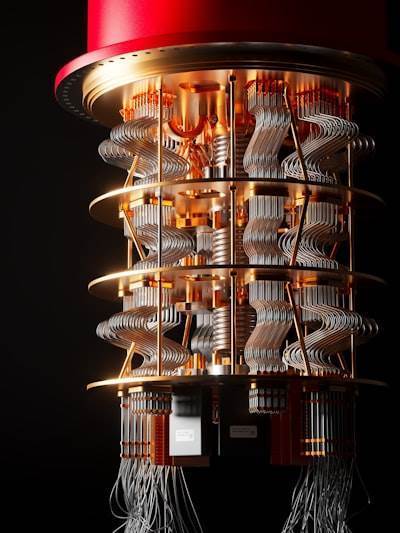
Differentiable equilibrium thermodynamic computing is emerging as a revolutionary paradigm to address the growing challenges of energy consumption and latency in machine learning systems. This approach, inspired by stochastic physical processes such as Langevin dynamics, proposes using analog hardware that exploits thermal noise to perform probabilistic calculations extremely efficiently. Instead of relying on digital transistors that dissipate energy with every switch, thermodynamic circuits operate in a continuous equilibrium, minimizing energy expenditure and accelerating both inference and training of generative models. This technology, still in its prototype phase with superconducting circuits, promises to transform how businesses deploy artificial intelligence, enabling custom applications that were previously unfeasible due to computational cost.
For organizations seeking to stay competitive, understanding and adopting these principles is key. Integrating thermodynamic computing into enterprise architecture requires a multidisciplinary approach combining specialized software development, cloud infrastructure, and cybersecurity strategies. In this context, Q2BSTUDIO positions itself as a strategic ally. As a software and technology development company, it offers solutions ranging from creating AI systems to implementing scalable platforms on cloud AWS/Azure. The ability to design custom applications that leverage the benefits of thermodynamic computing will allow companies to drastically reduce their operational costs and improve the response speed of their predictive models.
A key aspect of this technology is its differentiability, which facilitates training via stochastic gradients, a technique already mature in deep learning. By implementing energy potentials in analog hardware, one can build probabilistic graphical models that represent complex data distributions. This has direct applications in fields such as cybersecurity anomaly detection, where a thermodynamic model could identify attack patterns with minimal energy consumption. Similarly, in Business Intelligence (BI), generating samples from high-dimensional distributions enables more accurate and faster analyses, enhancing tools like Power BI to visualize trends in real time.
The synergy between thermodynamic computing and AI agents is particularly promising. Imagine an autonomous agent that, instead of running inferences on conventional GPUs, uses a thermodynamic chip to make decisions in milliseconds with negligible energy consumption. This type of innovation, which Q2BSTUDIO can help materialize through custom software development, opens the door to intelligent embedded systems, collaborative robots, and ultra-fast virtual assistants. The key lies in translating physical principles into efficient algorithms and then integrating them into the cloud architecture companies already use.
From a business perspective, adopting thermodynamic computing is not just a technical matter but a strategic one. Companies that invest now in this technology will gain a significant competitive advantage in terms of energy efficiency and processing capacity. Q2BSTUDIO, with its expertise in cloud AWS/Azure and cross-platform application development, can guide organizations through the transition to this new paradigm. Furthermore, cybersecurity benefits directly: thermodynamic models, operating in the analog domain, are inherently resistant to certain types of cyberattacks, and their integration with traditional security systems enables a more robust multi-layered defense.
In summary, the blueprints for differentiable equilibrium thermodynamic computing represent a mindset shift in the technology industry. Far from being a lab curiosity, this technology is ready to scale thanks to advances in superconducting materials and circuit design. Companies that want to lead the next wave of innovation must start exploring how to incorporate these principles into their daily operations. With the support of a technology partner like Q2BSTUDIO, offering services in artificial intelligence, cloud computing, cybersecurity, and Business Intelligence, the transition will be smoother and safer. The future of computing is thermodynamic, and the time to act is now.