
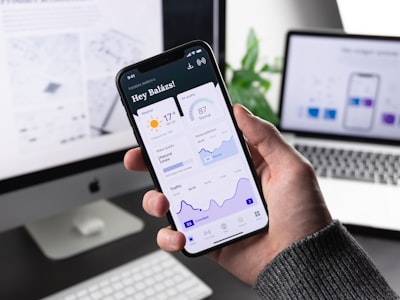
In today's business environment, mobility is no longer an optional add-on but a fundamental requirement for any digital solution. Organizations need their teams to access critical data, manage approvals, and make real-time decisions regardless of physical location. That is why custom mobile-compatible web development has become a strategic pillar for those seeking efficiency and competitiveness. Q2BSTUDIO, as a software and technology development company, understands that each business has unique workflows and that a generic platform rarely fits them. By choosing custom applications, companies not only get tools that exactly reflect their processes but also guarantee an optimized, secure, and scalable mobile experience.
Mobile compatibility in custom development goes far beyond adapting an interface to small screens. It involves redesigning the application architecture to deliver performance, usability, and security in any context: from a warehouse with limited coverage to a boardroom with a stable connection. Solutions built with this approach allow employees to perform tasks such as recording orders, approving budgets, or consulting key indicators without relying on a desktop. Q2BSTUDIO incorporates responsive design principles but also develops Progressive Web Apps (PWAs) or native applications when offline access and push notifications are required. This level of personalization is only possible when starting from a deep analysis of operational needs, something commercial platforms do not offer.
From a technical perspective, mobility in custom web applications relies on modern technologies that ensure consistency across devices. Using frameworks like React Native or Flutter allows for fluid interfaces, while cloud infrastructure provides the scalability needed to handle usage peaks without service degradation. In this regard, Q2BSTUDIO recommends leveraging cloud services on AWS and Azure to host applications, as these platforms offer synchronization tools, secure storage, and edge computing that enhance the mobile experience. Additionally, adopting serverless architectures reduces latency and simplifies maintenance, allowing development teams to focus on business logic.
One of the most impactful advances in custom mobile development is the incorporation of artificial intelligence and intelligent agents. These components can automate repetitive tasks, such as sorting requests or generating responses to frequently asked questions, directly from a mobile device. Q2BSTUDIO implements AI agents that integrate with existing workflows, offering contextual assistance to users. For example, an agent can analyze sales patterns in real time and suggest personalized discounts, or notify a technician about equipment requiring preventive maintenance. This combination of mobility and artificial intelligence transforms how companies operate, reducing response times and improving decision-making accuracy.
Cybersecurity is another critical factor when discussing web applications accessible from mobile devices. Personal devices and public networks increase the attack surface, so any custom solution must include robust protection mechanisms. Q2BSTUDIO incorporates multi-factor authentication, end-to-end encryption, and role-based access controls. Additionally, it performs periodic penetration tests to identify vulnerabilities. Integration with cloud identity services, such as Azure Active Directory or AWS Cognito, allows for secure session management even in low-connectivity scenarios. For companies handling sensitive data, having custom development that prioritizes cybersecurity is not an option—it is a necessity.
Access to business information on the go is further enhanced when applications include Business Intelligence capabilities. Power BI dashboards, for example, can be embedded directly into the mobile application, providing interactive visualizations that update with the latest data. Q2BSTUDIO helps organizations design dashboards that adapt to screen size, showing the most relevant KPIs for each role. A sales manager can monitor quota attainment from their phone, while a logistics manager reviews delivery times on a tablet. This democratization of data fosters a fact-based culture where every decision is supported by up-to-date and reliable information.
Use cases for custom web development with a mobile focus are as varied as industries. Companies still managing inventories with spreadsheets find in these applications a way to digitize processes in real time, eliminating transcription errors. Organizations with field teams—such as inspectors, technicians, or salespeople—use customized mobile forms to capture data, sign documents, or upload photographic evidence even offline. Customer and employee portals that allow checking invoices, requesting time off, or accessing training from anywhere are also common. In all these scenarios, Q2BSTUDIO deploys its discovery, design, development, and testing methodology to ensure the final solution aligns with the business's strategic goals.
Adopting a custom development approach with mobile compatibility also means thinking about future evolution. Applications must be modular and scalable to incorporate new features without disrupting service. Q2BSTUDIO uses modern stacks such as Node.js, Java Spring Boot, or Python, combined with relational or NoSQL databases as needed. Integration with ERP and CRM systems is another key point; a mobile application that connects directly with SAP, Salesforce, or other central systems avoids duplication and ensures information consistency. Moreover, the possibility of adding AI agents or Business Intelligence modules later makes these solutions long-term investments.
For companies looking to replace outdated solutions or take the leap into digitalization, custom web development represents a safe path toward digital transformation. The advantages of having an application designed from the start for mobile—with adaptive interfaces, smart notifications, and secure access—translate into higher productivity and user satisfaction. Q2BSTUDIO accompanies its clients at every stage, from requirements definition to continuous deployment and evolutionary support. If your organization needs a tool that truly adapts to its workflows and is ready to be used on any device, custom development with a mobile focus is the answer.
