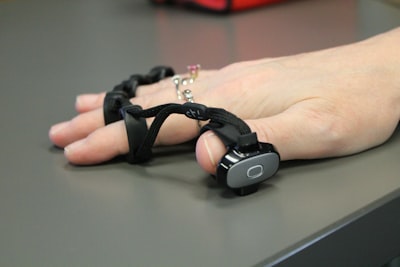
Natural interaction with electronic devices has long been a central goal in wearable technology development. Among the most promising techniques is surface electromyography (sEMG), which captures the electrical activity of muscles to interpret hand gestures. However, traditional systems require multiple sensor channels and computationally heavy models, limiting their integration into low-power and compact devices. A recent study explored the feasibility of classifying ten hand gestures using a single sEMG channel combined with lightweight machine learning architectures, opening the door to more accessible and efficient applications.
The proposal relies on transforming raw sEMG signals into a comprehensive feature set: time-domain, frequency-domain, higher-order crossings and relative intensity. To avoid redundancies, Pearson correlation filtering is applied and highly correlated features are removed. Subsequently, dimensionality reduction techniques such as LDA and PCA are used selectively. The classifiers evaluated —a feed-forward neural network, k-nearest neighbors (KNN) and a support vector machine (SVM)— are subjected to four systematic experiments. Results show that a combination of time and frequency features, filtered with Pearson and a compact neural network, achieves up to 90% accuracy even with limited temporal and spatial information. This demonstrates that single-channel systems can be a viable alternative for gesture recognition in low-power environments.
The relevance of this finding extends beyond the lab. In the business world, the ability to implement gesture classification with minimal hardware drives new opportunities in human-machine interfaces, smart home control, augmented reality and intelligent prosthetics. For example, a single-electrode wristband could allow industrial operators to handle machinery without contact, reducing risks, or surgeons to control equipment during operations without contamination. However, integrating this technology into real products requires a robust, customized and scalable software development approach.
This is where companies like Q2BSTUDIO contribute their expertise. As a company specialized in software development and technology, they offer custom software applications that allow adapting these machine learning models to specific needs. From signal capture and preprocessing to implementing lightweight models on edge devices, their team can build complete pipelines that guarantee minimal latency and high accuracy. Furthermore, integration with cloud platforms such as AWS or Azure facilitates data storage, posterior analysis and remote model updates. Cybersecurity also plays a crucial role: when handling biometric data, protecting user privacy through encryption and robust authentication is essential — services that Q2BSTUDIO offers within its portfolio of AI and cybersecurity.
An additional aspect is business intelligence. Data generated by these gesture systems can be exploited using BI tools like Power BI to gain insights on usage patterns, operational efficiency or behavioral trends. For instance, in a rehabilitation setting, the frequency and accuracy of a patient’s gestures can be monitored over time, enabling personalized therapy adjustments. The combination of single-channel sEMG with autonomous AI agents opens the possibility of systems that learn and adapt to each user without constant human intervention, enhancing the user experience.
In summary, the feasibility study demonstrates that gesture classification with a single sEMG channel can maintain competitive accuracy. This paves the way for cheaper, lighter and more energy-efficient wearable devices. However, bringing it to market requires a robust technology ecosystem covering firmware development to cloud analytics. Q2BSTUDIO, with its multidisciplinary approach in cloud AWS/Azure, artificial intelligence, cybersecurity and BI, is ready to accompany companies in this transformation. For those seeking to innovate in gesture interfaces, the combination of cutting-edge technology and custom software is the key to the future of human-machine interaction.