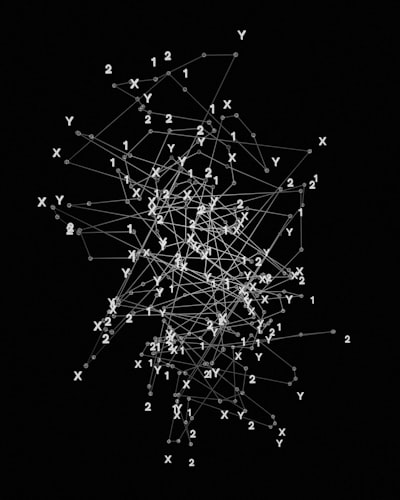
The traveling salesman problem (TSP) is a classic combinatorial optimization challenge with applications in logistics, route planning, and circuit design. For decades, exact and heuristic methods have dominated, but recently neural solvers have emerged as a promising alternative by learning to solve instances in an amortized fashion. However, these models are typically trained on synthetic distributions and fail when transferred to real-world scenarios with different scales or spatial patterns. In this article we analyze GeoRouteNet, a non-autoregressive architecture that incorporates explicit geometric features to improve cross-domain transfer, and discuss how these advances can be integrated into enterprise solutions of custom software.
Technical context: Autoregressive solvers generate the route step by step, limiting efficiency. In contrast, non-autoregressive models like GeoRouteNet produce the complete solution in a single pass, using attention over the nodes. The key innovation lies in geometric encoding: each node is represented by its offset from the center, a learnable radius, and radial distance bases are incorporated. Additionally, explicit edge messages and cross-layer representation mixing are added. This allows the model to understand the spatial arrangement of points without exhaustive retraining when the number or distribution of nodes changes.
Training with MCS-RL: To optimize the solver, the authors propose Multi-Candidate Self-Comparison Reinforcement Learning (MCS-RL). This method generates multiple tours per instance, uses an adaptive leave-one-out baseline, guides toward the winning candidate, and regularizes entropy with decreasing temperature. Experimental results show that GeoRouteNet with MCS-RL achieves gaps of 0.32% on TSP-50, 1.26% on TSP-100, and 3.60% on TSPLIB instances, significantly outperforming the NAR4TSP-PG baseline. This demonstrates that a richer training signal and a geometry-aware architecture improve generalization.
Business implications: In a world where route optimization directly impacts operational costs and sustainability, tools like GeoRouteNet can be integrated into intelligent logistics platforms. Companies like Q2BSTUDIO offer AI services and custom application development to implement such algorithms in production environments. The combination of neural networks with cloud infrastructure (AWS/Azure) allows scaling complex route processing in real time, while cybersecurity solutions ensure the integrity of geospatial data. Additionally, Business Intelligence (Power BI) systems can visualize optimized results for strategic decision-making.
Intelligent agents and automation: GeoRouteNet also opens the door to AI agents capable of dynamically planning routes in response to changes in demand or traffic conditions. These agents can be trained with reinforcement learning to adapt to specific client scenarios. Q2BSTUDIO develops process automation solutions that integrate AI models with ERP systems, enabling end-to-end orchestration from order to delivery.
Comparison with traditional approaches: Although exact solvers like Concorde offer optimal solutions for small instances, they do not scale to problems with hundreds of nodes. Classical heuristics (nearest neighbor, 2-opt) are fast but suboptimal. GeoRouteNet sits in the middle: it provides high-quality solutions with constant latency thanks to its non-autoregressive architecture. This makes it especially attractive for applications requiring simultaneous processing of many instances, such as logistics-as-a-service platforms.
Technical considerations for implementation: Deploying GeoRouteNet in production requires robust infrastructure. Cloud GPUs (AWS EC2 or Azure VM) enable large-scale training and inference. Q2BSTUDIO advises on migrating and optimizing AI workloads in the cloud, as well as integrating with secure storage systems for sensitive data. Cybersecurity is crucial when handling distribution routes that reveal business patterns.
Future of neural solversResearch in this field is moving toward more efficient and transferable models. GeoRouteNet shows that designing architectures with explicit geometric knowledge is a promising path. At Q2BSTUDIO we closely follow these innovations to offer our clients Business Intelligence solutions incorporating advanced optimization, as well as autonomous AI agents for fleet management.
In summary, GeoRouteNet not only represents an advance in the state of the art of neural solvers for TSP, but also illustrates how the integration of geometric features and reinforcement learning can bridge the gap between academic research and industrial applications. At Q2BSTUDIO we are ready to transform these algorithms into custom software tools that drive your business operational efficiency.