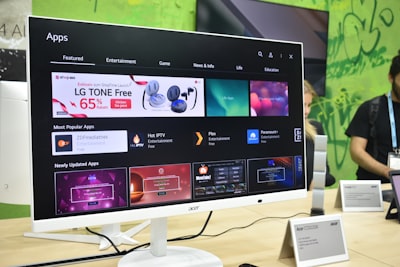
The recent controversy surrounding LG monitors that install McAfee adware without explicit consent, combined with new policies on smart TVs that allow audio recording to train artificial intelligence models, has sparked an intense debate about privacy, security, and ethics in the technology industry. As users express their rejection, fundamental questions arise about how companies manage data and what mechanisms exist to protect consumers. This phenomenon not only affects brand trust but also highlights the need for more transparent and user-centric technological solutions.
From a technical perspective, preinstalled adware on high-end monitors represents a considerable cybersecurity risk. Without clear authorization, McAfee software can consume system resources, slow down performance, and in some cases, expose sensitive data to third parties. What is concerning is that this practice is not isolated: other manufacturers have included unwanted applications in their devices, but the difference lies in the community's reaction. LG has defended itself by claiming it seeks to 'improve the user experience,' but growing criticism suggests the company must reconsider its strategy.
On the other hand, the listening policy on smart TVs, whose stated goal is 'to personalize content through AI,' has raised alarms about privacy violations. While smart speakers have already normalized voice collection, the fact that a television can record conversations without the user explicitly knowing crosses a delicate line. Concepts such as informed consent and data minimization—basic principles in the European General Data Protection Regulation (GDPR)—come into play here, and any company operating in global markets must comply.
In this context, software development companies have a crucial role. Q2BSTUDIO, for instance, specializes in creating custom applications that prioritize security by design. Instead of imposing external tools like adware, a tailored solution allows integrating cybersecurity and monitoring functionalities without compromising the user experience. Moreover, using cloud platforms such as AWS or Azure provides controlled environments where data can be encrypted and managed with strict access policies, reducing exposure to potential leaks.
Artificial intelligence, when implemented responsibly, can enrich device interaction. However, the LG case demonstrates that ethical boundaries must be established. AI agents that process voice or images should be trained with anonymous datasets and under explicit consent. Companies like Q2BSTUDIO offer AI solutions that incorporate transparency mechanisms, allowing users to know exactly what information is collected and for what purpose. Additionally, using Business Intelligence tools like Power BI makes it possible to analyze usage patterns without exposing personal data—a privacy-respecting approach that still yields valuable insights.
Cybersecurity, in turn, must be a transversal layer in any development. Adware is not just annoying; it can be a gateway to more serious attacks. Regular security audits combined with pentesting practices help identify vulnerabilities before they are exploited. Q2BSTUDIO integrates these services into its projects, ensuring that both applications and connected devices meet the most demanding standards.
From a business standpoint, the user reaction to LG is a lesson on the importance of trust. Brands that prioritize data collection over transparency risk their reputation and may face regulatory penalties. In contrast, those adopting an ethical approach, relying on technologies like AWS/Azure cloud to store data securely and custom applications to avoid unwanted software, build lasting relationships with their customers.
The smart device sector is at a crossroads. On one hand, AI-driven innovation promises increasingly personalized experiences; on the other, privacy protection has become a non-negotiable citizen demand. The solution is not to eliminate technology but to design it responsibly. Q2BSTUDIO advocates for development where transparency and security are pillars, offering services ranging from cybersecurity consulting to the implementation of explainable AI systems.
In conclusion, the LG case is not an isolated incident but a symptom of an industry that needs to rethink its practices. Users are more informed and demand control over their data. Tech companies must respond with solutions that prioritize user respect. Whether through custom software that eliminates unnecessary adware, or through AI policies that ensure consent, the path to trust lies in ethics and responsible innovation.