
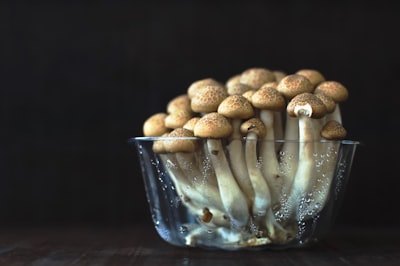
Growing mushrooms at home has become an unstoppable trend, and in 2026, the combination of traditional techniques with smart technology is taking this hobby to a professional level. Whether you live in a small apartment or a house with a garden, producing your own edible fungi is more accessible than ever. This guide walks you through each step, from choosing the species to harvesting, and how digital tools can optimize every stage.
First step: choose the right species. For beginners, oyster mushrooms (Pleurotus ostreatus) are the most recommended due to their fast growth and resilience. You can also try shiitake (Lentinula edodes) for a stronger flavor, or lion's mane (Hericium erinaceus) for its cognitive benefits. Each species requires slightly different substrate and conditions, but all share the need for a humid and ventilated environment.
Second step: prepare the substrate. The substrate is the material on which mushrooms grow. For oyster mushrooms, pasteurized wheat straw is ideal; for shiitake, hardwood sawdust; and for lion's mane, a mix of sawdust and bran. Pasteurization or sterilization eliminates competitors like molds and bacteria. You can do this at home with hot water (65-80 °C for one hour) or using a pressure cooker.
Third step: inoculate the substrate. Once cool, the substrate is mixed with the spawn (grain colonized by mycelium). This mixture should be kept in a clean container (plastic bags with filters or glass jars) at a constant temperature (20-25 °C) for the first two to three weeks, until the mycelium fully colonizes the substrate.
Fourth step: create the fruiting environment. When the mycelium has colonized the substrate, it is time to induce fruiting by lowering the temperature (around 15-18 °C) and increasing humidity to 85-95%. Indirect light is necessary for mushrooms to develop shape and color. A household humidifier can help, but manual control is tedious.
This is where technology comes in. Companies like Q2BSTUDIO develop custom software applications that automate watering, ventilation, and temperature control using IoT sensors. Integrated with AWS or Azure cloud, these systems collect real-time data and offer BI dashboards (Power BI) to monitor each crop's performance. AI agents can even be implemented to learn optimal conditions and adjust parameters automatically, preventing losses from mold or dehydration.
Fifth step: maintenance and prevention. During fruiting, check daily for humidity and potential contaminants (green or black mold). Cybersecurity is also relevant if you use connected devices: protecting system data and preventing unauthorized access is key. Q2BSTUDIO offers artificial intelligence and cybersecurity services to ensure your technological infrastructure is robust.
Sixth step: harvest and post-harvest. Mushrooms are ready when caps unfold but before they start releasing spores. Cut them with a clean knife. You can get several flushes from the same substrate if you maintain proper conditions. To preserve them, dehydrate or refrigerate for up to a week.
In 2026, the combination of home techniques with custom software solutions is democratizing mushroom cultivation. You no longer need to be an expert: AI agents and BI panels help you make informed decisions. If you want to take the leap to a professional system, contact Q2BSTUDIO to develop an application to control your smart greenhouse, or simply start with a basic kit and scale up. Your next harvest is closer than you think.


