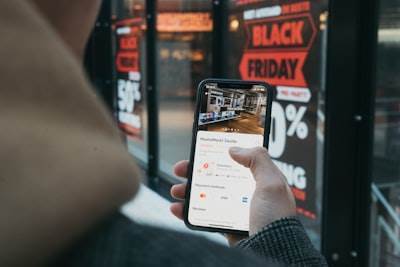
Augmented Reality (AR) is redefining retail in ways that go far beyond a simple technological novelty. For businesses looking to stay competitive, integrating AR is not just an option but a key strategy to transform customer experience and optimize operations. Unlike what many think, AR is not limited to social media filters; its real impact on retail spans from product visualization at home to intelligent in-store assistance. In this article, we will explore from a technical and business perspective how AR is changing the game, what underlying technologies make it possible, and how companies can effectively implement it with the support of specialized technology partners like Q2BSTUDIO.
One of the biggest challenges of traditional retail is customer uncertainty when buying without seeing the product in its real context. AR solves this by allowing digital objects to be superimposed on the physical environment through the mobile device camera. For example, a customer can place a virtual sofa in their living room to evaluate size, color, and style before purchasing. This capability not only boosts consumer confidence but also drastically reduces return rates, a problem that costs billions to the industry annually. Technically, this requires high-precision 3D models, real-time rendering engines, and spatial tracking algorithms. This is where the custom software we develop at Q2BSTUDIO comes into play, tailored to each business's specific needs.
For AR to work smoothly, the technological infrastructure is critical. We need a robust backend to manage heavy workloads, such as image processing and real-time data synchronization. Cloud AWS/Azure platforms offer the scalability and computing power needed to deploy AR experiences without latency. Additionally, user data security is paramount: when collecting information about shopping preferences and behaviors through the camera, companies must ensure compliance with regulations like GDPR. That is why at Q2BSTUDIO we integrate cybersecurity solutions from the design phase, protecting both the company and the customer.
Artificial Intelligence (AI) is the engine that takes AR to the next level. AI agents can analyze user interactions with 3D models and offer real-time personalized recommendations. For instance, if a customer virtually tries on sunglasses, an AI agent can suggest other accessories that match the detected style. Moreover, AI allows AR systems to learn from each session, improving tracking accuracy and overlay quality. At Q2BSTUDIO we develop conversational and predictive AI agents that integrate seamlessly with e-commerce platforms, creating an intuitive and adaptive shopping experience.
Another fundamental pillar is data analysis. AR generates a wealth of information about how customers interact with virtual products: which colors they prefer, how much time they spend on each model, what combinations they make. With Business Intelligence (BI) tools like Power BI, we can transform that data into actionable dashboards that help retailers make informed decisions about inventory, promotions, and store design. For example, if data shows that a blue sofa receives 40% more interactions than the gray one, the company can adjust its stock accordingly. At Q2BSTUDIO we help implement these BI systems, connecting AR with the core business intelligence.
Implementing AR is not without challenges. The biggest hurdle is technical complexity: developing an AR experience that works across a wide range of devices (iOS, Android, web) requires deep knowledge of engines like Unity or ARKit, as well as performance optimization. Additionally, the initial cost can be high without a modular and scalable approach. That is why we recommend starting with a pilot focused on the highest-turnover products or those generating the most returns, measuring impact with clear ROI metrics. Q2BSTUDIO offers consulting and development services to guide companies through this process, from MVP definition to production deployment.
The future of AR in retail is promising and accelerating with the arrival of wearable devices like smart glasses. The trend points toward immersive experiences that combine AR with virtual reality (VR), creating hybrid stores where customers can interact with digital and physical products simultaneously. Integration with the Internet of Things (IoT) will allow, for example, a customer to see how an appliance fits in their kitchen while the system automatically checks electrical compatibility. All this requires a solid technological foundation including cloud AWS/Azure for edge processing, AI for personalization, and cybersecurity to protect data.
For companies wanting to take the leap, partnering with a team that understands both technology and business is crucial. At Q2BSTUDIO, we specialize in Artificial Intelligence and custom software development, and we have helped retailers implement AR solutions that increase conversions and reduce returns. If you are considering integrating AR into your store, we invite you to explore how our custom applications can transform your business. AR is not a distant future; it is a tool available today for those who dare to innovate.