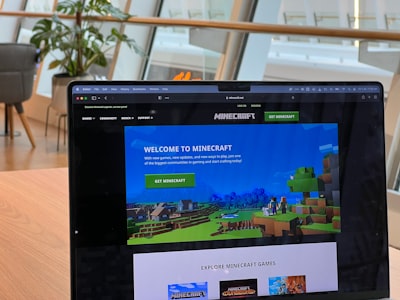
After 17 years since its original release, Mojang has updated the system requirements for Minecraft Java Edition, raising the RAM recommendation to 16 GB. This change, reflecting the game's evolution with larger worlds, complex biomes, and support for advanced shaders and mods, has sparked debate in the community. However, from a technical perspective, it is a clear sign that modern video games demand more powerful hardware, even for titles that appear simple.
The decision to increase requirements does not surprise developers working with Java-based engines. The exponential growth of textures, rendering mechanics, and mob artificial intelligence have pushed memory management to its limits. Minecraft, although visually minimalist, uses a chunk system that constantly loads and unloads map data. With updates in recent years, RAM consumption has far exceeded the previously recommended 8 GB. For players running heavy modpacks or servers with many users, 16 GB becomes a practical standard.
From a business perspective, this change impacts several sectors. Hardware manufacturers see an opportunity to upgrade equipment, while cloud service providers must adjust their offerings. This is where companies like Q2BSTUDIO, specialized in custom software, can make a difference. If a studio needs to migrate its game infrastructure to the cloud to support massive multiplayer sessions, having a partner that understands both software development and resource optimization is key. For example, implementing cloud AWS/Azure allows dynamic scaling of processing capacity and memory, essential when minimum requirements double.
Artificial intelligence also plays a growing role in game optimization. From smarter procedural generation systems to AI agents that simulate human behavior in stress tests, using AI can reduce the load on local resources. Q2BSTUDIO develops AI agents capable of monitoring server performance in real time and automatically adjusting parameters, preventing FPS drops or memory saturation. Additionally, cybersecurity becomes critical when players connect their private worlds to public networks; pentesting and DDoS protection solutions are increasingly in demand.
Another relevant aspect is Business Intelligence. With increased requirements, developers need to analyze large volumes of telemetry data to understand how players use hardware. Tools like Power BI allow visualization of RAM, CPU consumption, and load times, facilitating informed decisions on future optimizations. Q2BSTUDIO offers BI services that integrate these metrics into custom dashboards, helping independent studios compete with large companies.
In short, the change in Minecraft Java Edition requirements is not a whim but a natural consequence of the game's maturity. For users, it means additional hardware investment or an opportunity to explore cloud options. For technology companies, it represents a niche where services like those of Q2BSTUDIO —custom software development, cloud, AI, cybersecurity, and BI— become strategic allies. The coming years will see more titles following this trend, and being prepared will make the difference between a smooth experience and frustrating performance.