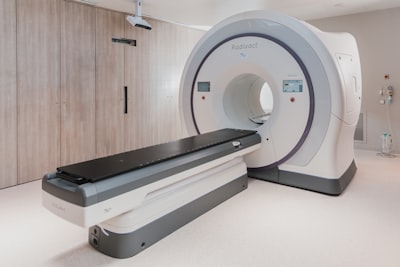
Medicine is undergoing a quiet revolution that comes not from big pharmaceutical corporations or expensive diagnostic equipment, but from 3D printing workshops and creative minds willing to democratize technology. A team of researchers has managed to build a portable MRI machine for less than $70,000 — a price that contrasts with the millions that traditional systems cost. This breakthrough not only lowers the economic barrier but also opens the door to diagnostic imaging in rural communities, small clinics, and conflict zones where a conventional scanner is unthinkable.
The device, built with 3D-printed components and consumer electronics, uses a low-field permanent magnet instead of the huge superconducting magnets that require liquid helium. This makes it lightweight (around 150 kg) and transportable in a pickup truck. Image quality, although inferior to a high-field hospital system, is sufficient to detect brain tumors, musculoskeletal injuries, and vascular problems. The total material cost is around $70,000, but the creators believe that with mass production it could drop to $50,000.
Behind this innovation lies a software ecosystem as crucial as the hardware. Signal acquisition, image processing, and 3D reconstruction depend on custom software that optimizes algorithms for weak magnetic fields. This is where companies like Q2BSTUDIO can make a difference. Developing custom applications for such devices involves integrating signal processing libraries, user interfaces tailored to non-specialist medical staff, and security protocols for transmitting sensitive data. AI also plays a key role: deep learning models help improve the resolution of low-field images, reduce noise, and speed up scanning times.
From a business perspective, the portability of this scanner opens up new business models. A health tech company could offer it as a service (MRI-as-a-Service) to remote district hospitals. Cloud AWS/Azure infrastructure enables remote storage and processing of images, while BI/Power BI tools analyze usage trends and predictive maintenance. Cybersecurity is essential, as patient data must comply with regulations like HIPAA or GDPR. Therefore, encryption and authentication protocols must be integrated from the design phase, something Q2BSTUDIO provides expertise in through its cybersecurity services.
Furthermore, AI agents can automate the workflow: one agent calibrates the magnet before each session, another monitors magnetic field stability, and a third generates preliminary reports in natural language for the radiologist. This automation not only speeds up diagnosis but also reduces the burden on healthcare professionals. The software modularity allows each agent to be developed independently and integrated via APIs — an approach that Q2BSTUDIO applies in its process automation projects.
From a technical standpoint, the main challenge has been compensating for the low signal-to-noise ratio. Researchers used sensor compression techniques and averaging of multiple acquisitions. However, for such a device to be commercially viable, it needs robust software that manages the processing pipeline. AI based on generative adversarial networks (GANs) has shown promise for synthesizing high-quality images from sparse data. Transformers are even being explored to understand anatomy and predict regions of interest.
Sustainability is another relevant aspect. By not requiring helium, the device eliminates dependence on an increasingly scarce and expensive resource. Additionally, 3D-printed components can be manufactured locally with desktop printers, reducing the carbon footprint of transportation. Plastic parts are combined with standard electronics like Arduino or Raspberry Pi boards (for control) and low-cost signal amplifiers. This turns the scanner into an open-source hardware project where the community can contribute to improving both the design and the custom software.
In terms of market, the $70,000 price tag is far below the $2–3 million of a conventional MRI, but it still requires investment. For small clinics or telemedicine projects, leasing or joint purchasing through cooperatives could be the solution. Insurers are also interested: a portable scanner reduces the costs of referring patients to large hospitals. The business model can rely on cloud AWS/Azure to offer scalable storage and on-demand processing without the client having to invest in local servers.
Integration with hospital information systems (HIS) is another critical point. Custom software that connects the scanner to the existing PACS must be compatible with standards like DICOM. Here, Q2BSTUDIO's cross-platform development experience enables applications that work on both Windows and Linux environments, common in healthcare settings. Moreover, BI/Power BI tools can generate real-time dashboards on equipment status, productivity, and usage patterns, helping management make informed decisions.
Finally, training and cybersecurity go hand in hand. Operators of these devices will not be physicists but radiology technicians with basic knowledge. The software must be intuitive and include integrated tutorials. Cybersecurity must protect against potential attacks that could modify images or steal patient data. Q2BSTUDIO offers pentesting and auditing services to ensure the system is robust from day one. Additionally, implementing AI agents that detect network traffic anomalies can alert on intrusions before they cause damage.
In conclusion, the 3D-printed portable MRI machine is much more than an engineering achievement. It is a case study of how the convergence of accessible hardware and intelligent software can transform healthcare. For this technology to reach its full potential, it needs an ecosystem of custom applications, AI, cloud, cybersecurity, and BI that only specialized companies like Q2BSTUDIO can provide in a comprehensive manner. The future of diagnostic imaging is portable, open, and affordable — and software is the key that makes it possible.