
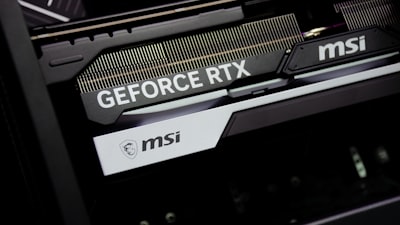
The MSI MAG Z890 Tomahawk WiFi II motherboard arrives with a clear proposition: offer a solid foundation for Intel Core Ultra 200 processors without inflating the price with superfluous features. In an ecosystem where flagship models compete to include the most ports, heatsinks, and LEDs, the Tomahawk WiFi II opts for efficiency and balance. It is a smart choice for those who prioritize pure performance over aesthetic flash.
Built on the LGA1851 socket and Z890 chipset, this board supports high-speed DDR5 memory, up to 8600 MT/s when overclocked, and features a 16+1+1 phase VRM with 80A DrMOS capable of handling even the most demanding processors, like the Intel Core Ultra 9 285K. Cooling is adequate thanks to enlarged heatsinks covering power components, a dedicated chipset cooler, and thermal pads on M.2 slots. Expansion includes a reinforced PCIe 5.0 x16 slot with metal shielding, four M.2 slots (two PCIe 5.0, two PCIe 4.0, all with heatsinks), and next-gen Wi-Fi 7 connectivity alongside a 2.5GbE Ethernet port. The rear I/O panel features multiple USB ports: one USB-C 20Gbps, four USB 3.2 Gen2, four USB 2.0, plus optical and analog audio outputs driven by a Realtek ALC897 codec. The Click BIOS 5 offers a clean interface with XMP profiles, voltage tuning, and fan control. The board also includes a BIOS flashback button without CPU and a debug LED.
Compared to higher-end models like the MSI MEG Z890 ACE or Carbon WiFi, the Tomahawk removes a second LAN port, a premium audio codec, and more elaborate heatsinks, allowing a significant price reduction to the $250-300 range. For most users, these omissions don't affect real-world performance. In productivity and gaming benchmarks, the Tomahawk performs on par with its pricier siblings, maintaining stability under heavy loads. Overclocking enthusiasts will find enough headroom to push their CPUs, with memory reaching 8000 MT/s easily. VRM temperatures stay below 70 °C under sustained stress thanks to efficient dissipation.
From a business perspective, the MSI MAG Z890 Tomahawk WiFi II represents an interesting option for building workstations dedicated to application development, artificial intelligence, and data analytics. The combination of ultra-fast storage (M.2 Gen5), low-latency networking (Wi-Fi 7 and 2.5GbE), and support for up to 192 GB of RAM makes it an ideal foundation for development environments and test labs. Companies like Q2BSTUDIO, specializing in custom software development, leverage this kind of hardware to implement AI solutions, AI agents for process automation, cybersecurity systems, and Business Intelligence platforms with Power BI. With a stable motherboard, engineers can run Docker containers, virtual machines, and machine learning workflows without bottlenecks. Integration with cloud services from AWS and Azure is seamless when adequate connectivity is available, and this board delivers exactly that. Those looking to scale operations can rely on cloud services from AWS and Azure to complement local compute capacity with elastic resources. Additionally, cybersecurity is reinforced with integrated TPM 2.0 and secure boot capabilities, key features for enterprise environments.
The build quality of the 6-layer PCB and solid capacitors ensures a long lifespan, even under continuous operation. In stress tests, the board remained stable for weeks, making it suitable for small servers or 24/7 workstations. For a company like Q2BSTUDIO, which develops custom applications and deploys them both on-premises and in the cloud, reliable hardware is as important as the software itself. Therefore, this motherboard becomes an ideal candidate for their development and continuous integration labs.
In summary, the MSI MAG Z890 Tomahawk WiFi II is a motherboard that doesn't disappoint. It trims the excess to deliver excellent performance at a more accessible price. It is perfect for builders who want a modern and reliable platform without paying for extras they'll never use. Whether for gaming, content creation, or as a workstation for technological development, this board delivers. The synergy between robust hardware and software companies like Q2BSTUDIO demonstrates that today's tech ecosystem requires both sides to work together for optimal results in the age of AI and cloud computing.

