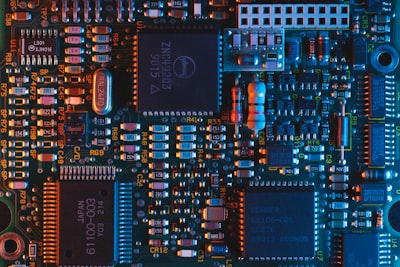
The global memory industry is in a perfect storm. The combination of explosive demand driven by artificial intelligence, data centers, and consumer devices, along with insufficient manufacturing capacity, has driven DRAM and NAND Flash prices to historic highs. This phenomenon, colloquially known as the “RAMpocalypse”, threatens to choke the technology supply chain for at least the next three to four years. In this context, two emerging Chinese manufacturers, YMTC (Yangtze Memory Technologies Co.) and CXMT (ChangXin Memory Technologies), have begun to be seen as a possible relief valve by major assemblers like Apple, Dell, and HP. However, a legislative move in the United States seeks to cut off that alternative at the root, prohibiting U.S. companies from purchasing these chips. This article analyzes the technical, business, and strategic implications of this possible ban, and how companies can prepare with intelligent software solutions.
To understand the drama, one must first grasp the nature of memory as a technological commodity. Unlike logic processors (CPU, GPU), which depend on proprietary microarchitectures and specialized software, DRAM and NAND memory are manufactured under widely accepted industry standards. This means that, in theory, one manufacturer can replace another relatively easily, as long as the chips meet the interface and performance specifications. It is precisely this fungibility that has led YMTC and CXMT to be evaluated by major OEMs. Their products, although not always cutting-edge in speed or density, offer significantly lower cost per gigabyte, thanks to heavy state subsidies and an aggressive pricing strategy. For PC, server, and mobile device manufacturers, turning to these Chinese suppliers would provide immediate relief from the record prices imposed by the three traditional giants: Micron (U.S.), Samsung, and SK Hynix (South Korean).
But that escape route is in serious danger. U.S. Representatives John Moolenaar (R-MI) and George Whitesides (D-CA) have sent a letter to Commerce Secretary Howard Lutnick urging the Trump administration to close what they see as a legal loophole. Currently, YMTC is on the Bureau of Industry and Security (BIS) Entity List, which prohibits the export of U.S. chipmaking technology to the company, but does not prevent U.S. companies from buying its finished products. Meanwhile, CXMT is on the Department of Defense’s (DoD) Section 1260H list as a “Chinese Military Company,” which creates stigma but also does not block commercial transactions. The lawmakers want an executive order or agency directive explicitly prohibiting any U.S. person or entity from procuring memory components from YMTC, CXMT, or any other firm on those lists. They argue that allowing these purchases would not only indirectly subsidize the Chinese People’s Liberation Army, but also flood the Western market with subsidized chips, pushing prices below the profitability threshold of allied manufacturers and destroying the domestic industrial base.
Beyond the geopolitical debate, there is an inescapable technical reality: expanding memory manufacturing capacity takes years. Building a new wafer fab requires between four and six years from groundbreaking to volume production. The plans by Micron, Samsung, and SK Hynix for new fabs in the U.S. and South Korea will not bear fruit until 2027 or 2028 at the earliest. That means that even if Chinese memory were completely banned, prices would remain high for at least that horizon. Technology companies thus face a dilemma: pay high prices for years, risk sanctions by buying from the Chinese, or find smarter ways to manage their memory resources through optimized software.
This is where the role of a software development company like Q2BSTUDIO becomes critical. Instead of relying solely on cheaper hardware purchases, organizations can implement custom software applications that reduce unnecessary memory consumption, optimize caching processes, and distribute workloads between local and cloud resources. For example, a business intelligence (BI) application built on Power BI and hosted in the cloud (AWS or Azure) can minimize local memory usage by offloading heavy calculations to cloud services, avoiding the need to purchase servers with large amounts of DRAM. Similarly, migration to cloud AWS/Azure allows dynamic scaling of memory resources, paying only for what is consumed and avoiding investments in rapidly depreciating hardware.
Cybersecurity also plays a crucial role. With increasing geopolitical tension, implementing robust cybersecurity measures is essential, especially if considering memory suppliers of Chinese origin. Data integrity monitoring and anomaly detection software can alert about potential backdoors or data leaks. Q2BSTUDIO offers pentesting and security audit services that help companies certify their supply chains are not compromised.
Another innovation front is AI agents. These intelligent systems can analyze memory usage patterns in real time within an organization, predict demand spikes, and suggest automatic reconfiguration of resources. For instance, an AI agent trained on historical Power BI data can decide when to move certain reports to cold cloud storage to free DRAM for critical tasks. The combination of AI and Business Intelligence with Power BI allows proactive memory management, reducing dependence on expensive hardware or politically sensitive suppliers.
Process automation is also key. Through automation software, companies can orchestrate workflows that deploy and scale containers efficiently, minimizing memory consumption in production environments. Platforms like Kubernetes, combined with custom monitoring tools, can dynamically adjust memory allocations based on real-time load, avoiding the overprovisioning that so inflates costs.
In summary, the possible ban on Chinese memory will not solve the RAMpocalypse in the short term, and could even worsen it by removing a source of competitive prices. However, companies are not defenseless. The key lies in a dual strategy: on one hand, diversify supply sources within legal restrictions; on the other, invest in intelligent software that optimizes the use of every gigabyte of available memory. Q2BSTUDIO, as a technology partner, offers everything from custom applications to cloud solutions, artificial intelligence, cybersecurity, and automation that allow navigating this storm with greater resilience. Memory will remain a costly and strategic resource, but with the right tools, its impact on costs can be significantly mitigated.