
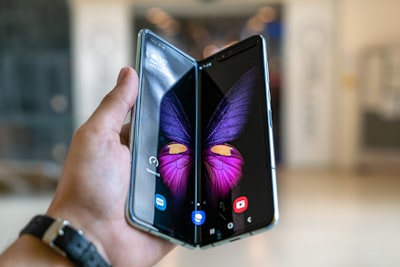
The leaks about the Samsung Galaxy Z Fold 8 have shaken the tech world. Just days before the July 22 launch event, renowned leaker Evan Blass published images revealing a significant redesign: a wider screen and a shorter profile, moving away from the elongated format of previous generations. This change not only impacts the user experience but also poses new challenges and opportunities for developers and companies looking to maximize the potential of foldable hardware. In this article, we analyze the leaked specifications in detail, the market context, and how software innovation—from custom applications to artificial intelligence—can enhance these devices.
According to the images shared by Blass, the Galaxy Z Fold 8 will feature a Qualcomm Snapdragon 8 Elite For Galaxy processor, a dual rear camera (50MP main and ultrawide), and two 10MP selfie cameras (inner and outer). The battery promises up to 26 hours of video playback, a significant leap over previous models. Additionally, an Ultra variant, the Galaxy Z Fold 8 Ultra, is rumored, potentially including further display and performance improvements. This wide-screen redesign aims to directly compete with Google's Pixel Fold square format and offer an experience closer to a compact tablet when unfolded.
From a technical perspective, the change in aspect ratio means that applications must adapt to an uncommon screen ratio. Apps designed for traditional phones may display black bars or incorrect scaling. This is where the development of custom software becomes relevant, optimizing the interface for foldable screens and leveraging the extra space and multitasking capabilities. Companies like Q2BSTUDIO, specialized in software engineering, already work on solutions that allow brands to integrate exclusive functionalities for these devices, from interactive dashboards to business productivity tools.
The foldable ecosystem does not rely solely on hardware. The cloud plays a fundamental role in synchronizing data between folded and unfolded modes, as well as offering seamless streaming and storage services. Therefore, companies betting on this format often require robust cloud AWS/Azure infrastructures capable of handling demand spikes and ensuring low latency. Q2BSTUDIO has helped multiple organizations migrate their systems to the cloud, implementing scalable architectures that adapt to the needs of modern mobile applications.
Artificial intelligence is another key pillar. With the power of the Snapdragon 8 Elite, the Galaxy Z Fold 8 can run AI models locally, from virtual assistants to real-time image recognition. This opens the door to AI agents that personalize the user experience, such as automatic document summaries or contextual recommendations. Companies can integrate these agents into their own apps via APIs or by developing custom AI solutions, a service that Q2BSTUDIO offers by combining pre-trained models with corporate data to create intelligent assistants tailored to each sector.
Cybersecurity cannot be overlooked. A foldable device with multiple sensors and constant connectivity represents a larger attack surface. Data leaks or unauthorized camera access are real risks. Therefore, any company developing software for these devices must implement robust security practices, such as end-to-end encryption and biometric authentication. Q2BSTUDIO includes cybersecurity audits in its development processes, ensuring that applications meet the highest standards.
In the business arena, data analytics is essential to understand how users interact with new screen form factors. With the proliferation of sensors and usage modes, Business Intelligence tools like Power BI allow visualizing metrics of productivity, usage time, and content preferences. Integrating BI/Power BI into corporate applications for foldables can provide valuable insights to product teams. Q2BSTUDIO has experience connecting data sources with customized dashboards, facilitating data-driven decision-making.
The launch of the redesigned Galaxy Z Fold 8 also drives process automation. Companies already using digital workflows can benefit from the foldable screen to visualize and manage complex processes more intuitively. For example, an ERP system adapted to a wide screen allows viewing multiple panels simultaneously. Q2BSTUDIO develops automation solutions that integrate with existing systems, improving operational efficiency without disruptive changes.
In conclusion, the leak of the Samsung Z Fold 8 with a wider screen is not just hardware news; it reflects where mobile computing is heading: versatile devices that demand equally versatile software. Companies wanting to capitalize on this trend must invest in custom application development, cloud infrastructure, artificial intelligence, cybersecurity, and data analytics. With technology partners like Q2BSTUDIO, it is possible to transform an innovative device into a powerful business tool, fully leveraging the capabilities of Samsung's new foldable.


