Deploying Eclipse Dataspace Components (EDC) connectors on AWS immediately raises the challenge of balancing data sovereignty, performance, and costs. Without a clear roadmap, organizations risk over-provisioning infrastructure or, conversely, compromising service availability. This article examines the factors that truly impact the monthly budget and proposes validated optimization strategies, based on the experience of Q2BSTUDIO as a software development and technology company specialized in cloud architectures.
To understand the cost structure, one must first distinguish between components managed by a Dataspace Governance Authority (DSGA) and those maintained by each participant. The EDC connector is the responsibility of the data provider and consumer, and it accounts for most of the infrastructure spending. The key drivers are data volume, transaction velocity, and reliability requirements. In real scenarios, storage and database represent 50-70% of total cost, followed by compute capacity and load balancing.
Consider two typical workload profiles. In a business-critical deployment, where high availability and performance are non-negotiable, database instances such as Aurora PostgreSQL with dedicated resources (e.g., db.r6g.large with 2 vCPU and 16 GB RAM), always-on containers with AWS Fargate, and a network load balancer are used. The estimated monthly cost is around 380-400 USD for 5 GB of data, 20 GB of network traffic, and 100,000 API calls. For development, testing, or non-critical loads, costs can be reduced by up to 58% using smaller instances (db.t4g.medium) and Fargate Spot, which saves up to 70% on compute. In this case, the monthly cost drops to about 160-170 USD while maintaining the same data throughput.
Optimization goes beyond choosing the right size. Custom software development experience shows that real savings come from aligning infrastructure with actual workload behavior. For example, using Aurora Serverless v2 allows the database to scale automatically based on demand, eliminating the need to provision for peaks. Likewise, applying S3 Lifecycle policies to move historical data to cheaper storage tiers (such as S3 Intelligent-Tiering or Glacier) reduces retention costs without sacrificing accessibility.
From a performance perspective, computational efficiency is key. AWS Graviton-based instances (like the r6g and t4g families) offer better price-performance and lower energy consumption, also contributing to sustainability. For workloads that can tolerate interruptions, using Fargate Spot can save up to 70% compared to on-demand. Additionally, designing data transfer patterns that avoid unnecessary movement—for example, caching federated catalogs locally or compressing large volumes before sending—reduces both transfer time and network costs.
Cybersecurity is another pillar influencing cost design. A sovereign data space requires robust authentication (e.g., AWS Cognito for M2M OAuth tokens), secret management with AWS Secrets Manager, and encryption at rest and in transit. Although these services have low unit costs, their integration must be planned from the start to avoid rework that increases expenses. In this regard, Q2BSTUDIO offers cybersecurity services that help implement controls without blowing the budget.
Artificial intelligence (AI) and AI agents are also beginning to play a role in cost optimization in EDC environments. For instance, models can be trained to predict demand spikes and automatically scale compute resources before bottlenecks occur. Similarly, AI-based chatbots or assistants can automate maintenance tasks such as secret rotation or log cleanup, reducing manual intervention and human errors. At Q2BSTUDIO we promote AI solutions that integrate naturally into AWS and Azure cloud architectures.
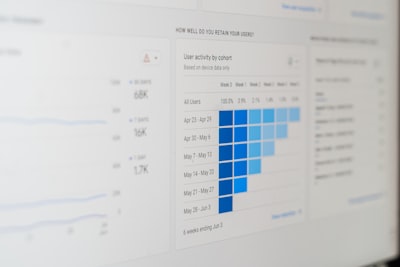
Business intelligence (BI), through tools like Power BI, also contributes to optimization. Visualizing resource usage metrics (CPU, memory, API calls) in dashboards allows quick identification of inefficiencies. Monthly cost analysis with AWS Cost Explorer combined with budget alerts helps maintain control. Companies adopting these practices often discover that 20% of services consume 80% of the budget, and acting on that 20% yields the greatest savings.
Sustainability is another increasingly relevant aspect. The better provisioned resources are utilized, the lower the carbon footprint. Turning off non-production environments outside business hours, selecting efficient instance types, and minimizing unnecessary data transfers are actions that reduce both economic cost and environmental impact. Q2BSTUDIO, as a technology partner, integrates these principles into its AWS and Azure cloud projects, ensuring every euro invested in infrastructure delivers maximum return.
In conclusion, optimizing costs for EDC connectors on AWS is not a one-time task but a continuous process combining service selection, monitoring, intelligent scaling, and the use of technologies like AI and BI. The key lies in understanding real usage patterns and applying the right strategies for each workload type. With the support of a specialized partner like Q2BSTUDIO in cloud services, organizations can deploy sovereign data spaces with confidence that their investment aligns with business needs and sustainability goals.