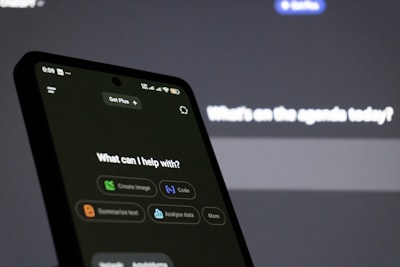
Artificial intelligence has transformed the interaction between companies and users, but its automatic implementation in customer responses is generating a growing problem: errors that can cost reputation, trust, and even money. When a chatbot rejects a security report with automated and false excuses, or when a virtual assistant cancels accounts without warning, it becomes clear that unsupervised automation is a risk. It is time to rethink the role of AI agents and set limits on their autonomy.
The current trend in many organizations is to delegate critical functions — such as customer service, incident management, or even technical support — to generative AI systems. These models, trained on large volumes of data, can draft convincing responses, but they also produce hallucinations and erroneous reasoning with complete confidence. A bot that decides on its own that a security hole 'falls outside the threat model' without proper evaluation is not just ineffective, but dangerous.
The problem is not only technical: it is about governance. When a company deploys a chatbot without human validation, it assumes the risk that its incorrect responses will multiply. We have seen cases where bots lied about cancellation policies, confused election dates, or worse, deleted customer data. Legislation is already beginning to hold companies accountable for the actions of their virtual assistants, as happened with airlines that had to compensate passengers for false information provided by a chatbot.
To avoid these scenarios, organizations need a more robust approach. Instead of relying solely on automatic responses, they must integrate AI systems with human oversight and validation processes. This is where companies like Q2BSTUDIO provide real solutions. We develop custom software that combines the power of AI with quality and security controls. It is not about eliminating automation, but designing it correctly.
Cybersecurity is another area where automated responses often fail. A support bot that rejects a vulnerability report because 'it does not fit the model' can expose an entire cloud infrastructure. That is why at Q2BSTUDIO we offer cybersecurity and pentesting services that evaluate not only the software, but also the automation processes. Furthermore, our cloud AWS and Azure solutions ensure secure and scalable environments where AI operates under defined rules.
Another critical front is business intelligence. When an AI agent provides incorrect data to a client, trust in BI systems erodes. Companies need AI-generated reports and dashboards that are accurate and verifiable. At Q2BSTUDIO we develop Business Intelligence solutions with Power BI that include human validation layers, preventing a bot from 'inventing' metrics or conclusions.
Process automation also benefits from a hybrid approach. AI agents can execute repetitive tasks, but when they interact with users — especially in sensitive contexts like customer service or technical support — they must have limits. At Q2BSTUDIO we create automation systems that integrate AI with human approval workflows, ensuring that no harmful response is sent without review.
The key is to understand that AI is not a substitute for human judgment, but a tool that must be governed. Companies that continue to blindly trust automated responses are playing with fire. It is time to end that model and adopt an approach where AI assists, but does not decide alone. At Q2BSTUDIO, we help organizations implement secure technology solutions, from custom software development to the integration of AI agents with expert supervision. The future is not total automation, but responsible automation.