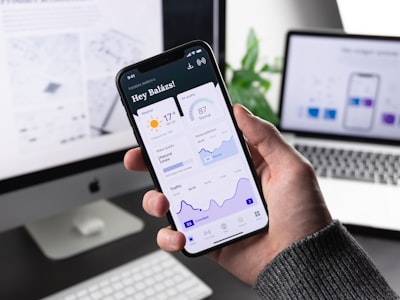
In today's business environment, mobility is no longer a luxury but a strategic necessity. When evaluating whether enterprise software is compatible with mobile devices, the answer cannot be limited to a simple 'yes' or 'no.' The real issue lies in how that compatibility is integrated into business processes, data security, and user experience. Many organizations assume that a responsive web version is sufficient, but the reality of field work, urgent approvals, and real-time decision-making demands much more.
Modern enterprise software must deliver an equivalent or even superior experience to desktop, adapted to mobile contexts with touch interfaces, optimized performance, and intermittent connectivity. It is not just about shrinking a screen, but about redesigning workflows so that a salesperson, a maintenance technician, or an executive can perform critical tasks from their phone or tablet without friction. This is where custom software makes the difference over generic solutions. A tailored development allows modeling exactly the processes of each department, from inventory management to budget approval, ensuring that every mobile interaction delivers real value.
To achieve effective mobile compatibility, companies must consider multiple technology layers. First, cloud infrastructure plays a fundamental role. Services like AWS or Azure not only provide scalability but also enable real-time data synchronization across devices without relying on local servers. Cloud AWS/Azure offer secure and flexible environments to deploy enterprise applications that respond with low latency even on limited mobile connections. Furthermore, integrating artificial intelligence (AI) into these environments allows, for example, an AI agent to assist a mobile user with predictive recommendations or automated responses, improving productivity without increasing cognitive load.
Cybersecurity is another non-negotiable pillar in enterprise software mobile compatibility. Mobile devices are common attack vectors, so any solution must incorporate multi-factor authentication, end-to-end encryption, and granular access control policies. Companies that have suffered breaches due to lack of security in their mobile apps know that the cost is much higher than investing in data protection. Q2BSTUDIO addresses this challenge with security audits and penetration testing, ensuring that both native applications and progressive web apps meet the most demanding industry standards. Cybersecurity is not an add-on but a requirement from the design phase.
Another key aspect is business analytics. Mobile access to dashboards and Business Intelligence (BI) reports allows managers to make data-driven decisions from anywhere. Tools like Power BI can be integrated into enterprise applications to offer dynamic visualizations and contextual alerts. An executive who receives a push notification about a sales deviation can dive into the details from their mobile and act immediately, without waiting to get to the office. The combination of mobile BI with generative AI is opening new possibilities: virtual assistants that answer natural language questions about business performance, or AI agents that suggest corrective actions based on historical patterns.
Mobile compatibility also involves adapting to different operating systems and screen sizes. Progressive Web Apps (PWAs) have gained ground because they offer offline functionality and automatic updates without going through app stores, while native apps provide deeper access to device hardware (camera, GPS, sensors). The choice depends on the use case: for a sales team that needs to scan barcodes, a native app may be more efficient; for occasional report viewing, a PWA suffices. In any case, enterprise software must ensure a smooth and consistent user experience, with finger-optimized forms and menus adapted to small screens.
Beyond technology, successful adoption of mobile solutions requires a cultural shift. Employees must trust that the app is secure and makes their work easier, not that it adds bureaucracy. Training and continuous support are essential. Companies that have implemented enterprise mobile apps report significant reductions in response times, improved customer satisfaction, and a greater ability to scale operations without proportionally increasing headcount. In fact, automating processes through mobile workflows —such as approvals, incident notifications, or inventory updates— frees up manual work hours that can be dedicated to higher-value strategic tasks.
Q2BSTUDIO, as a software and technology development company, understands that mobile compatibility is not limited to the interface. Therefore, in its projects it integrates AI components to personalize the experience, cloud connectors for real-time synchronization, and security layers adapted to the context. Its teams perform field tests —environments with low coverage, multiple devices, and concurrent users— to verify that the solution works under real conditions. Additionally, they offer consulting services to help companies choose the most suitable architecture, whether a native app, a PWA, or a combination of both.
The future points to even smarter mobility, where AI agents anticipate user needs, virtual assistants manage routine tasks via voice, and augmented reality overlays operational data on the physical environment. Companies already investing in mobile-compatible enterprise software, with a focus on customization, security, and analytics, are better positioned to face digital transformation. The initial question —whether enterprise software is compatible with mobile devices— transforms into a more relevant one: how to design that compatibility to truly drive the business?
In conclusion, mobile compatibility of enterprise software is a multidisciplinary field covering UX design, cloud infrastructure, artificial intelligence, cybersecurity, and data analytics. It is not a cosmetic addition but a strategic decision that determines an organization's operational agility. Working with a technology partner that understands these layers and offers custom solutions, like Q2BSTUDIO, ensures that the investment in mobility generates tangible and sustainable returns over time.