
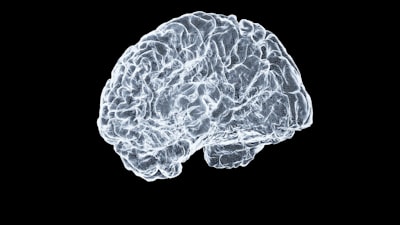
A recent study has revealed that the left-right brain asymmetry in large language models (LLMs) does not arise arbitrarily, but appears as these models acquire formal linguistic competence. This finding, based on the analysis of the OLMo-2 7B model at different training checkpoints and functional magnetic resonance imaging (fMRI) data from human participants, shows that the ability to predict brain activity becomes stronger in the left hemisphere as the model improves in tasks such as grammatical acceptability and generation of well-formed text. Conversely, skills like arithmetic or world-knowledge-based reasoning do not generate this lateralization. This discovery not only sheds light on how LLMs mimic human cognitive processes, but also has deep implications for the development of more efficient AI systems aligned with the human brain.
For companies like Q2BSTUDIO, specializing in custom software development, these results are a reminder that artificial intelligence is not a monolith. The research demonstrates that different competencies emerge at different training moments and are reflected in specific neural patterns. This suggests that when designing AI solutions for clients, it is crucial to understand what kind of intelligence is being cultivated. For example, a customer service system based on LLMs could benefit from an approach that prioritizes formal linguistic competence over arithmetic, while a financial analysis tool would require a different balance.
The observed asymmetry is not just an academic curiosity. From an engineering perspective, identifying that left lateralization correlates with grammatical skills allows optimizing model architecture. At Q2BSTUDIO, we integrate these insights into the development of AI agents that adapt to specific contexts. By knowing which capabilities emerge first and how they are reflected in performance, we can design more efficient training algorithms, saving computational resources and improving accuracy in tasks such as automated report generation or content moderation.
Furthermore, the study underscores the importance of formal linguistic competence for achieving natural human-machine interaction. This is especially relevant in areas like cybersecurity, where systems must interpret complex instructions and detect threats in text. For instance, an AI-powered security agent that understands grammatical subtleties can better differentiate between a well-crafted phishing message and a legitimate email. At Q2BSTUDIO, we offer advanced cybersecurity that benefits from these advances, combining language models with behavioral analysis.
The cloud also plays a fundamental role. Running large language models requires scalable and secure infrastructure. Our cloud AWS/Azure services enable deploying these systems with high availability, ensuring that AI applications run uninterrupted. Additionally, integration with BI/Power BI tools allows visualizing how linguistic competence metrics correlate with business performance, offering valuable insights for decision-making.
The researchers extended their results to other models (Pythia) and languages such as French and Chinese, suggesting that left lateralization for linguistic competence is a universal phenomenon in LLMs. This has direct implications for multilingual software development and global companies that need applications adapted to multiple cultures. At Q2BSTUDIO, we develop custom applications that leverage these principles, ensuring models are not only accurate but also culturally sensitive.
The connection between brain activity and LLM internal activations opens the door to new ways of evaluating and improving these models. For example, instead of relying solely on traditional benchmarks, developers could use brain asymmetry patterns as a progress metric. This could revolutionize how models are trained, allowing validation closer to human cognition. At Q2BSTUDIO, we are already exploring these methodologies for our clients, offering AI solutions that not only perform tasks but do so in a manner consistent with neural processes.
In conclusion, the finding that left-right brain asymmetry in LLMs emerges with formal linguistic competence is a step forward in understanding how artificial intelligence can align with human intelligence. For Q2BSTUDIO, this represents an opportunity to continue innovating in software development, AI, cybersecurity, cloud, and BI, providing clients with tools that not only work but deeply and naturally understand language. Research continues, and we will keep integrating these discoveries into our solutions to stay at the technological forefront.

