
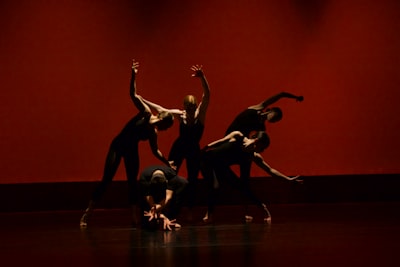
Music-driven dance generation has been one of the most fascinating fields in artificial intelligence applied to creativity. Traditionally, neural network-based systems achieved visually realistic movements, but they treated choreography as a continuous signal, ignoring its compositional nature. This resulted in structurally incoherent dances that were difficult to control. A new approach, inspired by human choreography, proposes modeling dance as a sequence of atomic movements: semantically interpretable events that serve as the fundamental building blocks of dance. This idea, presented in the paper 'Music-Driven Dance Generation via Atomic Movements' (arXiv:2607.13978v1), opens the door to commercial and technical applications that go far beyond entertainment.
To understand its impact, we must first grasp how that vocabulary of atomic movements is built. The researchers segmented large dance databases and grouped the fragments using clustering. Then, a large language model (LLM) refined the labels semantically, generating a reusable and interpretable set. With these annotations, they designed a two-stage generation framework: a planning stage where the model predicts the type, duration, and timing of each atomic movement conditioned on the music, and a completion stage where a transition-aware generator synthesizes smooth and coherent motion. The result is a dance with significantly improved structural coherence, rhythmic alignment, and perceptual naturalness compared to previous methods, while offering interpretability and controllable editing.
From a technical and business perspective, this paradigm has profound implications. The ability to decompose a choreography into discrete, reusable units allows not only generating dances but also editing, combining, and personalizing them with a level of control previously impossible. For example, a software development company like Q2BSTUDIO can integrate this model into custom applications for the entertainment, education, or advertising sectors. Imagine a content creation platform where users can select atomic movements from a library and combine them to the rhythm of their favorite music, all thanks to an AI system trained on choreographic data. This is not science fiction: it is a realizable product with current custom software development tools.
But the scope is not limited to dance. The principles of compositional modeling can extend to other domains, such as character animation in video games, robotics, or human motion simulation in virtual environments. In all these cases, the ability to plan and execute sequences of atomic actions is crucial to achieving natural and controllable behaviors. Q2BSTUDIO, with its expertise in AI and custom software, is in a privileged position to offer solutions that adapt this technology to each client's specific needs. Furthermore, the infrastructure required to train and deploy these models demands a robust and secure cloud. Here, cloud AWS/Azure services come into play, providing scalable computing power and massive data storage. Q2BSTUDIO helps companies migrate and optimize their workloads in the cloud, ensuring performance and predictable costs.
Another critical aspect is cybersecurity. When handling large volumes of sensitive data (such as body movements or musical preferences), AI-based platforms must comply with the highest protection standards. Q2BSTUDIO offers pentesting and security auditing services to ensure that both training data and real-time inferences are protected against unauthorized access. Additionally, integration with BI/Power BI systems allows analyzing model performance, detecting usage patterns, and optimizing user experience. For example, one can monitor which atomic movements are most popular, which combinations generate higher engagement, or how rhythmic coherence varies by musical genre. This information, visualized in interactive dashboards, facilitates data-driven decision-making.
The trend toward autonomous AI agents also finds an application here. An agent could act as a virtual choreographer: it receives a song, plans the sequence of atomic movements, executes it, and also asks for user feedback to refine future generations. These agents can be integrated into virtual assistants, fitness platforms, or show design tools. Q2BSTUDIO develops intelligent automation solutions that incorporate these agents, allowing companies to offer personalized services without manual intervention.
Finally, we cannot overlook the value of interpretability. Unlike black-box models, the explicit representation of atomic movements allows creators to understand and modify each step of the choreographic process. This is especially relevant in professional environments where fine control over the final result is required. Q2BSTUDIO provides custom applications that expose these variables to users, democratizing access to generative AI without sacrificing precision.
In conclusion, dance generation via atomic movements is not just an academic advancement; it is a technology that can transform entire industries. With the support of companies like Q2BSTUDIO, which combine expertise in AI, cloud AWS/Azure, cybersecurity, and BI/Power BI, it is possible to bring this innovation to scalable, secure, and tailored commercial solutions. The future of AI-generated dance is no longer just rhythmic and coherent: it is interpretable, controllable, and above all, practical.

