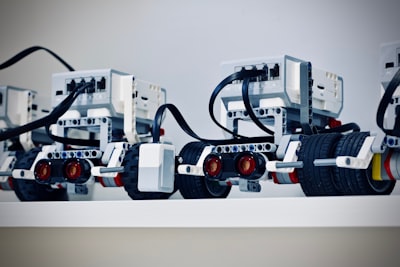
Semantic navigation of mobile robots guided by natural language represents a qualitative leap in human-machine interaction. This approach allows operators without technical training to give everyday instructions like 'go to the mailbox' or 'head to the reception desk,' and the robot correctly interprets the intention, locates the referenced object or place, and executes an autonomous navigation path. Behind this apparent simplicity lies a complex architecture integrating natural language processing, computer vision, and real-time motion planning.
From a technical standpoint, the fundamental challenge is transforming an ambiguous linguistic expression into a concrete action in the environment. For example, the phrase 'go to the mailbox' can vary depending on context: if the robot is already nearby, the destination is immediate; otherwise, it must plan a trajectory avoiding obstacles. Modern systems, such as the one in the conceptual reference article, employ modular frameworks based on ROS 2 (Robot Operating System 2) that separate language understanding, object detection using RGB-D cameras, and navigation goal generation. Each module communicates through services and topics, facilitating portability across different robotic platforms, from a TurtleBot3 to a quadruped Unitree Go2 robot.
The integration of advanced language models, together with deep learning techniques for object identification, allows the system not only to execute direct commands but also to interpret contextual requests. For instance, if the user says 'take me where you left the package yesterday,' the robot must recall past locations and reason about the temporal reference. This requires a semantic knowledge base and reasoning capabilities that are becoming feasible thanks to AI agents acting as intelligent intermediaries between the command and execution.
From a business perspective, developing such systems opens enormous opportunities for software and technology companies. Q2BSTUDIO, as a company specialized in custom software development, offers services to build semantic navigation platforms tailored to industries like logistics, hospitality, or industrial inspection. The key lies in combining AI with cloud infrastructure: language and vision models can run on AWS or Azure clouds, while the robot maintains a secure, low-latency connection. Cybersecurity is critical in these environments, as any breach could compromise both data integrity and the robot's physical safety. Therefore, the pentesting and communication protection solutions offered by Q2BSTUDIO are essential.
Another differentiating aspect is data analytics. Each navigation mission generates logs of position, response times, success rates, and encountered obstacles. With Business Intelligence (Power BI) tools, companies can visualize fleet performance in real time, identify usage patterns, and optimize routes. Q2BSTUDIO integrates these dashboards into its developments, providing customized control panels for each client.
The adoption of semantic navigation systems is not without challenges. The variability of natural language, cultural differences in spatial expressions, and the need to constantly update object models are technical obstacles requiring multidisciplinary teams. Furthermore, deployment in real-world environments like warehouses or shopping malls demands rigorous validation of safety and reliability. Here, the modular approach and expertise in custom software make the difference. Artificial intelligence applied to mobile robotics not only improves user experience but also reduces operational costs by eliminating the need for complex interfaces or specialized controllers.
A typical use case is task automation in hospitals: a robot receiving the order 'take this sample to the lab' must navigate corridors, avoid people, and open automatic doors. Thanks to natural language, healthcare staff communicate without interrupting their workflow. In logistics, voice-guided robots can receive picking instructions directly from the warehouse management system, optimizing the supply chain. In these scenarios, combining cloud AWS/Azure with AI agents allows scaling the solution to hundreds of robots without sacrificing performance.
Q2BSTUDIO brings its experience in developing modular architectures, integrating ROS 2 components with cloud services and semantic databases. Additionally, it offers consulting services to assess the technical and economic feasibility of implementing semantic navigation in each organization. The company also handles staff training and continuous support, ensuring a smooth transition to intelligent automation.
In summary, natural language-guided semantic navigation is transforming mobile robotics, making it accessible to non-expert users. Behind this technology lie disciplines such as language processing, computer vision, and autonomous planning, all powered by AI and cloud infrastructure. Companies like Q2BSTUDIO are leading this revolution, offering custom solutions that integrate cybersecurity, BI, and AI agents in a robust and scalable ecosystem. The future of human-robot interaction is conversational, and those who adopt these technologies today will be better positioned to compete in an increasingly automated market.