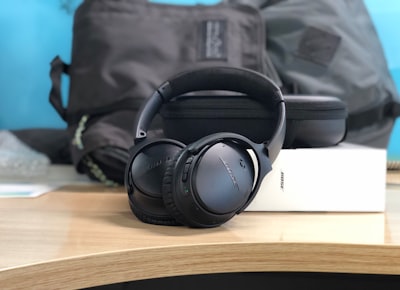
Skullcandy has made a new milestone in portable audio with the launch of the Crusher 1080 ANC, wireless headphones that promise overwhelming bass and active noise cancellation from Bose. The partnership between Skullcandy, known for its extreme low-end focus, and Bose, a leader in noise cancellation technology, has resulted in a product that seeks the best of both worlds: the sonic power that bass lovers adore and the technical sophistication for premium acoustic isolation. But beyond the listening experience, this launch sparks an interesting debate on how technology alliances can transform entire industries, from physical hardware to the software that controls it.
The major novelty of the Crusher 1080 ANC lies in its dual-driver architecture: a full-range driver for mid and high frequencies, and a dedicated driver exclusively for bass. This configuration allows the lows to be incredibly deep and vibrant, but Skullcandy admits that if the equalization is boosted too much, clarity in other frequencies is lost. To solve this, they have integrated Bose technologies, including the QuietControl ANC system, which adaptively adjusts noise cancellation based on the environment, and spatial audio with head tracking, creating an immersive experience. From a technical perspective, this kind of innovation requires very precise software development, both in the headphone firmware and in the companion apps that manage equalization and connectivity.
This is where companies like Q2BSTUDIO come into play. The design of smart headphones with adaptive noise cancellation and spatial audio demands complex signal processing algorithms, artificial intelligence models for ambient sound pattern recognition, and real-time control systems that are often deployed in the cloud. In fact, many hardware manufacturers turn to custom software applications to create user interfaces, calibration tools, and analytics dashboards that allow engineers to adjust parameters like frequency response or head-tracking latency. Without robust, scalable software, even the best hardware would be underutilized.
The active noise cancellation (ANC) of the Crusher 1080 ANC, based on Bose's QuietControl technology, not only improves the listening experience but also poses challenges in cybersecurity. Modern headphones are constantly connected to mobile devices and voice assistants, collecting data about listening habits, location, and even movement patterns. Ensuring that this information is not vulnerable to attacks or leaks is a priority, and more manufacturers are integrating security measures into firmware and Bluetooth communications. Software development companies like Q2BSTUDIO offer pentesting and security audit services to identify flaws in these embedded systems, ensuring that innovation does not compromise user privacy.
Another fascinating aspect is spatial audio with head tracking. This feature, which Bose has perfected in its own headphones, requires millimetric synchronization between motion sensors (gyroscopes and accelerometers) and sound reproduction. Implementing this functionality involves intensive work with artificial intelligence to predict and compensate for listener movements, as well as real-time processing that often relies on cloud services. The use of platforms like AWS or Azure allows developers to deploy AI models that analyze sensor data and adjust the spatial mix on the fly. Q2BSTUDIO, with its expertise in cloud AWS/Azure, helps companies design scalable, low-latency architectures for such applications, from data ingestion to inference deployment.
The noise-canceling headphone market is highly competitive, with brands like Sony, Apple, and Bose itself offering established products. Skullcandy is betting on a very specific niche: bass enthusiasts who do not want to give up the comfort of noise cancellation. The Crusher 1080 ANC are available starting at $279.99 in four colors (black, candy, primer, and cement), an aggressive price point for including Bose technology. However, the real differentiating value could lie in the software ecosystem surrounding the headphones. Control apps, firmware updates, and smart features (like wear detection or sound profile personalization) are increasingly important for customer loyalty.
From a business perspective, Skullcandy could benefit from BI / Power BI tools to analyze aggregated usage data and understand how users interact with the headphones: which equalization profiles are most popular, when noise cancellation is activated most, or which firmware versions have bugs. This information is gold for product development and marketing. Q2BSTUDIO helps organizations build custom dashboards that visualize this data in real time, enabling informed decisions based on actual metrics, not assumptions.
Moreover, the trend toward artificial intelligence agents embedded in audio devices is gaining momentum. Imagine headphones that not only cancel noise but also act as proactive assistants: adjusting volume based on ambient noise levels, automatically identifying songs, or translating conversations in real time. To implement these AI agents, robust software that combines language models, speech recognition, and signal processing is needed. Development companies like Q2BSTUDIO offer consulting and implementation services to create these systems, leveraging AI frameworks and cloud computing.
In short, the Skullcandy Crusher 1080 ANC represent a step forward in the fusion of powerful hardware and intelligent software. The collaboration with Bose is an example of how companies can complement each other to deliver added value, but long-term success will depend on Skullcandy's ability to keep the software ecosystem updated, protect user data, and offer innovative features that justify the investment. For companies looking to develop similar products, having a technology partner that masters custom software, artificial intelligence, cybersecurity, cloud, and BI is essential. Q2BSTUDIO is positioned to support that journey, offering solutions from conception to production deployment.