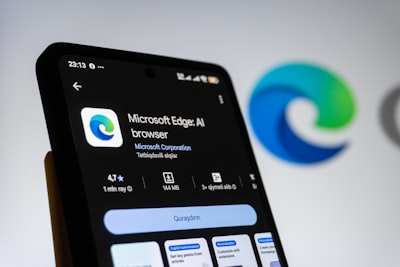
Microsoft has once again been accused of using practices that limit user choice in Windows, according to a report commissioned by Mozilla. The document, titled “Over the Edge 2.0”, details a series of dark patterns designed to push users toward Edge, the company’s browser. Although Microsoft has not responded to the allegations, market data suggests that these tactics are not yielding the expected results, but they do fuel a debate about fair competition in the digital ecosystem.
The report analyzes behaviors such as placing banners in Bing that say “All you need is here” when a user tries to download another browser, pinning Edge to the Windows taskbar, and using misleading language that could trick users into setting Edge as their default. Additionally, it points out that Copilot, Microsoft’s AI assistant, ignores the default browser setting when opening links, and that in the US and India, Copilot data-sharing toggles are preselected to ON. These practices vary by region: in the European Economic Area (EEA), where regulation is stricter, Microsoft has removed some of these elements, but they remain in the UK, US, and India.
The Browser Choice Alliance has applauded the report and harshly criticized the documented tactics. “The researchers’ findings in ‘Over the Edge 2.0’ reveal how Microsoft continues to use manipulative tactics to push users toward Edge, limiting users’ ability to choose and run their chosen browser,” the alliance stated. “The report demonstrates how Microsoft deploys harmful patterns against users on Windows 11 devices at a global scale. We call on Microsoft to respect its users and stop using the Windows ecosystem to steer users toward its own browser in ways that restrict user choice, undermine web freedom, and unfairly tilt the playing field away from fair competition and innovation.”
Other browser makers have also been critical. Bruce Lawson, Vivaldi’s Technical Communications Officer, told The Register: “We’re glad Mozilla’s independent researchers confirm what we’ve been telling regulators for years… Microsoft is very reluctant to compete on the merits of its own browser product, so abuses its dominance of the Windows ecosystem to manipulate users.” Lawson added: “The threat of scrutiny in the EU means that it’s not quite so bad in Europe, but it’s still not a level playing field — and we continue to urge the UK, Australian and Japanese regulators to step in and make their markets fair. Vivaldi will be happy to co-pilot the code changes needed, to avoid Microsoft having any unfortunate Copilot involvement.”
Despite these practices, market share figures do not seem to favor Microsoft. According to Statcounter, which monitors over one million websites globally, Edge stands at around 10% share, down from 13% in June 2025. Meanwhile, Mozilla’s Firefox has grown to 6.44% from 5.84% a year earlier. However, the report notes that Edge is the only browser that has gained share on Windows over the last two years, leading the authors to hypothesize that “previous harmful patterns have played a role in this growth.” In other words, although Edge’s global share is low, on its home turf of Windows it has made progress thanks to these tactics.
For companies developing software and technology, this case underscores the importance of user-centric design, respecting user decisions and avoiding manipulation. At Q2BSTUDIO, as a software and technology development company, we understand that user trust is an invaluable asset. That’s why we offer custom software services that prioritize user experience, transparency, and personalization, avoiding any kind of dark pattern. We also develop artificial intelligence solutions that respect user privacy and autonomy, contrary to the practices denounced in the report.
Artificial intelligence is indeed central to the dark pattern debate. Microsoft uses Copilot to redirect links and preselect data-sharing options, reducing user control. In contrast, ethical companies can implement AI agents that act under explicit consent and user configuration. At Q2BSTUDIO, we help our clients integrate AI agents that optimize processes without interfering with user preferences, whether in AWS/Azure cloud environments or on-premises systems. Additionally, our cybersecurity solutions ensure that any AI interaction is secure and compliant with regulations like GDPR.
Cloud usage is also relevant here. Microsoft leverages its dominance in Azure to promote Edge, but organizations can choose AWS/Azure cloud services that integrate neutrally with any browser. At Q2BSTUDIO, we design cloud architectures that respect freedom of choice, allowing users to work with their preferred tools without blockers or forced redirects. Process automation through custom software can further free companies from unwanted dependencies, creating fairer and more efficient work environments.
On the other hand, business intelligence (BI) and Power BI tools can be affected by these practices. If a user tries to access a Power BI dashboard from a non-Edge browser, they might encounter messages suggesting a switch. This is not only annoying but can also bias data-driven decision-making. At Q2BSTUDIO, we develop BI / Power BI solutions that integrate transparently with any browser, ensuring reports and metrics are accessible without artificial restrictions. Technological neutrality is key for companies to make informed decisions.
The Microsoft and Edge case reminds us that innovation should not be based on coercion but on product quality. Although Edge has technically improved, its forced growth through dark patterns breeds distrust and may have regulatory consequences. Countries like the UK and Australia are already considering antitrust measures similar to those in the EU. For companies looking to develop web and mobile applications, it is crucial to partner with firms that prioritize ethics and user experience. Q2BSTUDIO offers custom application development services that meet the highest standards of usability, security, and transparency, helping organizations build products that users actually want to use, not feel forced to use.
In conclusion, the “Over the Edge 2.0” report exposes a reality many users already suspected: Microsoft uses its control of the operating system to manipulate browser choices. Although Edge’s global market share is not overwhelming, its growth within Windows is worrying and suggests the tactics work. The response from industry and regulators will be key to restoring fairness. Meanwhile, companies can take the lead by adopting ethical design practices and partnering with trusted developers like Q2BSTUDIO, which offer custom software, artificial intelligence, cloud, cybersecurity, and BI solutions without dark patterns. Digital freedom deserves to be defended, and every technical choice counts.