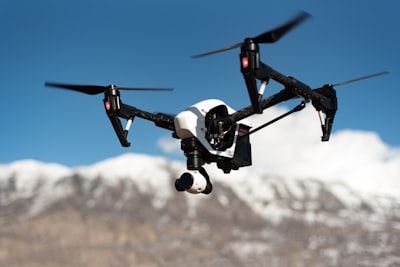
Autonomous tracking of moving targets from a fixed-wing UAV is one of the most complex challenges in aerial robotics, especially when the mission must culminate in precise terminal guidance. Unlike multirotor drones, fixed-wing aircraft impose severe dynamic constraints: they cannot stop, their minimum speed is high, and their maneuverability is limited by the need to maintain lift. Added to this is the difficulty of keeping the target within the field of view of a pan-tilt camera while preventing the UAV's own fuselage from occluding the view (self-occlusion). The complete solution requires combining computer vision, sensor fusion, predictive control, and terminal guidance laws, all orchestrated by robust and scalable software.
From a technical perspective, the first challenge is detection and state estimation of the target. Modern algorithms based on convolutional neural networks — such as YOLO variants — allow real-time target identification from the video stream. However, visual detections are noisy and sporadic, making it essential to fuse them with inertial measurements from the UAV itself using an unscented Kalman filter (UKF). This fusion provides a continuous estimate of the target's position, velocity, and acceleration, even when the target performs unknown maneuvers. The implementation of this perception module relies on artificial intelligence platforms that can run either on the edge or in the cloud, depending on latency and computing requirements.
Once the state is estimated, the tracking phase demands a controller that respects the aircraft's limits (speed, angle of attack, load factor) while keeping the target centered in the field of view. Here, model predictive control (MPC) offers decisive advantages over classical controllers. A nonlinear MPC (NMPC) can explicitly incorporate horizon constraints and control barrier functions (CBFs) to guarantee that the camera is not occluded by the wings or vertical stabilizer. This strategy ensures that the control loop always 'sees' the target, maximizing tracking continuity. Implementing an NMPC on an embedded system requires highly optimized software, which can be custom-developed for each UAV platform. In this context, custom software development allows adjusting both the dynamic modeling and the solution of the optimization problem to the actual capabilities of the flight hardware.
When the UAV approaches the target and the terminal engagement conditions are met, the system must smoothly switch to a guidance law that imposes impact angle constraints. Quaternion-based biased proportional navigation guidance (BPNG) is a natural choice because it avoids singularities and allows precise alignment of the final trajectory. The transition between tracking mode and terminal guidance is critical: a sudden change can destabilize the UAV or cause it to lose the target. Therefore, the control software must include state logic and signal smoothing, typically implemented on real-time operating systems or lightweight cloud containers.
The scalability and reliability of such systems depend heavily on the underlying infrastructure. Cloud platforms like AWS or Azure provide telemetry data storage, AI model training on GPU clusters, and deployment of inference pipelines. Additionally, managing UAV fleets requires cloud AWS/Azure solutions that guarantee real-time synchronization, remote model updates, and performance metric collection. Cybersecurity becomes an indispensable pillar: data links between the UAV and the ground station must be encrypted and authenticated to prevent unauthorized access or injection of spurious commands. A professional cybersecurity service evaluates the vulnerabilities of the entire system, from UAV firmware to cloud APIs.
Another key aspect is data analytics. During missions, enormous volumes of information are generated: detections, estimates, control commands, labeled images. Processing this data with Business Intelligence tools such as Power BI allows engineers to identify performance patterns, detect tracking deviations, and optimize controller parameters. These dashboards can be fed directly from flight logs stored in the cloud, offering a consolidated view of the operation. Furthermore, AI agents can monitor system status in real time and suggest configuration adjustments or alert about anomalous behavior, acting as autonomous supervision assistants.
The approach described here is not a closed product but an open architecture that each organization can adapt to its specific needs. Companies like Q2BSTUDIO offer software engineering services specialized in autonomous control systems design, AI integration, cloud deployment, and cybersecurity. By opting for custom applications, one achieves a system perfectly coupled to the UAV's dynamics, available sensors, and mission requirements. Whether for surveillance, infrastructure inspection, or defense applications, the combination of robust autonomous tracking and precise terminal guidance opens up new operational possibilities that were previously only achievable with much more expensive and complex systems.
In conclusion, the convergence of computer vision, constraint-based predictive control, sensor fusion, and advanced guidance laws, supported by cloud infrastructure and cybersecurity practices, paves the way for truly autonomous fixed-wing UAVs. Developing such solutions requires a technology partner with multidisciplinary experience, capable of materializing complex concepts into robust and scalable software. With the current maturity of algorithms and computing platforms, the leap from high-level simulation to actual flight is increasingly short, and entry barriers are lowered thanks to open-source tools and cloud services. However, the competitive edge lies in the intelligent integration of each piece, and in the ability to customize every component to maximize performance in real operational environments.