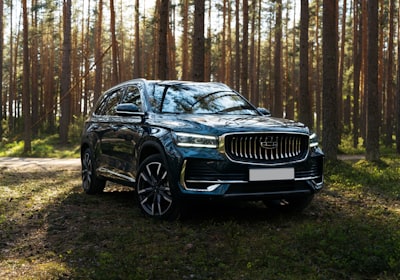
In the competitive entry-level luxury SUV segment, German manufacturers like Audi, BMW, and Mercedes-Benz have long been the undisputed reference. However, the landscape is changing. Prices are constantly rising, and the most desirable features are hidden behind expensive optional packages. This has led buyers to explore alternatives that offer better overall value without sacrificing luxury or performance. One of the most attractive options comes from Sweden: Volvo SUVs, especially the XC90 and the recently launched EX90, which combine Scandinavian design, legendary safety, and a more contained price. This article takes an in-depth look at why a Swedish luxury SUV can save you thousands of euros compared to its German rivals, and how technology plays a key role in this equation.
Volvo's value proposition is based on a different philosophy. While German manufacturers often segment their ranges with multiple trim levels and options, Volvo bets on a more integrated offer. Trims like Inscription, R-Design, or Ultimate come standard with many technologies that are extra cost in competing models. For example, the infotainment system based on Google's Android Automotive, with integrated navigation and voice assistant, is standard in most versions. In a BMW X5, the premium navigation system can add over €2,000 to the final price. Additionally, Volvo includes advanced driver assistance systems as standard, such as Pilot Assist (semi-autonomous driving), which in an Audi Q7 requires the assistance package valued at over €3,000. These differences accumulate, making a well-equipped Volvo XC90 cost up to 15-20% less than a German equivalent, easily saving between €5,000 and €10,000.
But savings are not only in the purchase price. Maintenance costs and residual value also favor the Swedish brand. According to market studies, Volvos tend to depreciate at a similar or slightly lower rate than Audi and BMW in the premium segment, while scheduled maintenance costs are usually lower. Moreover, Volvo offers fixed-price maintenance plans that eliminate surprises. On the other hand, the reliability of recent models has notably improved, now on par with German brands.
From a technical perspective, Swedish SUVs are at the forefront in areas such as electrification, connectivity, and active safety. The Volvo EX90, fully electric, comes standard with a LiDAR sensor, something that in the Mercedes EQS SUV is a very expensive option. This sensor enables Level 3 autonomous driving under certain conditions. Volvo's technology platform is based on a centralized computing core (NVIDIA Drive Orin) that processes data from cameras, radars, and ultrasonics. To manage this massive flow of information and provide a smooth user experience, robust and efficient software is necessary. This is where the importance of custom software development comes in: companies building these systems need technology partners capable of creating personalized software that optimizes performance, safety, and driving experience.
Q2BSTUDIO, as a software development and technology company, understands the challenges automakers face in the era of intelligent mobility. The integration of custom software applications for sensor data management, connection to cloud platforms like AWS or Azure, and implementation of artificial intelligence for predictive analysis and virtual assistants are fundamental pillars. For example, artificial intelligence applied to driver assistance systems allows detecting behavior patterns and proactively improving safety. Furthermore, cybersecurity is critical in a connected vehicle: every data entry must be protected against potential attacks. Q2BSTUDIO offers specialized cybersecurity services to ensure that infotainment systems and vehicle-to-everything (V2X) communications are robust against threats.
Another differentiating aspect is data analytics. Modern SUVs generate terabytes of information daily: from engine performance to driving habits. Business Intelligence tools such as Power BI allow manufacturers and dealerships to extract valuable insights to improve products and services. Using Power BI for fleet monitoring and predictive maintenance analysis is an increasingly common practice. Q2BSTUDIO helps implement these BI solutions, integrating data from multiple sources in the cloud (AWS or Azure) to offer real-time dashboards that optimize decision-making.
Additionally, process automation through AI agents is transforming the after-sales experience. Intelligent agents can manage service appointments, answer FAQs, or even diagnose minor issues based on vehicle data. This reduces the workload of human staff and improves customer satisfaction. Q2BSTUDIO develops these custom AI agents, tailored to the specific needs of each dealership or fleet.
Regarding the cloud, Volvo's platform (Volvo Cars App) relies on Azure to synchronize data between the vehicle and smartphone, enable over-the-air (OTA) updates, and offer remote services such as pre-conditioning or car location. This cloud architecture requires scalable and secure design. Q2BSTUDIO provides cloud services on AWS and Azure, helping automotive companies migrate, optimize, and manage their cloud infrastructures, ensuring high availability and regulatory compliance.
Returning to the main argument: choosing a Swedish luxury SUV like Volvo not only means direct economic savings but also a commitment to more integrated and user-centric technology. While Germans offer near-infinite customization (often at high costs), Volvo simplifies the experience by offering a complete product from the start. This aligns with the current trend towards simplicity and transparency in the automotive sector.
Moreover, electrification is a key factor. Volvo has committed to becoming a fully electric brand by 2030, while German manufacturers advance at different paces. The EX90 represents the brand's electric flagship, competing directly with the BMW iX and Mercedes EQS SUV, but with a significantly lower starting price. Volvo's strategy is to offer a high-tech product without the usual surcharges of German brands.
For buyers who value safety, Volvo remains the benchmark. Not only for the numerous airbags and impact-absorbing structures, but for the integration of predictive systems based on AI that anticipate dangers. Collaboration with companies like Q2BSTUDIO in developing critical safety software demonstrates how consumer technology can raise industry standards.
In summary, the Swedish luxury SUV is consolidating as a real alternative to German dominators, saving thousands of euros without sacrificing performance, luxury, or technology. Behind this proposal lies a complex technological ecosystem involving custom software development, artificial intelligence, cybersecurity, cloud computing, and business intelligence. Companies like Q2BSTUDIO are the invisible engine that enables manufacturers to offer these connected and safe experiences. If you are considering a premium SUV, do not dismiss the Swedish option: your wallet and your tech-savvy conscience will thank you.