
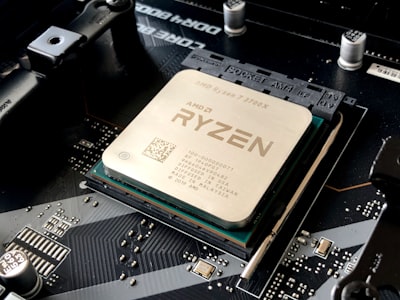
By 2028, AMD plans a strategic division of its Zen 7 architecture into three EPYC processor families, named Florence, Ferrara, and Fidenza. This segmentation aims to cover different segments of the data center market, from general workloads to high-performance computing and artificial intelligence. The Santa Clara-based company is betting on a roadmap that promises to double per-core performance compared to the current generation, thanks to a 2-nanometer lithography process and a new chiplet interconnect.
Each family will have a distinct profile. Florence will be optimized for traditional enterprise servers, balancing frequency and core count. Ferrara will focus on memory-intensive workloads and high-performance computing (HPC), while Fidenza will incorporate integrated AI accelerators designed to compete directly with solutions like NVIDIA Grace Hopper. This triad of architectures will allow integrators and hyperscalers to adapt their infrastructures without compromising energy efficiency.
The software ecosystem will also play a crucial role. Enhanced AVX-512 instructions and CXL 4.0 memory support will facilitate the creation of custom applications that fully exploit parallelism. In this context, companies like Q2BSTUDIO, specialized in software development and technology, are already evaluating how these platforms can be integrated into cloud and on-premise solutions for their clients.
Artificial intelligence and AI agents will directly benefit from the Zen 7 architecture. The Ferrara and Fidenza families will include dedicated neural processing units (NPUs) capable of running large language model (LLM) inference with minimal latency. Organizations developing AI solutions, such as those implemented by Q2BSTUDIO through its artificial intelligence department, will be able to leverage these chips to deploy autonomous agents in production environments.
The cloud will be another key scenario. Hyperscalers like AWS and Azure are already preparing instances based on EPYC Zen 7. Companies migrating their workloads to the cloud can benefit from managed cloud services by Q2BSTUDIO, which offers solutions on AWS and Azure optimized for performance and cost. Integration with Business Intelligence tools like Power BI will allow extracting maximum value from data processed by these powerful servers.
Regarding cybersecurity, AMD has confirmed that the new EPYC will include silicon-level security extensions, such as improved Infinity Guard, to protect data in transit and at rest. Companies will need to complement these capabilities with external strategies, such as those offered by Q2BSTUDIO in its pentesting and continuous monitoring services.
Process automation will also take a qualitative leap. With more cores and better AI integration, EPYC servers are ideal for running complex automated workflows. Q2BSTUDIO, with its experience in automation, helps companies design pipelines that fully leverage these new architectures.
However, the arrival of Florence, Ferrara, and Fidenza will not be without challenges. Thermal and packaging complexity will require advanced cooling solutions. Additionally, competition with Intel and its Granite Rapids and Diamond Rapids architectures will be fierce. AMD trusts that the flexibility of its modular design and the maturity of its lithographic process will give it an edge.
For software developers, compatibility with Zen 7 instructions will require updating their compilation tools. Companies investing in custom applications, like those developed by Q2BSTUDIO, must plan migration to avoid performance loss. The company already offers consulting services to adapt existing software to new platforms.
In summary, the division of Zen 7 into three EPYC families represents a milestone in AMD's strategy to dominate the data center. Companies wanting to stay competitive must consider not only hardware but also a software and services ecosystem that maximizes their investment. Q2BSTUDIO, with its portfolio in software development, cloud, AI, cybersecurity, BI, and automation, positions itself as a strategic ally to navigate this transition.
