
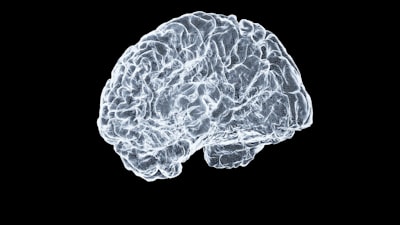
Predicting brain folding from 3D point clouds represents one of the most complex challenges in computational neuroscience and biomechanical simulation. Traditional finite element models can generate detailed data, but their analysis requires techniques capable of handling permutation invariance, lack of local context, and high computational cost. In this context, Trans-Unet emerges—a hybrid architecture that transforms three-dimensional point clouds into a two-dimensional grid and then applies a U-shaped model combining convolutional neural networks and self-attention mechanisms. This approach not only preserves the structural information of the brain surface and underlying fibers but also drastically reduces the curse of dimensionality, achieving high-fidelity predictions of brain patch growth from initial states to the final folding state.
The Trans-Unet proposal is especially relevant because it addresses key limitations of previous methods. By converting 3D data into a 2D grid, it facilitates the use of convolutions that capture low-level local patterns, while self-attention models global and long-range dependencies. The dataset originates from a finite element model generating point clouds with over 40,000 surface points and nearly 2,400 fiber points, simulating brain patch growth. Experimental results show that Trans-Unet outperforms other techniques in accuracy and realism, opening the door to clinical applications such as surgical planning, simulation of malformations, or the study of neurological development.
From a technical and business perspective, implementing solutions like Trans-Unet requires advanced capabilities in custom software development, artificial intelligence integration, and cloud infrastructure management. At Q2BSTUDIO, a company specialized in multi-platform application development and technology solutions, we understand that adopting deep learning models for 3D data is not just about algorithms: it involves building robust pipelines that guarantee scalability, security, and traceability. For example, processing massive volumes of point clouds generated by biomechanical simulations requires cloud services such as AWS or Azure that enable distributed training and deployment in production environments. In this regard, we offer cloud AWS/Azure services that optimize performance and reduce operational costs.
Furthermore, cybersecurity plays a critical role when handling sensitive medical data. Brain point clouds and finite element models contain information that must be protected in compliance with regulations like GDPR or HIPAA. At Q2BSTUDIO, we integrate cybersecurity and pentesting practices at every development phase, ensuring data is encrypted, access is controlled, and vulnerabilities are mitigated. Similarly, artificial intelligence is not limited to the predictive model: AI agents can automate tasks such as outlier cleaning in point clouds, automatic segmentation of regions of interest, or generation of result reports. Our team implements intelligent agents that integrate with BI platforms like Power BI to offer interactive dashboards that visualize the evolution of brain folds and facilitate clinical decision-making.
The combination of all these technologies—custom applications for 3D data management, AI for predictive modeling, cloud for scalability, cybersecurity for protection, and BI for visualization—creates a complete ecosystem that allows hospitals, research centers, and pharmaceutical companies to fully exploit the potential of models like Trans-Unet. At Q2BSTUDIO, we not only develop software but accompany our clients in their digital transformation strategy, from conception to continuous maintenance. For example, if an institution needs to adapt Trans-Unet to its own brain growth simulations, we can build a customized platform that integrates the data pipeline, distributed training on cloud GPUs, and a user interface for neurologists.
The future of brain folding prediction lies in combining hybrid models like Trans-Unet with data augmentation techniques, federated learning to preserve privacy, and digital twins that enable real-time simulations. The computational cost reduction achieved by the 3D-to-2D transformation opens the door to applications in resource-constrained clinical environments. Moreover, incorporating self-attention mechanisms allows interpreting which regions of the brain surface are most relevant for prediction, improving model transparency. These capabilities perfectly align with Q2BSTUDIO's offering in artificial intelligence, where we develop explainable AI solutions and autonomous agents that learn from data without sacrificing trust.
In conclusion, Trans-Unet represents a significant advancement in 3D point cloud analysis applied to neuroscience, and its practical implementation requires a comprehensive approach encompassing everything from custom software development to security and analytics. At Q2BSTUDIO, we are ready to help organizations worldwide adopt these technologies, offering services ranging from AI consulting to cloud infrastructure deployment, always with a firm commitment to quality and innovation. If your organization seeks to transform complex data into intelligent decisions, feel free to explore our artificial intelligence and custom application development solutions.

