
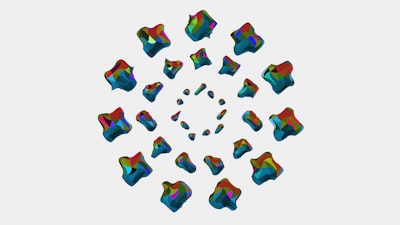
In the current landscape of data analysis, the ability to cluster probability distributions has become a key differentiator for companies handling complex information. Unlike traditional clustering over vector points, distributional clustering addresses situations where each observation is itself a density function, such as customer profiles, sensor time series, or genomic data. The fundamental challenge is that these distributions can overlap, and conventional methods often force unrealistic assignments. To solve this, the distributional determinantal point process for repulsive clustering of distributions (dDPP) has emerged, a probabilistic framework that induces repulsion among cluster centers, ensuring separation and improving interpretability of results.
The dDPP is constructed via an L-ensemble based on a sliced Wasserstein kernel, which effectively measures distances between distributions. This kernel makes the point process mathematically valid, and in discrete settings, concentration results can be derived for plug-in estimators of the L-ensemble, correlation kernel, and their determinants from i.i.d. samples of distributional atoms. This solid theoretical foundation makes dDPP attractive for business applications where reliability and reproducibility are essential.
One of the most promising applications of dDPP is in customer segmentation. Suppose a company has transaction data from thousands of users; each user can be represented as a distribution of purchase frequencies per category. A repulsive clustering model like dDPP groups users into well-differentiated behavioral profiles, preventing clusters with similar patterns from artificially merging. This enables hyper-personalized marketing strategies and early detection of behavioral changes.
Another relevant domain is industrial sensor signal analysis. Each sensor emits a time series that can be modeled as a distribution. By applying dDPP, the resulting clusters correspond to operational modes or incipient failure states, with clear separation that facilitates decision-making. The ability to handle distributions with different supports and to provide uncertainty quantification on assignments adds value over deterministic methods.
Implementing a dDPP model in a business environment requires adequate technological infrastructure. This is where Q2BSTUDIO positions itself as a strategic partner. This software and technology development company offers custom software applications that integrate advanced artificial intelligence models. Their AI experts can tailor the dDPP algorithm to specific business needs, optimizing the sliced Wasserstein kernel and L-ensemble estimation for massive datasets.
Moreover, cloud infrastructure is essential for scaling these models. Q2BSTUDIO deploys solutions on AWS and Azure, ensuring elasticity, security, and high availability. Using cloud services allows parallel processing of large volumes of distributional data, accelerating inference and cross-validation. Cybersecurity is another pillar: sensitive data used for training models (e.g., genomic or transactional information) must be protected through encryption, access controls, and continuous auditing. Q2BSTUDIO implements pentesting practices and regulatory compliance to safeguard information.
Once the model is trained, visualizing clusters is vital for business teams. Q2BSTUDIO integrates results into BI dashboards with Power BI, where grouped distributions, intra- and inter-cluster distances, and membership probabilities can be explored. This facilitates communication between analysts and decision-makers. Furthermore, atypical patterns detected by dDPP can trigger automated actions via AI agents, such as alerts, resource reallocation, or dynamic pricing adjustments.
The integration of a dDPP model into daily operations is not trivial. It requires data orchestration, continuous deployment, and monitoring. Q2BSTUDIO's process automation services enable the construction of pipelines that ingest data, execute the model, and update results in real time. This reduces latency and allows clustering-based decisions to become part of the workflow without manual intervention.
From a technical perspective, dDPP offers concentration properties that ensure plug-in estimators converge quickly, even with limited samples. This is crucial in environments where data acquisition is costly, such as clinical trials or engineering studies. The use of a sliced Wasserstein kernel, which averages over all one-dimensional projections, provides a robust and computationally efficient metric, overcoming limitations of other divergences like Kullback-Leibler when supports do not coincide.
The versatility of dDPP has been demonstrated in real cases such as single-cell gene expression data analysis, where distributions of messenger RNA per cell are clustered to identify cell types. Repulsion between clusters prevents oversegmentation and reveals rare cell populations. Similarly, in human epilepsy research, electroencephalogram (EEG) signals are modeled as spectral distributions, and repulsive clustering distinguishes epileptic states from normal states with high precision.
These use cases show that dDPP is not just an academic concept but a practical tool for extracting value from complex data. Companies that adopt these techniques gain a competitive advantage by better understanding their customers, optimizing processes, and anticipating problems. However, successful implementation depends on having the right technology partner.
Q2BSTUDIO combines expertise in custom software development, artificial intelligence, cloud computing, cybersecurity, and business intelligence to offer end-to-end solutions. Their approach is to first understand the business problem, design a tailored probabilistic model, deploy it on robust infrastructure, and create dashboards that stakeholders can use seamlessly. In addition, the inclusion of AI agents allows the system to evolve autonomously, learning from new data and adjusting clusters in real time.
In conclusion, the distributional determinantal point process for repulsive clustering of distributions represents a significant advancement in the analysis of data with distributional structure. Its ability to generate well-separated clusters and its solid theoretical foundation make it a valuable tool for companies seeking to segment complex data. Collaborating with Q2BSTUDIO allows maximizing these techniques by combining custom software development, cloud infrastructure, cybersecurity, artificial intelligence, and business intelligence. For organizations wishing to explore this path, the Q2BSTUDIO team is ready to guide them through every step, from conceptualization to production deployment.

