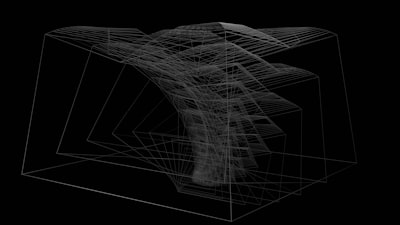
When a parametric optimization model requires solving hundreds or thousands of instances, the computational cost can become prohibitive. Techniques such as solver iterate learning offer a promising path: instead of training only with final solutions, intermediate trajectories of projected gradient descent are leveraged to increase the data volume without running new complete executions. This approach, inspired by data augmentation strategies like k-neighborhoods, allows generative models to learn convergence patterns and generate good initial guesses that drastically reduce numerical effort.
Data scarcity is, in fact, one of the most critical bottlenecks at the intersection of optimization and machine learning. In business environments where each solution involves seconds or minutes of computation (e.g., route planning, resource allocation, inventory control), having a fast predictor that delivers a starting point close to the optimum transforms operational feasibility. The original paper demonstrates how Rademacher complexity allows bounding generalization error when solver iterates are incorporated, theoretically validating the usefulness of k-neighborhood data.
From a technical perspective, projected gradient descent with box constraints (box-constrained quadratic programs) is an ideal scenario for this analysis. Each step of the algorithm corrects the descent direction and projects the point onto the feasible set, generating a sequence of iterates that, although intermediate, contain valuable information about the problem geometry. Feeding a generative model—such as a neural network or a Gaussian process—with these iterates not only multiplies the training set at no extra solver execution cost, but also teaches the model the convergence dynamics. This is directly applicable to areas like AI agents that must make real-time decisions, where a precise initial guess can avoid costly iterations and enable sub-second responses.
In today's business context, where computational efficiency is currency, integrating these techniques into custom software applications offers differential advantages. For example, a Business Intelligence (BI) system with Power BI that needs to compute optimization scenarios over large datasets can benefit from a starting-point predictor trained with historical iterates. Similarly, preventive cybersecurity in cloud infrastructures (AWS, Azure) may require solving resource allocation models under simulated attacks; a solver that starts from a good guess speeds up the response.
Q2BSTUDIO, as a software development and technology company, understands this need and offers services that connect optimization research with industrial practice. Their teams implement learning models that capitalize on every available data point, incorporating strategies such as solver iterate learning into scalable cloud architectures. The ability to design AI agents that self-tune using enriched training data is an example of how k-neighborhood theory translates into real value: less computation time, lower cloud resource consumption, and greater agility in decision-making.
Beyond the specific case of box-constrained quadratic programs, the general lesson is that intermediate data from iterative algorithms—from gradient descent to quasi-Newton methods—can be recycled as training material. This paradigm, called DDDAS (Dynamic Data Driven Application Systems) in the paper, allows closing the data-model-optimization loop more efficiently. In practice, any company dealing with repetitive optimization problems (logistics, finance, manufacturing) can implement these ideas with the support of specialized developers.
Process automation particularly benefits: with a model that predicts good initial points, optimization loops run in a fraction of the original time. Q2BSTUDIO has integrated these concepts into automation solutions for clients operating in multi-cloud environments (AWS/Azure), reducing computation costs by up to 40% in some cases. The key lies in combining a solid mathematical foundation with software engineering that ensures scalability and security.
In conclusion, learning projected gradient descent iterations represents a methodological advance that transcends academia. For businesses, it is a tool that improves the efficiency of optimization systems without requiring additional hardware. Q2BSTUDIO, with its expertise in AI, cybersecurity, cloud, and custom software development, is uniquely positioned to help organizations adopt these techniques and turn them into a competitive advantage.