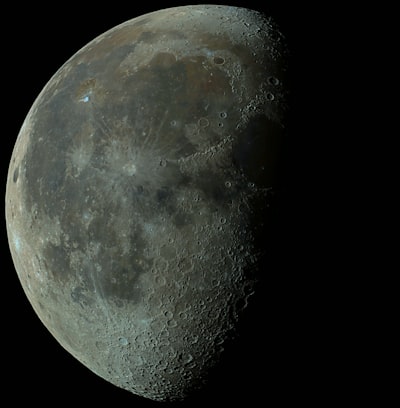
Lunar exploration has entered a new era thanks to artificial intelligence models capable of processing heterogeneous data from multiple orbital instruments. LunarFM represents a milestone by offering a multimodal representation of the lunar surface, integrating 18 input channels from six instruments across three different missions. This foundational model not only unifies scattered observations but enables tasks such as similarity search, few-shot resource mapping, mineral abundance regression, and geological classification. Its architecture, based on a multimodal masked autoencoder, generates a 768-dimensional embedding space that captures fundamental properties of the selenite surface.
For technology companies, LunarFM exemplifies how AI models can transform massive and fragmented data into actionable knowledge. On Earth, similar situations occur when organizations handle large volumes of information from sensors, ERP systems, or cloud platforms. At Q2BSTUDIO, we apply analogous principles when developing custom software that integrates disparate sources and generates predictive value. LunarFM's ability to learn generalizable representations without massive supervision mirrors the self-supervised learning approaches we use in artificial intelligence projects for clients.
From a technical perspective, LunarFM processes spectral, thermal, and topographic data, combining them into a shared embedding. This allows a single model to serve multiple scientific applications without full retraining. In the corporate world, this versatility is key: the AI solutions we implement at Q2BSTUDIO are designed to adapt to different domains, from anomaly detection in cybersecurity to process optimization via AI agents. The multimodal architecture also aligns with Business Intelligence strategies, where combining structured and unstructured data enhances Power BI dashboards.
The dataset accompanying LunarFM, with observations between 70°S and 70°N, is machine-learning-ready. This lowers the entry barrier for researchers and companies wishing to explore the Moon for resource extraction or sustainable settlement. Similarly, in sectors like mining or precision agriculture, integrating satellite data with foundation models can revolutionize decision-making. Q2BSTUDIO offers cloud AWS/Azure services to deploy these intensive workloads, ensuring scalability and security.
One of the most innovative aspects of LunarFM is its ability to perform similarity search: given a surface patch, the model finds analogous regions across the lunar globe. This has direct applications in mission planning and landing site selection. In the business environment, this functionality translates into recommendation systems and clustering of customers or assets. The same logic underlies the AI agents we develop at Q2BSTUDIO to automate repetitive tasks and discover hidden patterns in large datasets.
Cybersecurity also benefits from multimodal approaches. Just as LunarFM fuses data from different instruments to detect geological features, security solutions combine network logs, endpoint events, and cloud traffic to identify threats. At Q2BSTUDIO, we implement cybersecurity platforms that use machine learning algorithms to correlate weak signals and predict intrusions. The philosophy of unified representation is the same: transforming heterogeneous data into a coherent model that facilitates early detection.
The release of LunarFM as open source with a curated dataset reflects a trend toward democratizing AI. Any organization can download the model and fine-tune it for specific needs, whether mapping helium-3 resources or identifying permanently shadowed zones. This openness is similar to what we promote at Q2BSTUDIO by offering modular and customizable solutions, from cross-platform applications to deployments on AWS or Azure. Combining pre-trained models with client data accelerates innovation and reduces costs.
Looking ahead, LunarFM lays the groundwork for even larger models incorporating real-time data from rovers or orbital stations. In parallel, AI applied to space exploration opens new frontiers for extraterrestrial mining and in-situ manufacturing. Companies already investing in these technologies, such as those developing custom software and BI systems, will find in Q2BSTUDIO a technology partner capable of adapting these concepts to their commercial realities. Whether optimizing supply chains via AI agents or strengthening cybersecurity in cloud environments, the principles of multimodal representation are equally valid on Earth and beyond.
In conclusion, LunarFM is not just a scientific achievement but a model of how AI can unify disparate domains. The ability to learn general representations from multimodal data has transformative potential both in lunar exploration and industry. At Q2BSTUDIO, we are committed to bringing these capabilities to businesses through custom software, cloud services, cybersecurity solutions, and AI-driven BI systems. The future of artificial intelligence is multimodal, and it is already here.