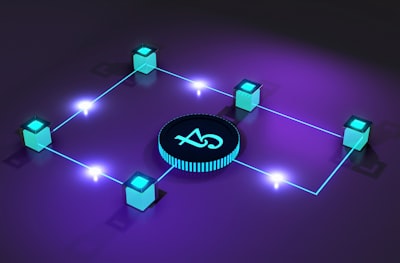
In the world of decentralized reinforcement learning, one of the most intriguing challenges is coordinating multiple agents that interact with the same Markov Decision Process (MDP) to collectively learn the optimal state-action value function. Recent research has proposed algorithms like VRDQ, an epoch-based distributed Q-learning approach that combines local estimation of the Bellman operator with a consensus protocol for information diffusion among agents. This article analyzes the technical and business implications of this innovation, highlighting how companies can leverage these techniques to build intelligent and scalable systems.
From a technical perspective, VRDQ stands out for its communication efficiency: it achieves linear speedups in sample complexity with only O(1) communication cost per epoch, significantly outperforming prior work. This is crucial for industrial applications where network resources are limited. Its ability to operate in both static and time-varying networks makes it ideal for dynamic environments such as autonomous vehicle fleets or sensor networks.
For a company like Q2BSTUDIO, specialized in custom software, integrating algorithms like VRDQ opens doors to adaptive artificial intelligence solutions. For example, in a multi-agent inventory control system, each warehouse robot can learn locally and share knowledge without centralizing sensitive data, improving efficiency and security. Here, AI not only optimizes routes but also enables real-time decision-making based on collective experiences.
The decentralized approach also strengthens cybersecurity: by not relying on a central server, single points of failure and attack vectors are reduced. Q2BSTUDIO offers cybersecurity services that, combined with distributed reinforcement learning, protect critical infrastructures. On the other hand, cloud infrastructure from AWS and Azure provides the scalability needed to train agents in parallel, something Q2BSTUDIO integrates into its cloud services.
In the Business Intelligence realm, VRDQ algorithms can feed Power BI dashboards that visualize agent performance in real time, allowing executives to adjust strategies. Q2BSTUDIO develops BI solutions that incorporate these predictive models to anticipate market trends.
Looking ahead, the combination of VRDQ with autonomous AI agents promises to revolutionize sectors such as logistics, manufacturing, and financial services. Q2BSTUDIO is already working on process automation projects where multiple agents collaborate to optimize supply chains. The ability to learn without exchanging large volumes of data preserves privacy and reduces bandwidth costs.
In conclusion, algorithms like VRDQ represent not only a theoretical advancement but also a practical tool for building intelligent, secure, and scalable systems. Companies like Q2BSTUDIO are at the forefront, offering custom software development that incorporates these cutting-edge technologies. If your organization is looking to implement decentralized reinforcement learning solutions, contact Q2BSTUDIO to explore how AI, cloud, and cybersecurity can transform your operations.