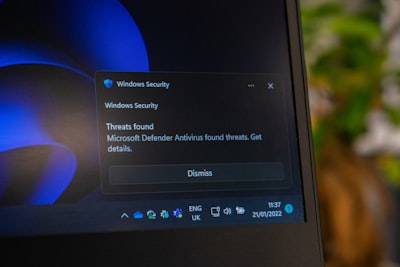
Microsoft has publicly acknowledged two critical flaws in its Microsoft Defender for Endpoint on Linux security solution, affecting recent versions of the product. These issues not only compromise protection for Linux systems in enterprise environments but also highlight the challenges of maintaining a homogeneous security ecosystem when relying on automatic updates. One of the most serious problems causes the Defender service to become completely disabled after a reboot, leaving devices unprotected until a manual fix is applied. The second flaw prevents updates from installing on Red Hat Enterprise Linux 8 and 9 systems operating in FIPS mode, a common requirement for government agencies and regulated companies. Both scenarios represent a significant risk to operational continuity and the cybersecurity of organizations that have adopted this product as the cornerstone of their perimeter defense.
The vulnerability that disables the service affects versions 101.26042.0000 through 101.26042.0009 on all supported Linux distributions. Microsoft explained that after an upgrade or reinstall followed by a reboot, 'the Defender service might be disabled on some devices.' The root cause has not been disclosed, but the fact that a product designed to protect systems can become inoperative without administrator awareness is alarming. In environments using Defender for Cloud with MDE integration enabled, automatic updates distribute the affected versions without manual intervention. This means an entire fleet of Linux servers could be exposed simultaneously if they are rebooted after applying the defective patch.
The second problem, though less immediately impactful, is equally concerning. On RHEL 8 and 9 systems configured in FIPS mode - which enforces U.S. federal cryptographic standards - the 101.26042.x update cannot install correctly, leaving machines on their previous version. Microsoft has indicated that the fix for this flaw is in version 101.26052.0011 and later. For the service disablement issue, version 101.26042.0011 resolves the incident. However, the recovery process may involve additional reboots and manual checks, slowing the response to a potential security breach.
These failures come at a time when enterprise cybersecurity is more critical than ever. With the rise of targeted attacks on cloud infrastructures and hybrid environments, any weakness in the protection layer can be exploited by malicious actors. Organizations that have centralized their security strategy around Microsoft Defender for Linux rely on the unified visibility offered by the Defender portal to monitor threats and coordinate responses. But when the security agent itself fails, that visibility disappears. This is where a multi-layered approach and the capabilities of cybersecurity offered by specialized providers become essential, complementing proprietary solutions with custom tools.
Exclusive reliance on a single vendor for endpoint security can be a trap, especially when automatic updates introduce risks rather than mitigating them. Companies like Q2BSTUDIO, dedicated to software and technology development, recommend evaluating hybrid solutions that combine commercial products with custom software designed to meet the specific needs of each infrastructure. For example, an internally developed security event monitoring system can alert on unexpected drops of critical services like Defender, something standard tools do not always detect in time. Furthermore, the integration of AI agents for anomaly detection allows identifying attack patterns before they materialize, offering an additional layer of defense even when the primary antivirus fails.
The cloud context exacerbates the problem. Many organizations deploy their Linux workloads on cloud AWS/Azure, where endpoint security is managed centrally. If a faulty update disables Defender on dozens of instances, the administrator may not be aware until an incident occurs. Therefore, best practices recommend implementing health verification mechanisms for security agents and having contingency plans for failed updates. Q2BSTUDIO offers cloud consulting services that help design resilient architectures, where security does not depend on a single point of failure.
Artificial intelligence also plays a crucial role in modern cybersecurity. AI agents can analyze process behavior in real time and detect when a security service stops unexpectedly. This self-diagnostic capability allows immediate reaction, even before the IT team reviews logs. Combined with BI/Power BI dashboards that visualize the health of the entire infrastructure, companies can maintain granular control over their systems. Q2BSTUDIO integrates these technologies into its custom software projects, offering solutions that go beyond simply installing an antivirus.
Microsoft's failure also reopens the debate on standardizing all security within a single ecosystem. While unification simplifies administration, it also creates dangerous dependencies. Instead of waiting for a vendor to correct its errors, many companies opt to develop their own monitoring and response tools, leveraging platforms like AWS or Azure to orchestrate security. Q2BSTUDIO's teams have helped clients design hybrid security systems that combine Defender with custom firewalls, AI-based intrusion detection systems, and automated remediation processes. This way, even if one component fails, overall protection is not compromised.
From a technical perspective, the current situation with Defender for Linux is a reminder that no security software is infallible. Organizations must plan for failure, not assume it will always work. This involves having configuration backups, automatic reinstallation scripts, and post-update verification protocols. In this sense, process automation is a fundamental ally. Q2BSTUDIO offers automation services that allow creating workflows to validate the health of security agents after each update, minimizing exposure time. Additionally, implementing custom software for patch management can prevent problematic versions from being deployed uncontrollably.
The impact of these failures is not limited to IT departments. Business leadership must understand that a security breach caused by a disabled agent can have legal, financial, and reputational consequences. Therefore, investing in a robust cybersecurity strategy that includes both commercial solutions and proprietary developments is a strategic decision. Q2BSTUDIO collaborates with companies of all sizes to design and implement these strategies, leveraging its expertise in cloud AWS/Azure, AI, and BI/Power BI to offer complete visibility and control. The combination of these technologies, along with a development team capable of creating custom software, enables organizations not only to react to incidents but also to anticipate them.
In conclusion, the problems detected in Microsoft Defender for Linux underscore the need to diversify security tools and to have internal development and monitoring capabilities. Blind trust in a single product can lead to avoidable risk situations. Companies like Q2BSTUDIO offer the knowledge and services necessary to build a resilient security architecture, where occasional failures do not become catastrophes. Investment in cybersecurity, cloud AWS/Azure, AI, and custom software is not an expense; it is a guarantee of business continuity.