
The way users discover content on the web is undergoing a quiet but profound transformation. For decades, the click-based model dominated: a search engine showed blue links and the user clicked the one they considered most relevant. However, the arrival of conversational assistants with artificial intelligence is completely redefining that dynamic. Today, AI systems like ChatGPT, Gemini or Perplexity not only answer questions directly in the interface, but also 'read' thousands of web pages to generate their responses. The result is a fascinating paradox: AI often cites deep pages — technical articles, detailed documentation, comparisons — but when it decides to send a human user to a website, it mostly directs them to the homepage. This mismatch between what machines consume and what humans visit is forcing companies to rethink their site architecture. Is your website ready for this new paradigm or is it still optimized for the old world of clicks?
The disconnect between citation and actual traffic is a phenomenon that analysts have begun to document with solid data. Independent studies show that more than 65% of URLs cited by assistants such as ChatGPT are two or three levels deep within the site structure, i.e. internal pages with specialized content. However, almost 60% of the referral traffic that these same assistants send lands directly on the homepage. This indicates that AI is using deep content as an authoritative source to build its responses, but prefers to redirect the end user to a generic entry point. For businesses, this behavior poses a strategic challenge: it is no longer enough to have quality content; that content must be 'citable' by machines and, at the same time, the homepage must be designed to receive a visitor who has already been informed by the assistant. A user arriving from an AI conversation knows what they want; they do not need to browse, but to act. Therefore, the homepage must prioritize conversion and quick orientation, rather than just being a business card.
At Q2BSTUDIO, as a software and technology development company, we see every day how this new reality impacts our clients' businesses. The key is understanding that the web is splitting into two layers: a machine-readable layer that feeds AI models with structured and verifiable data, and a human-oriented layer that must be optimized for action. For the first, deep pages must contain clear statements, semantic headings, and descriptive URLs that facilitate automatic extraction. For the second, the homepage and product pages must be designed for a visitor who has already done the mental research thanks to the assistant. This change requires a technical approach that combines custom software development with the integration of artificial intelligence, since personalization and automation of responses are now essential tools to compete in this ecosystem.
Another crucial aspect is the rise of internal search as a new acquisition surface. Data indicates that almost a third of traffic coming from conversational assistants ends up on the website's internal search page. This means that users, upon arriving at the homepage, do not just browse; they use the internal search engine to find exactly what the assistant suggested. For many sites, this functionality has historically been secondary, but now it becomes a strategic touchpoint. Investing in a powerful internal search engine, with semantic and filtering capabilities, can make the difference between retaining that visitor or losing them. This is where solutions such as AI agents that personalize the search and recommendation experience come into play, as well as Business Intelligence systems that analyze user behavior to continuously optimize site architecture.
Cybersecurity also plays a fundamental role in this new referral economy. As AI assistants scan and cite web pages, they expose sites to a greater volume of automated and potentially malicious traffic. Protecting endpoints, ensuring data integrity, and maintaining service availability are indispensable requirements. At Q2BSTUDIO we help companies implement advanced cybersecurity measures, from pentesting to continuous monitoring, adapted to cloud environments like AWS or Azure. The cloud, precisely, offers the scalability needed to absorb traffic spikes generated by viral referrals or AI campaigns, and our experience in cloud AWS/Azure allows us to design resilient architectures that support both crawler load and real user queries.
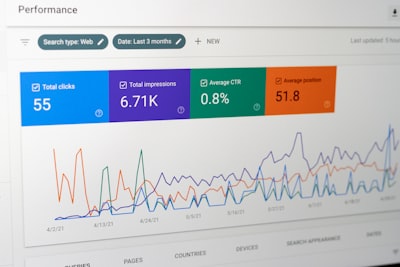
Monitoring and data analysis become essential allies to understand this new behavior. BI and Power BI tools allow real-time visualization of where traffic comes from, which pages are cited by AI, and which actually receive visits. With this information, companies can adjust their content strategy and redesign their conversion flows. For example, if a deep page about technical benchmarks receives many citations but little direct traffic, maybe it is time to turn it into an optimized landing page or link it from the homepage. Similarly, if internal search reveals that users search for specific terms that are not well covered, new content can be created or existing ones improved. At Q2BSTUDIO we develop BI / Power BI solutions that integrate this data and facilitate evidence-based decision making.
The future of the web is not just for humans, but for a symbiosis between machines that read and humans that act. Companies that understand that their site must be both a knowledge repository for AI and an efficient meeting point for the end user will have a competitive advantage. Information architecture, URL structure, loading speed, security, and personalization capability are now critical factors. At Q2BSTUDIO we work with technologies like AI agents, cloud computing, and cybersecurity to help organizations build that two-headed web: one that machines cite with confidence and that humans visit with intent. The question is no longer whether AI will change your site, but how you will redesign it to work in both worlds.
