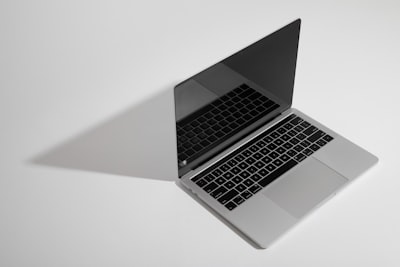
The Framework Laptop 13 Pro is undoubtedly my favorite laptop on the market. Its combination of modularity, repairability, and performance makes it a unique choice for those of us who value customization and sustainability. However, the recent price hike — nearly $800 more — has sparked what many call 'RAMageddon.' The cost of RAM and SSDs has skyrocketed due to global component shortages and inflation in the tech sector. This has made a device that was already more expensive than its traditional rivals even pricier, though it compensates with its DIY approach and long lifespan.
Is it worth paying that premium? To answer that, we first need to understand what the Framework Laptop 13 Pro offers. Unlike the standard version, this model includes a bright, sharp touchscreen, a haptic trackpad that rivals Apple's, and impeccable build quality. All of this is built on a chassis that lets you swap the motherboard, modular ports, battery, and even the keyboard. It is a computer that can evolve with your needs — something no other manufacturer offers to this extent.
But the current high-price environment forces us to ask whether Framework's business model is viable in the long run. The company bets on longevity, yet that promise clashes with the reality of the component market. RAM and storage — two of the items hardest hit by inflation — are precisely the parts the user can upgrade later. However, the high entry price discourages many potential customers.
In the software development world, we face similar dilemmas. At Q2BSTUDIO we understand that building a custom application may seem expensive upfront, but in the long run it offers a greater return on investment than generic solutions. Similarly, investing in a Framework means betting on an ecosystem that reduces electronic waste and allows you to adapt to future needs without buying a new machine. That is why, drawing from our experience as a custom software development company, we recommend evaluating the total cost of ownership (TCO) before being swayed by the initial price.
The $800 increase also brings other factors into play. The so-called 'RAMageddon' does not only affect consumers but the entire technology supply chain. Artificial intelligence (AI) and data analysis with Power BI can help businesses predict these fluctuations and adjust their inventories. For example, AI models trained on historical price data allow you to anticipate when it is best to buy components. At Q2BSTUDIO we integrate AI agents that automate these cost optimization processes — something any manufacturer, including Framework, could leverage to stabilize their prices.
Furthermore, cybersecurity becomes a critical aspect when talking about modular hardware. Because it is easier to disassemble, a Framework laptop can be more vulnerable to physical attacks if proper precautions are not taken. That is why, from our cybersecurity division, we recommend users encrypt their drives and use robust authentication solutions. On the enterprise side, the cloud — AWS or Azure — provides an additional layer of protection and scalability, allowing critical data and backups to be centralized.
Moreover, Framework's modularity makes it easy to integrate cloud services. If you work with cloud AWS or Azure, you can sync your business intelligence (BI) applications directly from the laptop, leveraging the Intel CPU power to process large volumes of data. At Q2BSTUDIO we develop Power BI solutions that run both locally and in the cloud, adapting to mixed environments like the one Framework offers.
The trend toward customization is also reflected in software. More and more companies request custom applications that fit their specific workflows, just as Framework users customize their ports and components. In both cases, flexibility is key. And that flexibility comes at a price, but it is a price that pays off over time thanks to reduced maintenance and upgrade costs.
Getting back to the Framework Laptop 13 Pro, I still believe it is a smart purchase for those who understand the value of repairability and the right to modify their own hardware. The extra $800 is a hard blow, but if you compare it to the cumulative cost of buying a new laptop every three years, the Framework remains more cost-effective in the long run. Moreover, the fact that you can swap the motherboard to integrate future processor generations means your initial investment does not become obsolete after a few months.
In summary, RAMageddon reminds us that technology is a complex ecosystem where prices fluctuate and decisions must be made with foresight. Whether you opt for a Framework or decide to develop a software solution with Q2BSTUDIO, the key is to prioritize quality, sustainability, and adaptability. In the end, the best device — or the best application — is not the cheapest, but the one that best fits your needs for the longest possible time.