
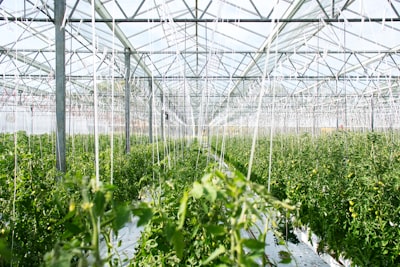
Artificial intelligence applied to greenhouse control has opened revolutionary possibilities for optimizing crop growth, reducing energy costs, and minimizing environmental impact. However, when we talk about Reinforcement Learning (RL) in this field, a critical issue arises: the scalar reward received by the agent is not enough to understand which specific actions it is taking. A control engineer or grower needs to know not only whether the policy is good, but also when it heats, enriches CO₂, vents, manages humidity, deploys screens, or turns on lamps. This need has driven the development of reward component audit frameworks, such as the one proposed in the GreenLight-Gym research, which introduces a calibration-first, reproducible approach to keep reward terms comparable across simulator training, facility-adapted rollouts, Autonomous Greenhouse Challenge logs, and actuator-rule distillation.
The calibration-first reward audit approach is based on a simple yet powerful idea: decompose the scalar reward into conditional components that reflect physical and actuation variables. In GreenLight-Gym, the decomposition includes terms for temperature, CO₂, humidity, vapor pressure deficit (VPD), screen status, and actuation proxies. Each component is calibrated against historical climate traces from the second Autonomous Greenhouse Challenge, allowing the simulator model to be validated against real data. For a company developing intelligent control software, having such a framework means being able to audit RL agent behavior before deploying it in commercial greenhouses, reducing risk and increasing trust in automated decisions.
From a technical perspective, calibration-first is essential because it eliminates biases that arise when training on simulators that do not accurately reflect real greenhouse dynamics. For example, if the simulator temperature model is off by 2 °C, the learned policy may prioritize heating or ventilation incorrectly. By auditing each reward component separately and comparing it with historical data, that drift can be detected and corrected. This process requires custom software tools that integrate both simulation and real data acquisition. Here, companies like Q2BSTUDIO, specialized in artificial intelligence and automation, can provide tailored solutions to facilitate the implementation of these audit frameworks in production environments.
Moreover, reward auditing benefits not only R&D teams but also operations managers who need to justify technology investments. With a clear breakdown of how each action contributes to the overall reward, informed decisions can be made about which sensors to install, which actuators to prioritize, or even which irrigation and fertigation policies to adopt. This directly connects with business intelligence (BI). For instance, a Power BI dashboard could display the contribution of each reward component in real time, allowing managers to detect anomalies or inefficiencies. Q2BSTUDIO offers Business Intelligence with Power BI services to visualize these indicators, combining sensor data, climate history, and RL metrics.
Another relevant dimension is cybersecurity. RL-based control systems, being connected to sensors and actuators in the cloud (AWS, Azure), are potential attack vectors. A reward audit framework can include anomaly detection mechanisms that alert on suspicious deviations, indicating possible cyberattacks or sensor failures. Integration with robust cloud services, such as those offered by Q2BSTUDIO on AWS and Azure cloud, ensures scalability and security in storing and processing climate traces. Additionally, artificial intelligence agents (IA agents) managing the greenhouse can be trained to respond to emergency situations, such as communication drops or abnormal CO₂ readings, keeping production safe.
In the business context, the ability to audit and calibrate RL rewards is not an academic luxury but a competitive necessity. Companies developing precision agriculture solutions need to demonstrate to their clients (large growers, cooperatives, investment groups) that their algorithms work in real conditions and are interpretable. A framework like GreenLight-Gym, combined with the expertise of a technology consultancy like Q2BSTUDIO, enables the creation of custom applications that integrate everything from simulation to control dashboards, including calibration with historical data and continuous auditing of each reward component. Building custom software for this purpose ensures the system adapts perfectly to the particularities of each greenhouse: crop type, local climate, existing infrastructure, and production goals.
Finally, we cannot overlook the role of process automation. Reward auditing closes the control loop: the RL agent learns, its behavior is evaluated through decomposed components, the simulator is calibrated with real data, and the policy is updated. This continuous cycle is the essence of intelligent automation. Q2BSTUDIO, with its software process automation division, can design and implement these feedback loops, integrating sensors, actuators, cloud platforms, and AI algorithms. The result is a greenhouse that not only executes commands but learns and adapts autonomously, with the guarantee that every decision can be audited and justified.
In conclusion, calibration-first reward component auditing represents a step forward in the maturity of RL applied to real-world environments like greenhouses. By decomposing the scalar reward into interpretable terms, it facilitates debugging, validation, and policy transfer from simulation to physical greenhouse. For technology and software development companies, this approach opens doors to consultancy, integration, and custom application development services that solve each client's specific challenges. Q2BSTUDIO, with its expertise in AI, cloud, BI, cybersecurity, and automation, is in a privileged position to lead this transformation, offering solutions that combine the power of RL with the transparency demanded by modern agriculture.

