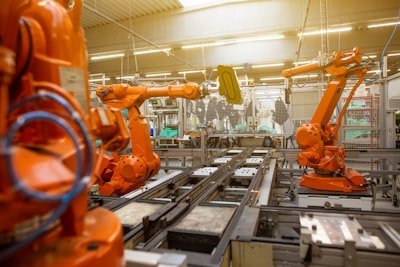
Integrating Vision-Language-Action (VLA) models into industrial environments represents a qualitative leap in modern robotics. However, practical deployment of these systems, which can reach billions of parameters, faces hardware constraints that force a rethinking of training strategies. A recent study on Low-Rank Adaptation (LoRA) applied to the π0 model, a flow-matching VLA, evaluated on precision assembly tasks with a UR5e robotic arm, sheds light on how to optimize resources without sacrificing performance. Results show that with a proper LoRA configuration (rank r=32 and uniform allocation between the Vision-Language-Model backbone and action expert), performance matches Full Fine-Tuning (FFT) while drastically reducing VRAM consumption from 36.2 to 10.8 GiB. This finding opens the door to more agile deployments in production environments, where computational efficiency is as critical as model accuracy.
The current landscape of industrial robotics demands solutions that combine cutting-edge artificial intelligence with accessible hardware. Companies that develop custom software, like Q2BSTUDIO, understand that the key lies not only in raw power but in intelligent resource optimization. Applying techniques such as LoRA allows complex models to run on equipment that would otherwise be relegated to specialized data centers. In this context, algorithm customization and domain-specific adaptation —such as electronic component assembly or precision part manipulation— become differentiating factors. The ability to fine-tune a VLA model with just 32 adaptation ranks without losing performance represents a significant advance for process automation.
From a technical perspective, the study confirms that freezing the Vision-Language-Model (VLM) or restricting the visual encoder solely to LoRA significantly degrades performance. This suggests that adaptation to the physical environment requires both semantic and visual plasticity. In other words, it is not enough to modify decision modules; the system must constantly reinterpret the visual and linguistic signals it receives. For companies offering artificial intelligence services, like Q2BSTUDIO, this conclusion reinforces the need to implement architectures that allow continuous learning without prohibitive costs. The combination of LoRA with full visual encoder fine-tuning emerges as the winning formula for real robotic applications.
In business terms, reducing memory consumption from 36.2 to 10.8 GiB not only lowers infrastructure costs but also accelerates iteration cycles. A development team can test different LoRA configurations in a single day, something unthinkable with full models that require long training hours on latest-generation GPUs. This approach is particularly valuable for companies integrating AI into their workflows, as it democratizes access to frontier technologies. Furthermore, the ability to run these models in the cloud, leveraging services like cloud AWS/Azure, allows horizontal scaling without massive investments in local hardware.
Cybersecurity also plays a relevant role in this ecosystem. By reducing dependence on specialized hardware, companies can centralize inference processes in managed cloud environments, where sensitive data —such as component images or assembly instructions— is protected through advanced protocols. Q2BSTUDIO, as a provider of cybersecurity solutions, recommends regularly auditing communications between the model and robotic actuators to prevent potential attack vectors. LoRA integration does not introduce additional vulnerabilities if good isolation and encryption practices are maintained.
On the other hand, data analytics benefits from these lightweight architectures. With VLA models fine-tuned via LoRA, it is possible to collect real-time performance metrics without saturating system resources. Companies using Business Intelligence (BI) and tools like Power BI can visualize robotic process efficiency, identify bottlenecks, and optimize task allocation. The combination of BI / Power BI with efficient VLA models opens a new layer of operational intelligence in manufacturing.
AI agents, understood as autonomous systems capable of making decisions based on multimodal perceptions, find a natural ally in LoRA. The ability to quickly adapt an agent to new tasks —for example, switching from precision assembly to flexible material manipulation— without retraining the entire model accelerates the adoption of collaborative robotics. Q2BSTUDIO develops AI agents that integrate these efficient tuning techniques, enabling its clients to deploy versatile and cost-effective robotic solutions.
In conclusion, the study on LoRA for VLA models demonstrates that it is possible to achieve the same accuracy as full fine-tuning with a fraction of the computational resources. Choosing r=32 and ensuring visual encoder plasticity are the keys to success. For companies seeking custom applications in robotics, this approach allows scaling from prototypes to production without compromising budget. Q2BSTUDIO offers consulting and development services that incorporate these findings, helping clients transform automation with efficient artificial intelligence. The future of robotics does not depend on larger models, but on better-adapted ones.