
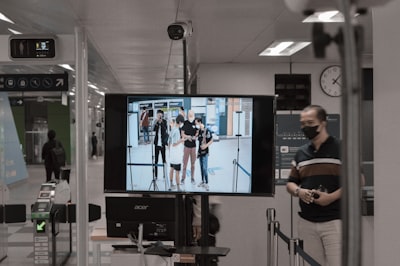
Video action detection has become a cornerstone for enterprise applications ranging from intelligent video surveillance to autonomous driving. However, one of the most persistent challenges faced by computer vision systems is occlusions: objects that partially or fully block the view of an action. Recent research has delved into this problem by creating synthetic and real datasets that allow evaluating how models behave when occluders are static or dynamic, and when they exhibit realistic movements. The results confirm that as occlusion severity increases, the performance of action detectors drops drastically, and reveal emergent phenomena in neural networks: transformers naturally outperform CNNs, even when the latter have been trained with occlusion-based data augmentation; the incorporation of symbolic components like capsules enables binding to objects never seen during training; and islands of agreement emerge in real images without instance-level supervision. These findings open the door to simple yet effective training recipes that improve occlusion robustness by over 30% in metrics like vMAP.
For companies looking to implement video analytics solutions at scale, understanding these dynamics is crucial. A surveillance system that fails to handle occlusions properly could miss a critical incident simply because a pole or a person briefly crosses the scene. Similarly, an autonomous driving assistant needs to identify pedestrians and vehicles even when partially hidden. The mentioned research suggests that model architecture matters more than sheer data volume: transformers, with their global attention, are inherently better at reasoning about hidden regions. This has direct implications for technology infrastructure choices. At Q2BSTUDIO, as a software development and technology company, we understand that applied artificial intelligence requires not only powerful models but also careful integration with the business ecosystem.
The key to making these training recipes work in production environments lies in customization. Every business has its own types of occlusions: in a logistics warehouse, stacked boxes may hide workers; in retail, customers constantly overlap. Therefore, developing custom software that incorporates the latest advances in computer vision becomes indispensable. Our team at Q2BSTUDIO designs AI solutions tailored to each client's specific needs, leveraging modern frameworks that implement attention mechanisms and capsules. Additionally, we know data security is critical: any video system processing people's images must comply with privacy regulations. That is why we integrate cloud services on AWS and Azure with robust cybersecurity policies, ensuring sensitive information is protected both in transit and at rest.
Another relevant aspect is the ability to scale and monitor these systems. Once the action detector is trained with optimal recipes, its deployment in the cloud allows processing video streams from multiple cameras in real time. Here, Q2BSTUDIO's expertise in cloud AWS/Azure comes into play, optimizing costs and performance through serverless architectures and load balancing. Furthermore, the information generated by these systems —for example, how often a specific action occurs— can be visualized using BI/Power BI, transforming raw data into actionable dashboards for decision-making. Not only that, but AI agents can automate responses based on detections, such as sending alerts or activating security protocols.
The future of video action detection lies in models that understand context and handle occlusions naturally, without requiring millions of labeled examples. The emergent properties discovered in research —such as islands of agreement appearing without supervision— suggest that systems can learn more abstract and robust representations. At Q2BSTUDIO, we are ready to help companies adopt these innovations by developing custom software applications that integrate the latest advances in AI, cloud, cybersecurity, and BI. Whether improving safety in an industrial plant or analyzing customer behavior in a shopping mall, our mission is to turn cutting-edge research into practical, scalable solutions.
In summary, a video system's ability to tolerate occlusions defines its real-world utility for businesses. The new training recipes based on transformers and capsules offer a promising path, but successful implementation requires a comprehensive approach that combines robust models, secure cloud infrastructure, business analytics, and intelligent automation. At Q2BSTUDIO, we bring all of this together to deliver solutions that make a difference.
