
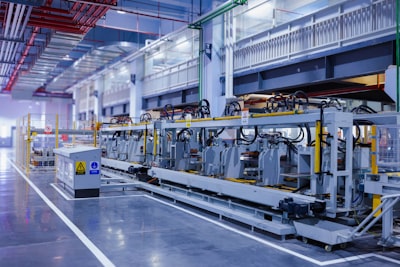
The prefabricated prefinished volumetric construction (PPVC) industry promises efficiency and speed by shifting most work to module factories. However, the operational reality is more complex than it seems. In the production floor, which operates as a flexible job shop, critical post-operation delays arise: concrete curing, watertightness tests, and paint drying block the module while the workstation stays idle. These pauses, often ignored in scheduling models, can inflate the optimal reference makespan by up to 67%, according to studies based on official prefabrication guidebooks. Ignoring them and then repairing feasibility turns out worse than any conventional dispatching rule.
To tackle this challenge, research has adapted a dual-attention deep reinforcement learning solver through three minimally invasive, individually ablatable extensions: lag-aware dynamics with an admissible reward bound, two anticipatory lag feature channels, and liveness-masked operation- and station-type embeddings. These adaptations allow the system to learn scheduling policies that reach a makespan within about 4% of a constraint-programming reference, outperforming all dispatching rules and a genetic-algorithm metaheuristic. The advantage widens under capacity contention, and a single size-mixed policy carries this lead across the trained range of factory sizes.
The implication for companies adopting PPVC is clear: they need scheduling tools that natively handle these delays, without relying on expensive or slow external solvers. This is where custom software developed by Q2BSTUDIO makes the difference. Our expertise in building tailored enterprise software allows integrating AI algorithms and intelligent agents directly into production planning systems, adapting to each factory’s specifics. For instance, an AI agent system can monitor curing delays in real time and resequence operations within seconds, something an exact solver cannot do without costly license models.
Moreover, cloud infrastructure is essential to scale these solutions. With cloud AWS/Azure, we deploy platforms that train reinforcement learning models on distributed clusters and run inferences at the factory edge. Q2BSTUDIO offers cloud services that guarantee low latency and high availability, even when production ramps up. Likewise, cybersecurity is vital to protect production data and AI models from external tampering. We implement security protocols at every layer, from module-to-module communication to storage of trained policies.
Another key piece is business analytics. With BI / Power BI, we create dashboards that visualize actual makespan versus planned, delay causes, and station efficiency. This information enables managers to make informed decisions and adjust DRL model parameters. Q2BSTUDIO integrates these business intelligence tools into the scheduling software, offering a complete view of the modular factory’s performance.
The three-extension approach demonstrates that a solver-free scheduler is feasible, re-planning within seconds after a disruption and achieving near-optimal quality. This is especially relevant for SMEs that cannot afford commercial optimizer licenses. Our team has developed similar solutions for industrial clients, combining reinforcement learning with domain-specific logic. For example, a benchmark generator based on official guidebooks allows validating performance before deployment, a service we offer as part of our AI consulting.
In short, flexible job shop scheduling with delays in PPVC factories is a complex but addressable problem with the right techniques. The combination of DRL, intelligent agents, and robust cloud infrastructure allows companies to build modules faster, with less waste and greater predictability. At Q2BSTUDIO we work on artificial intelligence to transform industrial processes, and this case is one of the most promising. We invite module manufacturers to explore how technology can eliminate the invisible bottlenecks currently hindering their productivity.
