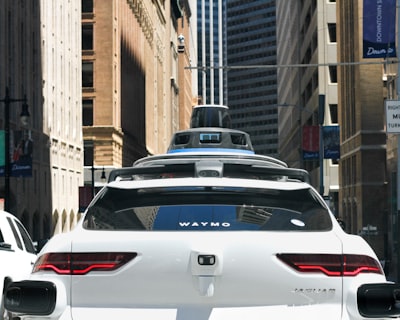
The rise of multimodal artificial intelligence systems in autonomous driving has opened new frontiers but also exposed critical vulnerabilities. The recent challenge organized at the CVPR 2026 Workshop on Adversarial Machine Learning (AdvML) focuses on a key problem: how multimodal adversarial attacks can deceive vision-language agents (VLAs) that interpret complex driving scenes. These systems, based on architectures like DriveLM, combine images from multiple synchronized cameras with structured question-answer pairs to reason about the environment. However, the introduction of almost imperceptible perturbations in images or textual modifications in question suffixes can completely divert model responses, leading to potentially catastrophic consequences in real traffic situations. The challenge, which saw participation from international teams, has become a benchmark for measuring the robustness of multimodal VLAs.
The challenge design is inspired by the DriveLM dataset, which provides six synchronized camera images per scene along with a structured set of driving-related question-answer pairs. Participants were required to generate adversarial images (visual perturbations) and textual perturbations (suffixes) that would induce the model to produce significantly different answers from the reference. The evaluation metric combined answer deviation with penalties for image fidelity (measured by PSNR or LPIPS) and textual cost (number of tokens). In Phase I, the attacked model was known (white-box); in Phase II, a hidden black-box model was added to assess attack transferability. The results published in the technical report reveal key patterns that redefine the understanding of vulnerabilities in these systems.
Among the most relevant patterns, most successful teams opted for image-side attacks, as the textual suffix penalty made modifying the text less profitable. Moreover, scene-level multi-view optimization, considering all six cameras jointly, proved much more effective than attacking each view independently. The structure of question types (e.g., object semantics, spatial relations, trajectory prediction) provided a natural guide for allocating the attack budget: questions with higher visual dependency were more susceptible. It was also observed that using feature-space objectives improved transferability to black-box models, a crucial finding for defense design. Finally, the vulnerability to typographic content embedded in images (such as traffic signs or text on billboards) demonstrated that current VLAs do not properly process visual textual information.
These findings are not only relevant to the academic community but also have direct implications for the software and cybersecurity industries. Companies developing autonomous driving systems need to evaluate and strengthen the robustness of their models against adversarial attacks. This is where companies like Q2BSTUDIO can provide a differentiating value. With solid experience in developing custom AI applications, Q2BSTUDIO offers artificial intelligence solutions that integrate computer vision, natural language processing, and multimodal systems. Its cybersecurity team performs model audits and penetration testing to identify vulnerabilities such as those exposed in this challenge, and provides cybersecurity services tailored to critical environments. The combination of cloud services on AWS and Azure allows these systems to scale safely and efficiently, while Business Intelligence (Power BI) capabilities facilitate real-time monitoring and analysis of agent behavior.
The development of robust AI agents cannot be limited to optimizing performance under normal conditions; it must include a rigorous validation phase against adversarial attacks. The techniques observed in the challenge, such as optimization in latent feature space to improve transferability to black-box models, can be incorporated into adversarial training methodologies. Q2BSTUDIO, as a software and technology development company, integrates these practices into its projects, offering clients not only robust applications but also the guarantee that their autonomous systems will withstand malicious manipulation attempts. Furthermore, the implementation of AI agents (AI agents) that combine perception, reasoning, and action directly benefits from these findings, as an autonomous driving agent must be able to detect and mitigate attacks in real time.
Beyond autonomous driving, the principles learned at CVPR 2026 can be applied to other domains where multimodal systems are critical: AI-assisted medical diagnosis (where an altered image could change a diagnosis), industrial virtual assistants that interpret visual and textual instructions, or e-commerce platforms that use multimodal search. Investment in proactive cybersecurity and in custom software development with high quality standards is a strategic necessity for any organization that relies on AI for critical decisions. Q2BSTUDIO, with its broad portfolio of services ranging from cloud consulting to BI solution implementation, positions itself as an ideal partner to address these challenges.
Another relevant aspect is the scalability of multimodal systems. Running vision-language models in real time requires robust and efficient cloud infrastructure. AWS and Azure services offer GPU instances and orchestration tools like Kubernetes, enabling optimal deployment and management of these models. Q2BSTUDIO has experience in cloud migration and application optimization, ensuring that AI systems are not only secure but also fast and cost-effective. In addition, continuous monitoring through Power BI dashboards allows operations teams to detect anomalies in model behavior that could indicate an ongoing attack.
In summary, the multimodal adversarial attack challenge in autonomous driving has demonstrated that current VLAs, while powerful, are vulnerable. The technology community must respond with innovative defense tools and exhaustive validation processes. Companies like Q2BSTUDIO are prepared to offer that support, combining deep technical expertise in artificial intelligence, cybersecurity, cloud computing, and business intelligence. The future of autonomous mobility depends on building systems that are not only intelligent but also secure against adversaries. Collaboration between academic research and the custom software industry is key to advancing toward truly reliable autonomous driving.