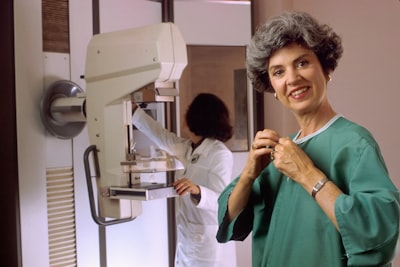
Accurate breast cancer risk prediction from screening mammography is a cornerstone for advancing personalized medicine, where screening intervals are tailored to each patient's individual profile and early detection becomes more effective. In recent years, deep learning methods have shown tremendous potential by integrating longitudinal data and explicit temporal alignment, outperforming traditional approaches that only analyze a single image or an isolated view. However, current systems present a key limitation: they either perform explicit alignment using a single mammographic view (e.g., craniocaudal or mediolateral oblique), or model multiple views without explicit longitudinal alignment, preventing them from exploiting the complementary spatiotemporal information that radiologists use in daily clinical practice. This technological gap creates a significant opportunity to innovate by developing custom software solutions that integrate advanced artificial intelligence capabilities, image processing, and cloud data analytics.
Faced with this challenge, a new paradigm emerges: risk prediction using longitudinal multi-view models. The core idea is to jointly analyze the anatomically complementary CC (craniocaudal) and MLO (mediolateral oblique) views within an explicitly temporally aligned framework. This makes it possible to capture both the evolution of mammographic features over successive screenings and the spatial relationships between the two projections, improving discrimination between high- and low-risk patients. Results published on public datasets such as EMBED and CSAW-CC show that these approaches consistently outperform state-of-the-art methods, not only in overall risk prediction metrics but also in subgroups defined by breast density and cancer type. These advances underscore the potential of longitudinal multi-view vision to stratify risk more precisely, paving the way for personalized screening intervals, earlier identification of high-risk patients, and more efficient allocation of healthcare resources.
From a technical and business perspective, implementing such a system requires combining multiple technological disciplines. On one hand, it is necessary to develop artificial intelligence algorithms capable of temporally aligning series of mammographic images, extracting relevant features, and fusing information from different views. This involves the use of convolutional neural networks, transformers, and attention mechanisms, trained on large volumes of historical data. On the other hand, managing this data, storing it securely, and deploying the models in clinical environments requires robust cloud computing infrastructures, either on AWS or Azure, ensuring scalability, regulatory compliance, and cybersecurity. Furthermore, integration with hospital information systems and presenting results to clinicians through interactive dashboards requires Business Intelligence solutions such as Power BI, which transform calculated risks into actionable insights.
In this context, Q2BSTUDIO positions itself as an ideal technology partner to tackle projects of this magnitude. Our experience in developing custom applications allows us to design modular architectures that integrate AI models, longitudinal data flows, and personalized visualizations. We also offer specialized services in artificial intelligence, from prototyping to production deployment of predictive models, always with a focus on interpretability and clinical validation. To ensure patient data privacy and system resilience, we incorporate advanced cybersecurity practices, including encryption, access control, and periodic audits. And when it comes to scaling the solution regionally or nationally, our expertise in cloud AWS and Azure ensures elastic, high-performance infrastructure.
A differentiator of our proposal lies in incorporating AI agents that assist radiologists in interpreting model results. These agents can, for example, generate automatic reports highlighting the most relevant changes between screenings, alert about patients requiring priority attention, or suggest personalized follow-up intervals based on the individual risk curve. All of this is integrated into a software ecosystem where data analytics, using tools like Power BI, offers dynamic dashboards for hospital management and epidemiological research.
The business benefits of adopting these technologies are clear. Healthcare organizations that implement longitudinal multi-view models can reduce the number of false positives and false negatives, optimize the use of resources such as mammography and biopsy, and improve the patient experience by avoiding unnecessary examinations. Moreover, the ability to identify high-risk women early enables more effective preventive interventions, which in the long run reduces the care burden and costs associated with treating advanced cancers. From an innovation standpoint, having an AI-based risk prediction platform positions any healthcare center as a leader in precision medicine, attracting talent, research funding, and international collaborations.
For all these reasons, we believe that combining longitudinal multi-view vision with a solid technological infrastructure represents the next natural step in the evolution of mammographic screening. At Q2BSTUDIO, we are committed to driving this transformation by offering artificial intelligence and software development solutions that not only solve complex technical problems but also generate real impact on people's health. Our collaborative approach, integrating clinicians, researchers, and engineers, allows us to adapt each project to the specific needs of the client, ensuring that technology becomes an enabler of better diagnoses and treatments.
In summary, breast cancer risk prediction using longitudinal multi-view vision is not just an academic promise; it is a technical reality that is already demonstrating its superiority in studies with public data. To translate these advances into daily clinical practice, a ecosystem of custom software, artificial intelligence, cloud computing, cybersecurity, and business intelligence is required. At Q2BSTUDIO, we offer all these capabilities in an integrated manner, helping hospitals, diagnostic centers, and research institutions build the future of personalized screening. If your organization seeks to lead this change, we are ready to accompany you every step of the way.