
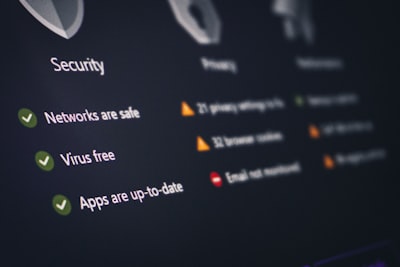
Security of business management software is a constant concern for any organization that relies on accurate data, auditable processes, and uninterrupted operations. One of the most common questions among IT directors and compliance officers is: how frequently is management software updated for security? The answer is not one-size-fits-all, as it depends on the type of application, the vendor, system criticality, and regulatory requirements of each sector. However, there are standard practices that set the rhythm of security updates that every company should know to plan their cybersecurity strategy.
In general terms, security updates follow a predictable cycle of monthly or quarterly patches. These intervals allow technical teams to prepare, test, and deploy fixes without affecting daily productivity. Scheduled updates typically include patches for known vulnerabilities, improvements in access configuration, and updates to libraries or dependencies identified through automated vulnerability scans. This disciplined approach minimizes surprises and facilitates communication with users before, during, and after the maintenance window.
However, when a critical vulnerability or active exploit threatens data confidentiality, integrity, or availability, the regular cycle is not enough. In such cases, software vendors release emergency hotfixes under strict change management procedures. These urgent patches are released within hours or days, requiring close coordination with internal teams to assess impact and plan a rapid but controlled deployment. Companies lacking defined processes to handle these situations may suffer prolonged exposure or, worse, unplanned disruptions.
The actual update frequency also depends on the software deployment model. In traditional on-premise solutions, each organization is responsible for applying patches on its own servers, which can cause significant delays. Conversely, cloud-based platforms, such as those deployed on cloud AWS/Azure, benefit from automatic updates managed by the infrastructure provider. However, even in the cloud, the application layer needs coordination. Many companies opt for hybrid solutions where the core management software runs on cloud infrastructure while certain critical modules remain on-premise, adding complexity to the patch schedule.
A determining factor is regulatory compliance. Sectors such as finance, healthcare, or manufacturing are subject to regulations that impose maximum timelines for fixing vulnerabilities. For instance, PCI DSS or GDPR may require certain patches to be applied within 30 days, regardless of the vendor's regular cycle. In these environments, the ability to demonstrate proactive update management is as important as the technical fix itself. This is where having a technology partner that supervises and documents each update makes sense.
Q2BSTUDIO, as a software development and technology company, understands that security is not a one-time event but a continuous process. Therefore, when implementing business management solutions, it coordinates security updates by aligning maintenance windows with business operations and compliance requirements. It is not just about applying patches, but doing it intelligently: prioritizing by criticality, communicating with stakeholders, and verifying that no automated process is affected. To this end, Q2BSTUDIO uses automated vulnerability scanning tools and dependency analysis, maintaining an up-to-date inventory of all software components.
Furthermore, the integration of custom applications allows companies to tailor approval flows, notifications, and rollbacks, adapting the update to their own operational cadence. For example, a project management system may require patches only during weekends, while an invoicing module may need a minimal downtime window. With custom software, these requirements are implemented in the core of the system itself.
Another relevant aspect is post-update monitoring. Business Intelligence tools (such as Power BI) and AI agents enable analyzing system behavior after a patch, detecting performance anomalies, unexpected errors, or changes in access patterns. Q2BSTUDIO integrates these capabilities into its solutions, offering dashboards that show update status, vulnerability exposure levels, and compliance with security SLAs. Artificial intelligence, through predictive models, can even anticipate which updates will have the greatest operational impact, helping to prioritize patches more efficiently.
Update frequency also depends on the software lifecycle. Applications under active support typically receive regular patches, while older versions or those in extended maintenance may only get critical updates. Therefore, it is advisable to keep platforms on supported versions and plan periodic migrations. Q2BSTUDIO advises its clients on version roadmaps, ensuring transitions with minimal impact.
In short, there is no single frequency that works for all scenarios. The question 'how frequently is management software updated for security?' must be answered considering business criticality, technological environment, applicable regulations, and the maturity of change management processes. What is universal is the need for a structured approach, with predictable windows, emergency procedures, clear communication, and the ability to measure the effectiveness of each update. Companies that delegate this responsibility to a partner like Q2BSTUDIO not only reduce the risk of breaches but also gain agility to adapt to emerging threats without slowing growth.

