
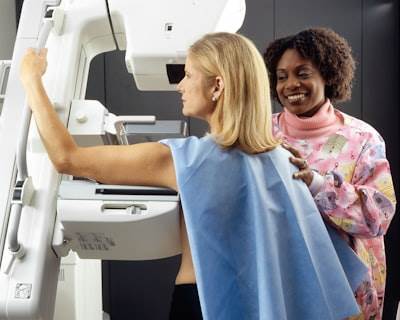
Artificial intelligence is transforming medical imaging, particularly mammography, where early breast cancer detection can save lives. However, one of the most critical challenges facing foundation models —large pre-trained networks used as feature extractors— is maintaining performance when confronted with domain shifts. These shifts can arise from differences in acquisition equipment, imaging protocols, breast density, or patient populations. A recent study evaluating 15 foundation model architectures in mammography reveals that although some mammography-specific models show superior average performance on out-of-distribution data, robustness is not solely explained by prior exposure to mammographic images. General vision models like DINOv3 remain competitive, and adapted pretraining does not guarantee consistent generalization improvement. This finding underscores the importance of evaluating models not only on internal datasets but also on a variety of external datasets that reflect real-world heterogeneity.
From a technical and business perspective, addressing the robustness of foundation models requires a comprehensive approach that combines data science, software engineering, and a solid cloud infrastructure. This is where companies like Q2BSTUDIO can make a difference. With expertise in developing custom software, Q2BSTUDIO offers tailored solutions for integrating AI models into clinical workflows, ensuring systems are robust to variations in input data. For instance, when deploying mammography models across different hospitals, it is crucial to have a data pipeline that can handle varied formats, inconsistent labels, and population biases. The company can design a software architecture that acclimates models through data augmentation, normalization, and cross-domain validation.
Artificial intelligence, as a core pillar of these solutions, greatly benefits from cloud infrastructure. AWS and Azure cloud services enable efficient scaling of model training and inference, as well as storage of large volumes of mammograms while complying with regulations such as HIPAA or GDPR. As a technology partner, Q2BSTUDIO helps organizations migrate their workloads to the cloud, optimizing costs and improving availability. Additionally, cybersecurity is a critical factor in healthcare: protecting patient data and trained models requires measures like encryption, access controls, and regular pentesting. The company offers cybersecurity services to ensure that AI systems in mammography are secure against adversarial attacks or data breaches.
Another relevant aspect is business analytics. Hospitals and diagnostic centers need to monitor the performance of their foundation models over time, identifying failure patterns or data drift. Business Intelligence tools like Power BI come into play, allowing the creation of visual dashboards with key metrics: accuracy by breast density, false positive rates per acquisition machine, etc. Q2BSTUDIO integrates these BI solutions into existing systems, providing clinical and management teams with a clear view of AI behavior. Furthermore, the concept of AI agents is emerging as a way to automate repetitive tasks, such as label validation or preliminary report generation. An intelligent agent could, for example, automatically detect low-performing domains and suggest specific retraining.
Ultimately, evaluating the robustness of foundation models in mammography is not only an academic problem but a practical requirement for safe clinical adoption. The combination of multi-site evaluation methodologies, cloud infrastructure, cybersecurity, and advanced analytics forms the basis of a reliable ecosystem. Companies like Q2BSTUDIO, with their focus on custom software, are uniquely positioned to help organizations overcome these challenges, building solutions that are not only accurate but also robust to the inevitable variability of the real world. Investing in these capabilities not only improves clinical outcomes but also adds business value by reducing retraining costs and increasing trust in the technology.

