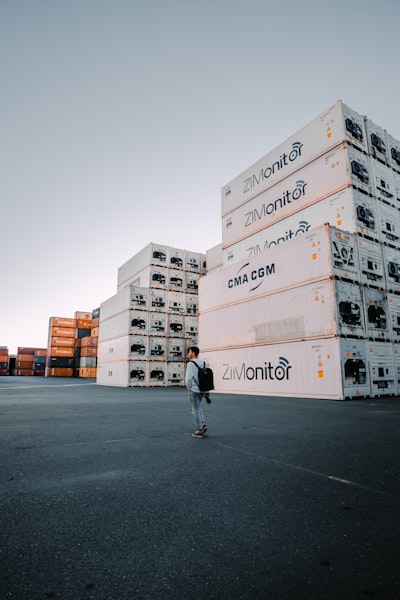
Containerization has become a cornerstone for machine learning (ML) projects in open source environments. A recent study of nearly 2,000 ML-related Dockerfiles reveals that containers not only enable reproducibility and portability but also pose unique challenges due to the iterative nature of AI model development. Results show containers average 10.27 GB and take about 8.84 minutes to build, with 44.4% of commits triggering rebuilds — mainly due to context file changes — and 71% of rebuild work wasted on redundant computation. This highlights the need to optimize containerization workflows to avoid development bottlenecks.
From a business perspective, these inefficiencies directly impact iteration speed and operational costs. Companies adopting ML for custom software applications face the challenge of managing environments that combine training, inference, and infrastructure in containers. For instance, a training container may include heavy libraries like TensorFlow or PyTorch, while an inference container is lighter but requires specific dependencies. The lack of efficient caching strategies and suboptimal refactoring patterns exacerbates the problem. Identifying and applying best practices — such as the seven refactoring patterns detected in stable projects — is key to reducing footprint and speeding up builds.
Technically, containerization in ML goes beyond packaging code; it involves managing versions of datasets, pre-trained models, and hyperparameter configurations. Here, cloud services like AWS or Azure come into play, offering scalability and efficient storage. For organizations, combining containers with cloud AWS/Azure enables more agile ML pipelines, reducing deployment time and improving team collaboration. Additionally, integrating with Business Intelligence tools like Power BI allows real-time visualization of model performance metrics, facilitating data-driven decisions.
Another critical aspect is cybersecurity. Containers handling sensitive data or proprietary models must be protected against unauthorized access and vulnerabilities in base images. Companies developing custom AI software often outsource cybersecurity services to audit their containerized environments, ensuring compliance with regulations like GDPR or HIPAA. Moreover, the adoption of autonomous AI agents — performing maintenance or monitoring tasks — is gaining traction, and their deployment in containers requires careful system layer design to minimize data leakage risks.
In the open source ecosystem, projects like Kubeflow or MLflow have standardized container management, but specific challenges persist. For example, 96.4% of rebuilds are due to context file changes, indicating developers frequently modify datasets or scripts without optimizing the order of Dockerfile instructions. A solution is to separate stable dependencies from dynamic ones into different layers, leveraging Docker's caching system. Companies like Q2BSTUDIO offer consulting services to redesign these flows, applying refactoring patterns that have been shown to reduce image sizes by up to 30% and build times by over 40%.
The integration of AI agents into containerization pipelines represents the next evolutionary step. These agents can automatically monitor builds, detect redundancies, and suggest Dockerfile changes based on commit history. For instance, an agent could identify that a dependency layer is unnecessarily rebuilt every time a configuration file is updated and recommend isolation. Furthermore, by linking them with BI tools like Power BI, teams can visualize build performance and associated costs on dashboards, enabling continuous optimization.
Finally, for companies looking to develop custom software with AI, efficient containerization is a strategic enabler. It not only accelerates time-to-market but also reduces technical debt accumulated from inefficient builds. In this context, partnering with technology providers like Q2BSTUDIO grants access to expertise in cloud, cybersecurity, and process automation, ensuring containers do not become a black box but rather an agile and controlled tool. The key is understanding that each ML project has a unique containerization profile, and only through deep analysis and proven patterns can a balance between performance, cost, and security be achieved.