
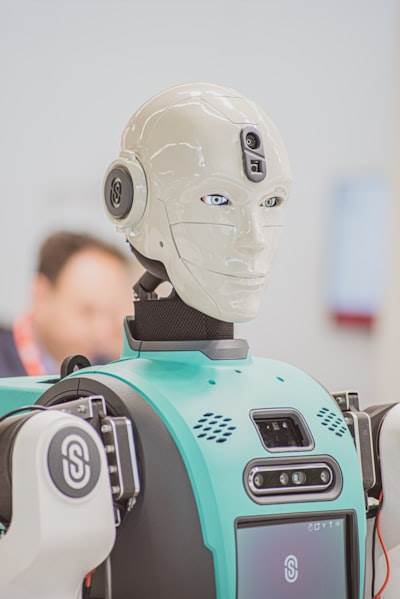
In the world of modern robotics, human efficiency during the post-training of vision-language-action (VLA) models has become a critical factor for scaling real-world deployments. Traditionally, adapting these models to specific tasks requires multiple fine-tuning rounds, where each iteration aims to correct failures detected in the previous one. However, the human cost of supervising, intervening, and labeling data grows linearly with the number of robots and tasks, limiting overall productivity. This is where concepts like VLAC-Cut — an automatic trajectory curator — offer a way to maximize throughput per human work hour, combining role specialization and intelligent data curation.
The core proposal involves splitting human labor into two distinct roles: a trained teleoperator who performs high-value remote interventions and recovery demonstrations, and a floor operator who supervises multiple robots, triggers takeovers, and performs physical resets. This specialization reduces forced multitasking, lowers training costs, and allows a small team to oversee a larger fleet. But even with this organization, the volume of generated data exceeds human labeling capacity. Here, VLAC-Cut steps in by segmenting autonomous trajectories into useful fragments (progress, idle, failure, recovery) and discarding harmful or uninformative ones. By combining curated data with human interventions, each post-training round is optimized, achieving success rates of 80% to 95% and multiplying productivity by up to 4.2 times compared to the base model.
From a business perspective, implementing such a pipeline is not trivial. It requires integrating teleoperation modules, fleet control, cloud data storage, and AI model orchestration. This is where companies like Q2BSTUDIO bring real value. With expertise in cloud services on AWS and Azure, they can deploy scalable infrastructure to manage multiple robot trajectories, ensuring low latency for remote interventions and high availability. Furthermore, the company's artificial intelligence capabilities allow designing and integrating AI agents that support real-time decision-making, assisting both the teleoperator and floor operator with data-driven recommendations.
Cybersecurity is another fundamental pillar. When a robot operates in industrial or commercial environments and connects to cloud services, any vulnerability can compromise both data integrity and physical safety. Therefore, embedding cybersecurity from the design stage — with robust authentication protocols, encrypted communications, and periodic audits — is essential for confident scaling. Q2BSTUDIO offers pentesting and security consulting services tailored to robotic systems and IoT platforms, ensuring the post-training pipeline is as secure as it is efficient.
Likewise, the data generated by robots — from telemetry to video — can be leveraged through Business Intelligence tools. With Power BI or custom solutions, companies can visualize fleet performance in real time, detect recurring failure patterns, and optimize post-training rounds. Q2BSTUDIO develops custom BI solutions, integrating cloud and on-premise data sources to deliver actionable dashboards that improve strategic decision-making.
Of course, not all organizations have the resources to build a complete system from scratch. Here, custom software development becomes key. Whether it is a tailored teleoperation interface, a trajectory curation module like VLAC-Cut, or a fleet management system, having software adapted to specific needs reduces implementation time and maximizes return. Q2BSTUDIO, as a software and technology development company, offers cross-platform solutions that integrate with existing ecosystems, allowing teams to focus on continuous improvement of their robotic models.
Process automation also plays a relevant role: from autonomous robot restarts to automatic correlation of failures with corrective actions. AI agents can learn from human interventions and propose increasingly effective recovery strategies, reducing teleoperator dependency over time. Combined with automatic data curation, this accelerates the iteration cycle and decreases the manual effort required.
In short, human efficiency in robot post-training depends not only on faster algorithms but on a careful design of roles, tools, and processes. VLAC-Cut represents a significant advance in leveraging autonomous data, but its true potential is unlocked when integrated into a solid enterprise architecture. Companies like Q2BSTUDIO, with their combination of cloud services, AI, cybersecurity, and custom development, enable this vision to materialize in real production environments. The result is a robot fleet that learns faster, with less human intervention, and with a success rate that justifies the investment in each post-training round.

