
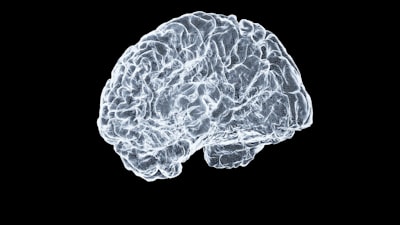
Large-scale modeling of neural data has become a central challenge for computational neuroscience. Widefield calcium imaging, which captures cortical activity across multiple subjects, offers an unprecedented window into brain dynamics, but its high dimensionality, complex spatiotemporal structure, and task-irrelevant activity have limited models to single-session analyses. This hinders scalability and generalization. In this context, WiCAT emerges as a multi-subject model that employs self-supervised learning to overcome these barriers, even achieving zero-shot behavior decoding on unseen subjects. Its atlas-based tokenization and absence of session-specific components enable learning globally shared spatiotemporal representations. Results show that WiCAT outperforms single-session models, transfers across subjects, tasks, and datasets, and reconstructs omitted brain regions.
From a technical perspective, WiCAT represents an advancement in how high-dimensional multimodal data is processed. The use of pretrained foundation models with self-supervised learning not only improves performance on downstream tasks but also reduces the need for labeled data. This directly resonates with strategies that companies like Q2BSTUDIO implement in developing custom artificial intelligence solutions. The ability to extract relevant patterns from unstructured data while minimizing contextual noise is key for enterprise applications ranging from industrial process monitoring to anomaly detection in critical systems.
One of the pillars of WiCAT's approach is its atlas-grounded tokenization, which organizes the signal into coherent semantic units without relying on session-specific configurations. This principle is analogous to how Q2BSTUDIO designs custom software applications that abstract the underlying complexity of different platforms and environments. By standardizing data representation, model reuse and integration with cloud systems, such as those based on AWS or Azure, are facilitated. The scalability of these models, which require large compute and storage capacities, directly relies on cloud infrastructures that Q2BSTUDIO helps design and deploy.
Cybersecurity emerges as a critical factor when handling neural data from multiple subjects, especially in clinical or research settings. WiCAT, by not including session-specific components, reduces exposure of sensitive information, but transferring models and data between cloud servers demands robust protection protocols. Q2BSTUDIO integrates cybersecurity practices in all its developments, ensuring that data and models remain secure through encryption, access control, and continuous auditing. This allows organizations to leverage the advantages of multi-subject modeling without compromising privacy.
Another relevant aspect is the use of AI agents to automate analysis and behavior decoding. WiCAT demonstrates that a pretrained model can perform zero-shot decoding, i.e., infer behavioral states in previously unseen subjects. This capability opens the door to autonomous systems that, for example, monitor brain activity in real time and alert about subtle changes. Q2BSTUDIO develops AI agents tailored to specific domains, from healthcare to logistics, incorporating self-supervised learning and multi-subject modeling techniques to improve accuracy and generalization in dynamic environments.
Business intelligence (BI) also benefits from these advances. The same principles of tokenization and global representations can be applied to complex enterprise data, such as financial time series or consumption patterns. With tools like Power BI, it is possible to visualize and analyze these representations, extracting insights that were previously hidden. Q2BSTUDIO offers consulting and implementation services for Business Intelligence that integrate advanced AI models, enabling companies to make decisions based on high-dimensional data with the same efficiency that WiCAT applies to neuroscience.
Finally, the WiCAT model represents a milestone in the direction of foundation models for neuroscience, but its principles are transferable to any domain requiring multi-subject learning and zero-shot generalization. In the business arena, Q2BSTUDIO leads the adoption of these approaches, combining custom software development, cloud infrastructure (AWS/Azure), cybersecurity, artificial intelligence, and BI tools to deliver comprehensive solutions. The ability to build models that learn from multiple sources and adapt to new contexts without retraining is the natural next step in the evolution of intelligent software.

