
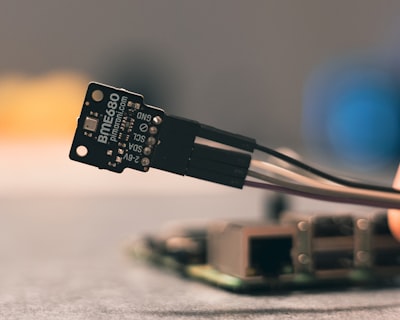
The Internet of Things (IoT) has transformed how we monitor physical assets, servers, and embedded sensor platforms. Every second, millions of devices generate multivariate temporal data streams that need to be analyzed to detect anomalous behavior. Early anomaly detection is essential for fault diagnosis, predictive maintenance, and security, but practical implementation faces obstacles such as decentralized non-IID data, limited bandwidth, and constrained computational and memory resources on edge devices. In this context, federated learning has emerged as a promising solution, yet traditional deep-learning-based approaches require training and communicating heavy neural models, which is unfeasible for resource-constrained environments.
Against these limitations, the combination of federated learning with Koopman operator theory offers a lightweight and efficient alternative. The Koopman operator allows representing nonlinear dynamics through a linear model in a high-dimensional observable space, drastically reducing computational complexity. Instead of training deep networks, sliding-window Koopman representations are learned, capturing the normal temporal dynamics of multivariate series. This approach, known as FedKAD (Federated Koopman Anomaly Detection), formulates federated training as a low-rank consensus problem, where raw data and local reduced dynamics never leave the device, and only compact subspace variables are exchanged with the central server.
To optimize the shared representation under orthonormality constraints, FedKAD employs a federated Stiefel-ADMM algorithm that guarantees convergence and stationarity even with partial client participation. During inference, each client detects anomalies locally by measuring the prediction residual between observed future trajectories and the learned Koopman dynamics. Experimental results on four widely used benchmarks show that FedKAD maintains or improves detection performance compared to federated deep learning baselines, but with key operational advantages: up to 2100x faster training, 80x lower communication, and 79x lower inference latency. These figures make it an ideal solution for resource-limited IoT devices.
From a technical and business perspective, adopting a framework like FedKAD opens new possibilities for industries that rely on continuous monitoring, such as smart manufacturing, smart cities, energy, and digital health. However, implementing and scaling such systems requires robust software infrastructure, cloud integration capabilities, and a cybersecurity approach that protects both data and federated models. This is where companies like Q2BSTUDIO provide differential value.
Q2BSTUDIO is a software and technology development company specialized in custom solutions that address the most complex IoT and artificial intelligence challenges. For example, to implement an anomaly detection system like FedKAD, one needs custom software development that integrates sensor data streams, manages federated communication, and offers visualization interfaces for operators. Q2BSTUDIO has experience creating such platforms using cloud technologies like AWS and Azure, optimizing deployment in edge environments and reducing infrastructure costs.
The cloud plays a central role in aggregating and coordinating federated learning. Cloud AWS/Azure services provide the scalability needed to handle thousands of devices, store Koopman subspaces, and orchestrate training cycles. Additionally, Q2BSTUDIO integrates advanced cybersecurity mechanisms, such as end-to-end encryption and multi-factor authentication, to ensure sensitive client data is never exposed during federated aggregation. Cybersecurity is a fundamental pillar in any IoT deployment, especially when handling critical data for industrial operations or public infrastructure.
Another key aspect is artificial intelligence and data analysis. The Koopman operator itself is an AI technique, but its effectiveness is enhanced when combined with Business Intelligence (BI) tools like Power BI. Q2BSTUDIO helps companies build dashboards and control panels that visualize detected anomalies, temporal trends, and real-time alerts. BI / Power BI services allow transforming prediction residuals into actionable information for maintenance and operations teams. Furthermore, the trend toward autonomous AI agents that make decisions based on these anomalies is gaining traction. Q2BSTUDIO develops intelligent agents capable of executing corrective actions without human intervention, such as isolating a compromised device or adjusting production parameters.
For companies looking to adopt federated Koopman learning, the first step is usually a feasibility analysis and a controlled pilot. Q2BSTUDIO offers technical consulting to assess the suitability of the approach in each case, considering data heterogeneity, device capacity, and latency requirements. Subsequently, a software architecture is designed combining cloud microservices, edge containers, and a secure communication layer. Q2BSTUDIO's experience in process automation facilitates integration with existing systems, such as ERP or MES, and the generation of automated workflows that respond to detected anomalies.
The future of IoT anomaly detection lies in lighter, federated, and adaptive models. FedKAD represents a significant advance, but its practical implementation depends on a solid technological ecosystem. Q2BSTUDIO, with its multidisciplinary approach in custom software development, artificial intelligence, cybersecurity, and cloud, is perfectly positioned to help organizations make the leap toward intelligent, efficient, and secure monitoring. Whether in a connected factory, a network of environmental sensors, or a fleet of autonomous vehicles, the combination of federated Koopman and Q2BSTUDIO's expertise offers a real competitive advantage. For more information on how to implement these solutions, visit q2bstudio.com.
