
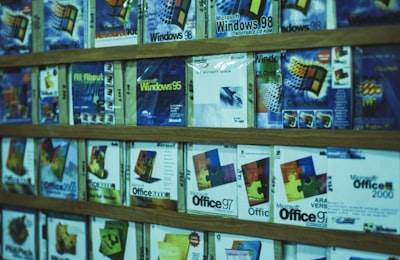
Windows 95 marked a turning point in operating system history, but it also brought some technical decisions that seem rudimentary today. One of the most curious is how it detected installers: it did not identify them by analyzing the file contents, but simply 'guessed' based on the filename. If a program was named setup.exe, install.exe, or update.exe, Windows 95 automatically considered it an installer and displayed the famous 'Do you want to install this program?' dialog. This led to absurd situations, such as a simple text file renamed to setup.exe triggering the same pop-up. The logic was basic: the operating system scanned the root directory of a CD-ROM or disk for predefined name patterns. There was no header analysis, digital signature, or integrity check. It was a time when computer security was not yet a priority and user experience relied on simplicity, albeit naive.
This mechanism, although functional for its time, reveals much about Microsoft's design philosophy in the 1990s. Compatibility and ease of use were prioritized over technical robustness. Any developer could package their software with a standard name and the system would recognize it without issues. However, it also opened the door to rudimentary malware: simply naming a virus virus.exe would make Windows 95 treat it as a legitimate installer. The lack of real validation was a risk assumed for the sake of fluidity. Over time, operating systems evolved toward more sophisticated methods, such as digital signature verification, manifest metadata, and heuristic analysis. Today, Windows 10 and 11 use technologies like SmartScreen, UAC, and Authenticode signatures to decide whether a file is trustworthy.
But evolution has not only been in security, but also in how software is distributed. Applications no longer come on CD-ROMs with a single setup.exe; they are deployed through digital stores, web installers, virtual containers, and cloud services. Companies like Q2BSTUDIO, specialized in custom software development, have had to adapt their installation and update processes to complex environments. No longer is a filename sufficient; modern installers must manage dependencies, permissions, versioning, and security. For example, a tailored software for a company may include components that integrate with cloud services like AWS or Azure, and its automated deployment requires CI/CD systems that validate each step.
Artificial intelligence has also entered this field. Today there are AI agents that analyze installer behavior to detect threats, optimize the installation process, and even personalize the user experience. Q2BSTUDIO incorporates artificial intelligence into its solutions to automate repetitive tasks, such as generating installation scripts or adapting configurations based on user profiles. Furthermore, cybersecurity is essential: a malicious installer can compromise an entire business infrastructure. That is why companies invest in pentesting and vulnerability analysis, services also offered by Q2BSTUDIO through its cybersecurity division.
Another key aspect is Business Intelligence. Tools like Power BI allow monitoring installation success rates, detecting recurring failures, and improving user experience. Q2BSTUDIO develops custom dashboards that display real-time metrics on software deployment, integrating data from multiple sources such as installation logs, ticketing systems, and cloud platforms. This enables data-driven decisions to optimize processes.
Returning to Windows 95, that primitive way of detecting installers is a reminder of how far technology has come. What was sufficient then would be unacceptable today. The lesson is that innovation is not just about adding new features, but rethinking the foundations. Just as Microsoft had to abandon filename guessing, today's companies must adopt modern approaches to software distribution. Cloud, automation, and artificial intelligence are not luxuries but necessities to compete in a market where security and efficiency are paramount.
In conclusion, the curious case of Windows 95 and its guessed installers teaches us that seemingly minor technical details can have a big impact on user experience and security. Since then, the software ecosystem has matured enormously, and companies like Q2BSTUDIO are at the forefront, offering solutions that integrate custom development, AI, cybersecurity, cloud, and BI. If your organization needs robust, modern software, remember that a simple setup.exe is no longer enough; you need a comprehensive approach that covers all technology layers.
