
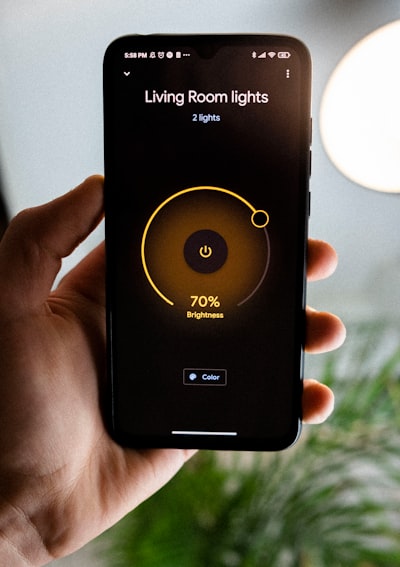
The smart home has always been a tantalizing promise, but one that has rarely been fulfilled coherently. Amid protocol fragmentation, reliance on multiple apps, and lack of interoperability, the dream of a house that adapts to us has collided with technical reality. Yet one story stands above the noise: that of Philips Hue. Since its launch in 2012, this connected lighting system has not only popularized the concept but has laid the foundation for what many consider the perfect smart home. In this article we explore the keys to its success, from its technical architecture to its business model, and how companies like Q2BSTUDIO apply similar lessons in custom software development to create robust and scalable digital ecosystems.
Philips Hue's proposition is deceptively simple: LED bulbs controlled via an app that can change color, intensity, and temperature. But behind that apparent simplicity lies first-class engineering. The system relies on a bridge that connects to the router and communicates with the bulbs via Zigbee, a low-power mesh protocol. This technical choice avoided direct Wi-Fi dependence, which saturates networks and consumes more energy. The Zigbee architecture allows each bulb to act as a repeater, extending reach and ensuring reliability even in large homes. Such decisions, prioritizing stability over immediacy, are the same that guide development teams when designing cloud solutions on AWS or Azure for enterprise clients, where resilience and performance are critical.
One of Hue's greatest successes was its focus on interoperability. Philips opened its API early, allowing third-party developers to integrate the bulbs with voice assistants, sensors, security systems, and automation platforms like IFTTT, HomeKit, or Google Home. This strategic decision turned Hue into a de facto standard within the smart home ecosystem. Rather than trying to control the entire experience, Philips focused on being the best at lighting and provided the tools for others to build around it. This philosophy is very similar to what drives the development of custom AI agents: building specialized modules that connect via secure APIs, allowing each part of the system to evolve independently.
From a business perspective, Hue's success also lies in its business model. Philips does not just sell bulbs; it sells an ecosystem that includes motion sensors, wireless switches, LED strips, outdoor lamps, and accessories. Each new product integrates seamlessly, fostering customer loyalty and recurring spending. Moreover, the company managed firmware updates and new features without breaking compatibility, something not all tech companies achieve. This platform approach, where hardware and software reinforce each other, is an example of how a Business Intelligence strategy with Power BI can help companies understand user behavior and anticipate needs, optimizing both experience and profitability.
Nevertheless, even the most polished system faces challenges. Cybersecurity has become a growing concern in the smart home. Philips Hue has had to patch vulnerabilities in its Zigbee protocol and bridge firmware, demonstrating that security is not an end state but a continuous process. In this regard, companies developing IoT solutions must integrate cybersecurity and pentesting practices from the design phase, something Q2BSTUDIO incorporates in its custom software projects, ensuring that both the application and the cloud infrastructure are protected against threats.
Looking ahead, Hue's evolution points toward contextual intelligence. New advanced automation features allow lights to react not only to commands but to presence, time of day, natural light, and even mood inferred by biometric sensors or usage patterns. This aligns with the broader trend of AI agents that learn from data and make decisions without explicit human intervention. In this scenario, the combination of cloud computing (AWS/Azure), data analytics with BI, and machine learning algorithms enables truly adaptive experiences. Companies like Q2BSTUDIO are already working on systems where lighting, climate, and security are coordinated by an artificial intelligence core, offering a level of comfort and efficiency that Philips Hue has only begun to sketch.
In conclusion, Philips Hue did not achieve the perfect smart home by chance. Behind its success lie a solid technical architecture, an open platform strategy, a scalable business model, and an obsession with user experience. The lessons learned are applicable to any tech project, whether a startup or a corporation: prioritize reliability, foster the ecosystem, design with security in mind, and use data to continuously improve. At Q2BSTUDIO we apply these same principles in every custom application development project, integrating AI, cybersecurity, cloud, and BI to build solutions that not only work but transform the way people interact with technology. The perfect smart home is still under construction, but with the right foundations, it is getting closer every day.

