
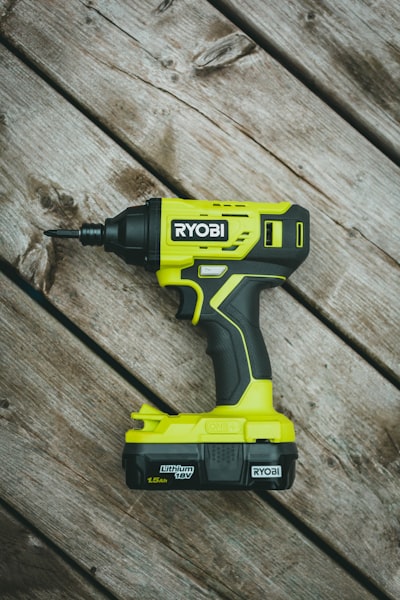
Ryobi is one of those brands that sparks divided opinions in forums and social media. While communities like Reddit or YouTube are full of criticism about their lime-green tools, calling them 'cheap' or 'low quality,' the truth is that their sales keep growing and DIY enthusiasts buy them massively. How can this contradiction be explained? The answer lies not only in the price, but in a smart business strategy that combines a battery ecosystem, accessibility, and a solid user experience. And, as we will see, tech companies like Q2BSTUDIO can offer custom software solutions to replicate this success in other sectors.
To understand why Ryobi thrives among DIYers, we need to analyze the buyer profile. These are not construction professionals who need tools for daily heavy use, but people who take on occasional home projects: assembling furniture, fixing a pipe, cutting wood for a shelf. For this audience, the cost of a professional tool like Milwaukee or DeWalt is prohibitive. Ryobi offers performance good enough for household tasks at a much more affordable price, backed by a warranty and a massive distribution network in big-box stores like Home Depot.
The differentiating factor, however, is its One+ battery platform. With over 300 compatible tools, from drills to vacuums and leaf blowers, the user buys one battery and uses it across multiple devices. This creates an addictive ecosystem: once you invest in two batteries, you are likely to keep buying Ryobi tools because you already have the power base. This strategy is similar to what software companies do with closed platforms: hook the customer with a basic product and then sell extensions. From a technical perspective, managing an interconnected product ecosystem requires robust inventory, logistics, and customer service software — areas where cloud AWS/Azure solutions like those offered by Q2BSTUDIO can make a difference.
Additionally, Ryobi has tailored its communication to the DIY niche. It does not try to compete in the professional segment; instead, it positions itself as the reliable and fun 'do-it-yourself' brand, with a striking design that makes it easily recognizable. In a world where differentiation is key, its lime-green color has become a symbol of accessibility. This is a marketing lesson, but also a data analysis one: companies need to understand who their customers are and what they expect from a product. For this, using BI/Power BI enables audience segmentation and personalized offers, just as a tool manufacturer would when launching a new line for beginners.
Another often-overlooked aspect is incremental innovation. Ryobi does not introduce disruptive technologies every year; instead, it progressively improves its products: longer battery life, better ergonomics, new features like built-in LED lights. This continuous improvement philosophy aligns perfectly with agile software development, where teams launch early versions and iterate based on feedback. A tech company like Q2BSTUDIO can help implement this approach through custom software that collects user feedback, analyzes usage patterns, and automates responses, integrating with AI and AI agents for customer support.
Also worth considering is the supply chain and global presence of Ryobi. To keep prices low without sacrificing quality, logistics optimization is fundamental. Here, cloud services come into play: cloud AWS/Azure allow scaling warehouse management systems (WMS) and predicting demand using machine learning models. Cybersecurity is another critical layer, as customer data and inventory controls must be protected against cyberattacks — an area where Q2BSTUDIO can provide advice with pentesting and comprehensive security solutions.
The online criticism of Ryobi often comes from professionals who compare the durability of its tools to high-end ones, forgetting that home users do not subject their equipment to the same wear and tear. In fact, Ryobi is perfectly functional for most household tasks, and its value for money is hard to beat. The hate on social media is partly a phenomenon of brand tribalism: defenders of other brands try to justify their higher investment by denigrating the competition. But the numbers don't lie: Ryobi is the best-selling brand of cordless power tools for home use in the United States, according to market data.
For a company wanting to emulate this success, the key is to understand the customer and build an attractive ecosystem. It is not enough to launch a cheap product; you must offer a complete experience: a platform of accessories, efficient after-sales support, and an app that manages smart tools. Here, technology plays a transformative role. Q2BSTUDIO, as a software development company, can design custom applications that connect hardware with software, allowing manufacturers to collect usage data, send maintenance notifications, or even sell subscriptions for premium services. Using AI agents can automate customer support in multiple languages, while Power BI visualizes sales and satisfaction metrics in real time.
In conclusion, the question 'If Ryobi is so bad, why do so many hobbyists buy it?' is answered with an uncomfortable truth for critics: because it is not bad for what it is designed for. The brand has identified a huge niche — occasional DIY — and built an ecosystem that maximizes convenience and minimizes cost. The lessons for other sectors are clear: segment well, invest in a platform of complementary products, use data to improve continuously, and do not underestimate the power of visual marketing. And if you need technological support to implement these strategies, companies like Q2BSTUDIO offer advanced solutions in custom software, AI, cybersecurity, cloud AWS/Azure, and BI/Power BI so your business not only survives but thrives in a competitive market.
Ultimately, Ryobi's success shows that online perception does not always reflect market reality. The key is to offer value to the right customer, and technology is the best ally to achieve that. Whether you are a tool manufacturer, a startup, or an established company, consider how custom software can help you understand your audience, optimize your processes, and scale your business. And remember: lime-green may be meme-worthy, but the results speak for themselves.

