
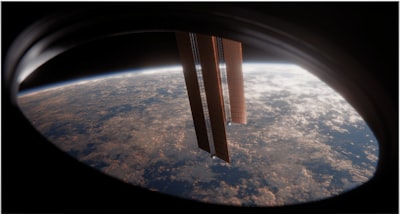
The United States Federal Communications Commission (FCC) has given the green light to a project that seemed straight out of science fiction: the deployment of orbital space mirrors capable of reflecting sunlight toward Earth. The first satellites equipped with these reflectors could launch before the end of this year, according to official sources. The initiative, driven by private companies and backed by space agencies, aims to harness solar energy continuously, illuminate dark regions at night, and even mitigate climate effects. From a technical perspective, the challenge lies not only in aerospace engineering but also in the software ecosystem that will control, manage, and protect these assets in space.
The concept of orbital mirrors is not new; it has been discussed since the 1990s as a solution for space-based solar power (SBSP). However, the FCC approval marks a regulatory milestone that opens the door to commercial deployments. The satellites, equipped with ultra-light reflective panels, will be placed in low Earth or geostationary orbits. Their main function will be to redirect sunlight toward ground receiving stations or areas requiring additional illumination, such as critical infrastructure or agricultural zones. Technical viability depends on precise attitude control systems and solar tracking algorithms, areas where developing custom software applications is essential.
For these mirrors to operate efficiently, a robust software infrastructure is needed. Each satellite must adjust its orientation in real time, communicate with ground stations, and coordinate its position with other satellites to avoid collisions. Here, artificial intelligence (AI) systems come into play, capable of optimizing reflection paths, predicting atmospheric interference, and automating orbital maneuvers. Technology companies like Q2BSTUDIO already work on AI solutions that integrate machine learning models for autonomous decision-making. Additionally, managing the vast amount of telemetric data generated by these satellites requires scalable cloud platforms, whether with cloud AWS/Azure, to store, process, and analyze information in real time.
Cybersecurity becomes a critical pillar. An attack on the control systems of an orbital mirror could divert the light beam toward unwanted areas, cause interference in communications, or even damage ground infrastructure. Therefore, it is essential to implement cybersecurity protocols from the design phase, including end-to-end encryption, multi-factor authentication, and periodic penetration testing. Q2BSTUDIO offers pentesting and security audit services tailored to critical systems, ensuring that every link between satellite and ground is inviolable.
Another key aspect is business intelligence applied to the operation of these mirrors. Operators need to visualize the performance of each reflector, the energy efficiency transmitted, and operational costs. Using BI / Power BI tools, it is possible to create interactive dashboards that monitor fleet status, space weather, and terrestrial energy demand in real time. This allows informed decisions on when and where to redirect light, maximizing return on investment. Q2BSTUDIO has experience implementing customized Business Intelligence solutions for sectors such as energy, telecommunications, and defense.
Process automation is another technological enabler. Orbital mirrors will require predictive maintenance cycles, orbit adjustments, and rapid reconfigurations. Here, AI agents can play a crucial role: virtual assistants that manage repetitive tasks, such as scheduling maneuvers or responding to anomaly alerts. These agents, based on language and reasoning models, integrate with legacy control systems, reducing the operational burden on human teams. The combination of AI agents with cloud computing allows these capabilities to scale to fleets of hundreds or thousands of satellites.
From a business perspective, the project represents an opportunity for software development companies like Q2BSTUDIO, which can offer comprehensive solutions: from designing embedded control applications to creating real-time analytics platforms. The flexibility of modular services allows space operators to focus on their core business while delegating the technological part to experts. Moreover, collaboration with startups and government agencies opens the door to multi-million dollar contracts in the NewSpace sector.
The potential impact of orbital mirrors goes beyond energy. They could be used to illuminate disaster areas at night, facilitating rescue operations, or to extend daylight hours in agricultural regions, increasing food production. Even scientific exploration is considered, such as lighting permanently shadowed lunar craters. However, there are also environmental and astronomical concerns: excessive artificial light could alter nocturnal ecosystems and hinder telescopic observations. Regulators already require impact studies and rapid shutdown systems in case of emergency.
In summary, the FCC approval for orbital mirrors marks the beginning of a new era in space infrastructure. The first satellites this year will serve as a proof of concept, validating the technology and business models. For the project to succeed in the long term, an advanced software ecosystem will be indispensable, covering fine mirror control, data management, and cybersecurity. Companies like Q2BSTUDIO, with their focus on custom software development, AI, cloud, BI, and cybersecurity, are prepared to accompany this orbital revolution, offering solutions that turn space light into tangible value for Earth.

