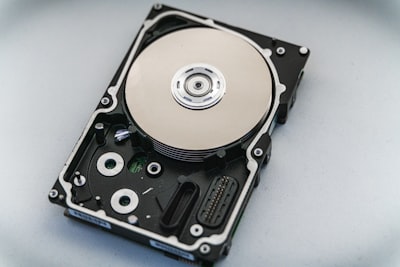
In today’s technology landscape, data management has become a strategic pillar for both professionals and businesses. With the arrival of 2026, the demand for external hard drives has evolved towards faster, more secure and versatile solutions. Whether for 4K or 8K video editing, field backups or storing large volumes of corporate data, choosing the right device makes a difference. In this article we explore the best external SSD and HDD options, analyzing their technical features and how they integrate into modern workflows.
Solid-state drives (SSDs) have prevailed due to their speed and shock resistance. For intensive tasks like video editing, an NVMe SSD with Thunderbolt 4 or USB 4 interface achieves sequential read speeds over 3000 MB/s, allowing playback and editing of high-resolution RAW files without latency. On the other hand, traditional hard disk drives (HDDs) remain a cost-effective option for mass backups or reference files, albeit with lower speed. In 2026, manufacturers are betting on compact, water- and dust-resistant form factors, ideal for photographers and videographers working outdoors.
Cybersecurity is another critical factor. External drives with hardware encryption (AES 256) ensure data is protected even if the device is lost. Additionally, more professionals are integrating these drives into hybrid workflows: storing local copies and syncing with the cloud. For businesses, this strategy requires robust management software. This is where Q2BSTUDIO offers custom software development that automates backup, synchronization and version control, ensuring data travels securely between local drives and cloud services like AWS or Azure.
Precisely, cloud integration is key in 2026. Many companies opt for external drives as local cache for their cloud data, reducing latency and improving productivity. Q2BSTUDIO provides cloud services on AWS and Azure that allow connecting these devices to scalable environments with backup and disaster recovery policies. Furthermore, artificial intelligence is transforming how data is processed: from intelligent file indexing to training models with datasets stored on external drives. AI agents developed by Q2BSTUDIO, based on artificial intelligence, can monitor disk usage, predict failures and optimize data distribution between local storage and the cloud.
In the realm of Business Intelligence, having a high-performance external drive facilitates the analysis of large data volumes with tools like Power BI. By storing datasets locally, network bottlenecks are eliminated and report generation is accelerated. Q2BSTUDIO also offers Business Intelligence solutions with Power BI that, combined with fast storage, enable companies to make data-driven decisions in real time. Cybersecurity, in turn, is reinforced with pentesting and audits that Q2BSTUDIO performs to ensure both drives and cloud connections meet the highest standards.
Regarding storage technology, QLC NAND (Quad-Level Cell) SSDs are gaining ground in 2026, offering larger capacities at lower prices, albeit with lower write endurance. However, for video and editing applications, drives with DRAM cache or technologies like SLC caching are recommended. USB 4 and Thunderbolt 5 interfaces promise speeds up to 40 Gbps, eliminating any bottlenecks even with the heaviest files. For companies handling sensitive data, the combination of an encrypted external SSD with access management and audit software is essential. Q2BSTUDIO develops cybersecurity and pentesting solutions that evaluate the security of these storage flows, identifying vulnerabilities before they are exploited.
Furthermore, process automation greatly benefits from fast external drives. For example, in production environments, an SSD can act as a buffer for data generated by sensors or IoT systems, allowing subsequent processing in the cloud. Q2BSTUDIO implements software process automation that orchestrates the transfer, transformation and loading of data from external drives to databases or data lakes. AI agents can even automatically classify and tag stored content, facilitating search and further analysis. Undoubtedly, in 2026 the external hard drive is not just a peripheral but a key piece in any organization’s data architecture.
Another aspect to consider is form factor. Traditional 2.5-inch external drives remain popular, but M.2 NVMe SSD enclosures are gaining ground, allowing a high-performance drive in a minimal size. These devices are ideal for professionals who need maximum portability without sacrificing speed. Additionally, drives with wireless connectivity (Wi-Fi 6) are emerging as a solution for collaborative environments where multiple users need to access the same storage simultaneously. Q2BSTUDIO develops applications that manage these accesses and ensure data integrity.
Ultimately, choosing the best external hard drive in 2026 will depend on the use profile. For the video editor, an ultra-fast SSD is essential. For the field professional, a rugged drive with IP68 protection. And for the company, the combination of reliable hardware with intelligent management software makes the difference. Companies like Q2BSTUDIO offer the necessary technological ecosystem to get the most out of these tools, integrating storage, cloud, artificial intelligence and cybersecurity into a coherent solution.