
The Software as a Service (SaaS) model has been the backbone of digital transformation for over a decade. Companies of all sizes adopted monthly subscriptions to access CRM, ERP, project management and other solutions without massive upfront investments. However, the emergence of artificial intelligence agents is rewriting the rules. These autonomous systems, capable of executing complex tasks without constant supervision, promise efficiencies that traditional SaaS can hardly match. Does this mean the SaaS model is obsolete? The answer is not a definitive yes, but it does imply a profound transformation that forces a rethink of architecture, integration and the differential value of platforms.
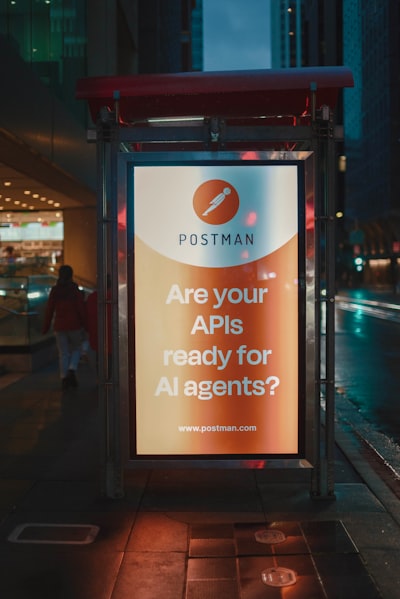
To understand the challenge, it is worth analyzing the inherent limitations of SaaS. A typical SaaS application works like a black box: the user pays for a predefined set of features, but can rarely modify internal behavior or integrate smoothly with other systems. AI agents, on the contrary, require access to heterogeneous data, the ability to execute actions across multiple platforms and dynamic adaptation to changing contexts. A SaaS CRM that does not expose flexible APIs or allow injection of custom AI models will quickly become obsolete compared to more open solutions. That is why many organizations are opting for custom software that combines the best of SaaS with proprietary artificial intelligence layers.
The key is not to abandon SaaS, but to evolve it towards a hybrid model where AI agents act as orchestrators. Imagine a virtual assistant that, using natural language processing, can query a cloud ERP, generate a Power BI report, and then send a notification to the team via a chatbot. All this requires that SaaS applications expose programmable interfaces and that the AI layer is hosted on scalable infrastructures like AWS or Azure. This is where the need for robust and secure cloud services comes in. Cloud AWS/Azure provide the elasticity that AI agents demand, but also require careful governance to avoid data leaks or uncontrolled costs.
Another critical factor is cybersecurity. AI agents, by interacting with multiple systems, expand the attack surface. A traditional SaaS subscription model used to delegate security to the provider, but when autonomous agents are introduced that perform actions on behalf of the user, responsibility is shared. Therefore, companies must invest in advanced cybersecurity, including pentesting and continuous monitoring, to ensure agents do not become vulnerability vectors. Q2BSTUDIO, as a software and technology development company, offers comprehensive services that address these challenges, from security consulting to implementing role-based access controls.
Business analytics is also transformed. AI agents generate huge volumes of operational data that, if exploited correctly, can reveal behavioral patterns and optimization opportunities. Business Intelligence tools like Power BI become the brain that visualizes agent activity. But integrating Power BI with an agent ecosystem is not trivial: it requires real-time data pipelines, updated semantic models, and often custom connector development. Q2BSTUDIO helps companies build these architectures, combining its expertise in BI / Power BI with AI and automation solutions.
Process automation is precisely one of the fields where AI agents make a difference. While traditional automation tools (RPA) are limited to following fixed rules, AI agents can learn from historical data, adapt to exceptions and make contextual decisions. This enables automation of complex flows such as invoice reconciliation, multi-channel customer service or inventory management. However, implementing this automation requires software that is not only flexible but also auditable. This is where custom automation software development becomes indispensable, as generic solutions rarely cover the particularities of each business.
Returning to the initial question: is the SaaS model obsolete? The answer is that pure, monolithic, closed SaaS is indeed at risk. But SaaS as a software delivery concept evolves towards open platforms, with robust APIs and integration capacity with AI agents. Providers that do not adapt will lose relevance. On the other hand, companies that want to leverage the full potential of AI will need a technology partner that understands both legacy SaaS and new architectures. Q2BSTUDIO, with its focus on AI, custom software development and cloud services, is positioned to guide organizations in this transition, avoiding common mistakes of buying tools before mapping processes or neglecting data quality.
In conclusion, the era of AI agents does not announce the death of SaaS, but its reinvention. Companies must look beyond subscriptions and ask how their current applications can interoperate with autonomous systems. Investment in custom applications, secure cloud infrastructure, cybersecurity and advanced analytics will be key to staying competitive. Q2BSTUDIO offers precisely that ecosystem of services, enabling technology leaders to plan their next investment cycle with confidence. The future is not about choosing between SaaS or AI, but about integrating them intelligently.

