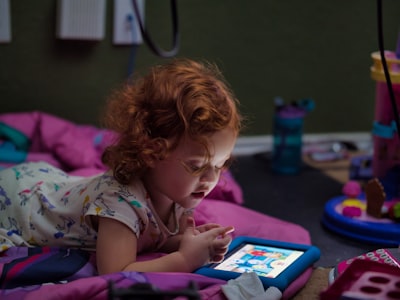
Developing a children's story app with artificial intelligence is not just about training a model and generating nice text. Behind the magical experience of a child becoming the hero of their own story every night, there is a technical framework that must prioritize safety, reliability, and user experience. In this article, we explore the real challenges that arise when building such an app, the architectural decisions that make a difference, and how a company like Q2BSTUDIO tackles these problems from design to production deployment.
When we talk about custom software for children, the margin for error is minimal. A story that fails to generate, a duplicate charge, or inappropriate content can destroy parents' trust. Therefore, building a story app with AI involves much more than connecting an LLM to an interface: it requires an engineering approach where every transaction is idempotent, every failure has a clear recovery path, and every safety decision is backed by a human.
The first major challenge is content generation. Current language models are excellent at creating narratives, but they can also invent false facts with total confidence. In a children's story context, that is not a minor issue: a fire-breathing dragon is acceptable, but stating that "dinosaurs lived with humans" is not. The solution is not just a better prompt, but a subsequent validation layer. At Q2BSTUDIO, when developing AI systems for clients, we always implement automatic output schema review and, when possible, a human filter. In a story app, the parent acts as that final filter: they must read the story before telling it. This is not a hidden disclaimer, but a design feature.
Another critical aspect is privacy. Children are a specially protected group under regulations like GDPR. Therefore, in a well-designed app, the child never interacts directly with the device; the adult configures the character, preferences, and fears. This avoids collecting data from minors, simplifies regulatory compliance, and keeps the app out of kid-directed store regimes, thus allowing the use of analysis and error reporting tools necessary for continuous improvement. This privacy-by-design principle is similar to what we apply in cybersecurity projects at Q2BSTUDIO: the most sensitive data must be protected from the architecture, not as a later patch.
Transaction reliability is another point where many novice projects fail. Imagine a parent taps "generate story" and, just as the AI is finishing, receives a call and backgrounds the app. In a naive synchronous architecture, generation completes on the server, credit is deducted, but the response never reaches the client. The user pays and gets nothing. The solution is to change the communication model: instead of a blocking request, use an asynchronous job system. The client sends the request, receives a job identifier, and then polls for status until the story is ready. This allows the app to be closed without losing progress. Furthermore, the charge is made only after the result is durably persisted, using a database transaction that guarantees no double charge for the same job. This is achieved with partial unique indexes and optimistic locking, techniques common in cloud AWS/Azure projects we manage at Q2BSTUDIO. The cloud provides the scalability needed to handle generation peaks, but also requires careful design to avoid data loss during deployments or restarts.
Managing content boundaries is another delicate aspect. Each child may have specific fears: thunder, dark forests, monsters under the bed. The system must allow the parent to configure an exclusion list that is passed to the model as a top priority. If generation conflicts with those boundaries, the model must fall back to a calm alternative. But no prompt guarantees 100% compliance. Therefore, the real safety barrier is a human in the loop. At Q2BSTUDIO, when designing AI agents for businesses, we apply the same principle: AI suggests, but a person oversees critical decisions. In a children's app, that person is the parent, who should always review the story before reading it aloud. This is not a limitation, but a competitive advantage: the app acknowledges its limitations and communicates them honestly.
Monetization also requires careful handling. Monthly subscriptions can cause resentment in parents, who already have enough recurring expenses. An alternative is to offer a few free stories and then a pack that never expires, with an optional auto-top-up. This aligns with the philosophy of custom software we implement at Q2BSTUDIO: understanding the end-user context and designing a business model that does not penalize the customer. Additionally, integration with payment services like RevenueCat must be robust, ensuring receipts are verified and credits are updated atomically.
Finally, the developer experience should not be neglected. A story app may start as a personal project, but as it scales, it needs structure. Using a monorepo with Expo for mobile, Next.js for the website, and Hono/Node for the API allows everything to be in one repository, facilitating continuous deployment. The chosen database (Supabase) provides authentication, storage, and row-level security, accelerating development without sacrificing control. In every BI/Power BI or cloud project we undertake at Q2BSTUDIO, we apply these same principles of modern infrastructure: choosing tools that offer a good balance between development speed and robustness.
In summary, creating a children's story app with AI is an engineering exercise that goes beyond text generation. It requires thinking about security, privacy, transaction reliability, and honesty with the user. At Q2BSTUDIO, we understand that every custom software project has its own challenges, and the key lies in applying good architectural practices, testing in real scenarios, and user-centered design. If you are considering developing a similar application or want to improve the robustness of your AI-based product, contact us. We will help you build something that works not only in the demo, but also at 8 PM when the user needs it most.